Control access and isolate the affected equipment
If water reaches a switchboard or switchgear lineup, keep personnel away and treat the equipment as energized until qualified electrical personnel establish its status. Do not open doors, remove covers, operate handles or attempt to dry internal parts. Water may create conductive paths, and damage can remain after standing water disappears. Follow the facility emergency plan and have qualified personnel isolate sources in accordance with site procedures.
Isolation must account for all possible sources, including utility feeds, generators, ties, control power and backfeed from connected equipment. The appropriate switching and lockout process depends on the one-line diagram and actual system configuration. Do not re-energize equipment simply because it appears dry or because another section of the lineup remains in service. Record which devices were operated and who performed the work.
Preserve evidence for a qualified evaluation
Before cleanup changes the scene, document where water entered, its apparent depth, duration and source, and which compartments or adjacent equipment were affected. Photograph exterior and interior conditions only when qualified personnel have made access safe. Note whether water was clean, storm-driven, sewage-contaminated or mixed with chemicals, and whether deposits, corrosion, soot or debris are present. These details help evaluators judge exposure pathways and contamination.
Provide available drawings, equipment nameplates, maintenance records, prior test results and the event timeline to the qualified evaluator. Assessment may include inspection of conductors, insulation, bus joints, barriers, terminals, protective devices, wiring and mechanisms, along with appropriate electrical testing. The required scope depends on equipment type and exposure. A visual inspection or a single test cannot by itself establish that damaged equipment is fit for service.
Make the repair-or-replace decision on evidence
Water can carry contaminants into insulating materials and mechanisms, while corrosion may develop later at connections or within enclosed areas. Drying, cleaning or replacing selected components does not automatically restore the original condition or performance. A qualified engineering and service team should assess the affected equipment, identify limits of inspection and testing, and document the basis for any recommendation. The owner and relevant authorities determine what review is required before service.
Replacement becomes a planning option when the extent of damage cannot be established, critical parts are compromised, or the required restoration cannot be supported. The decision should consider outage needs, system protection, available fault-current information, physical space and interfaces with existing gear. Do not assume that a new assembly can simply replace the old one: ratings, bus arrangement, connections, control schemes and site conditions must be verified.
Define a replacement scope that fits the system
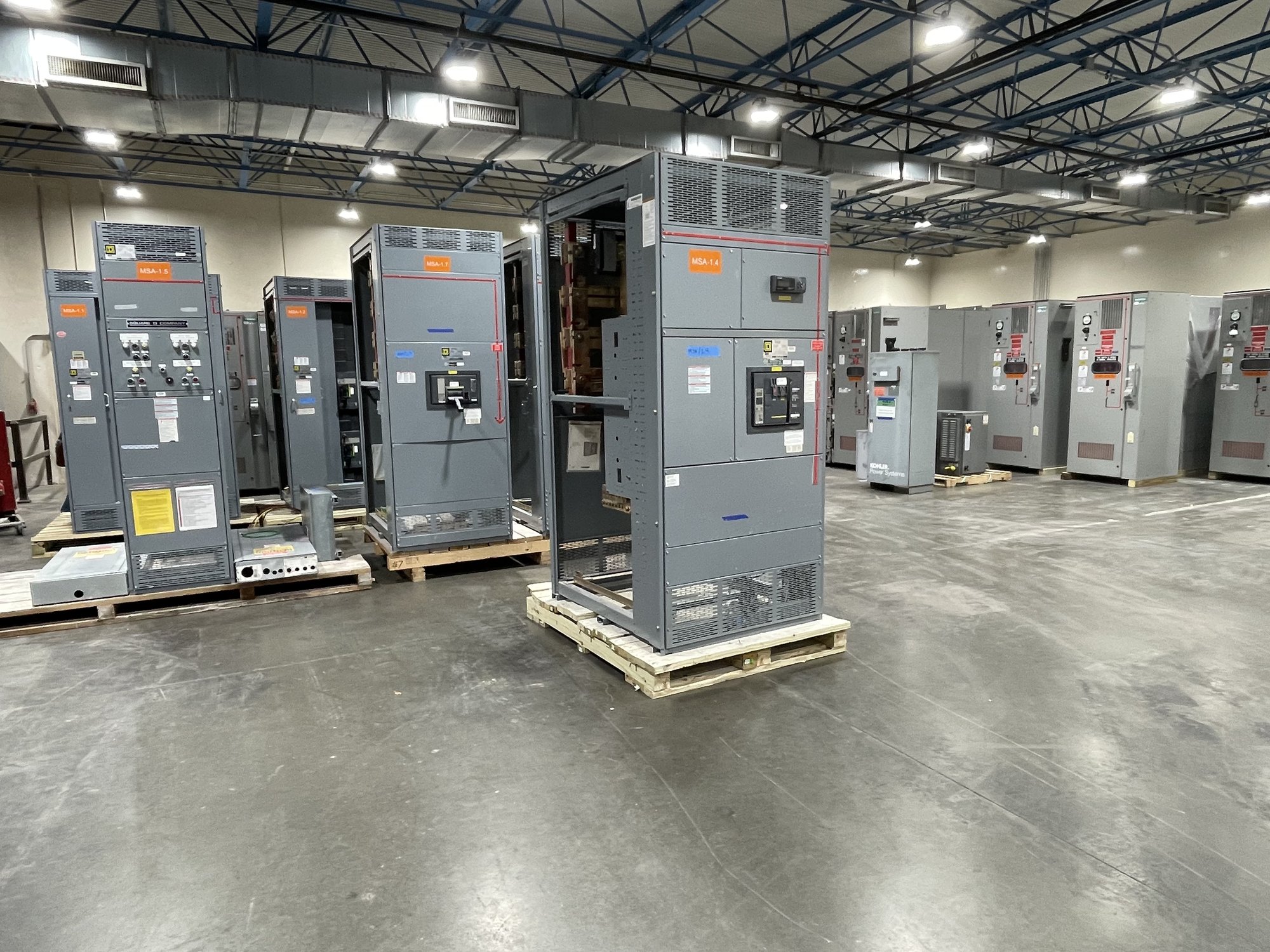
For a new switchboard assembly, share the one-line diagram, existing nameplate data, system voltage, main and feeder arrangement, bus requirements, available fault-current data, protection details, metering and control needs, enclosure location and cable or busway entry constraints. Identify which sections were exposed and whether adjacent gear must remain operational. A UL 891 switchboard assembly may be specified where applicable; UL 891 does not provide a blanket listing for medium- or high-voltage switchgear.
For a manufacturer quote, include the requested equipment type and quantity, project schedule, delivery destination, drawings, specification documents, known deviations and any required interface with existing equipment. State which information is preliminary and identify open engineering questions. If the original documentation is missing, provide clear photographs and dimensions gathered by qualified personnel, but treat them as supporting information rather than a substitute for verified design data.
Plan procurement and the Georgia project handoff
A replacement built with American-made components and a custom configuration may help align procurement with project requirements, but component selection, availability and schedule are confirmed for each order. Provide the required in-service date, decision milestones and any constraints on shipment or site access. Short lead times may be a project priority, not a guaranteed delivery commitment; the confirmed scope and timeline depend on the approved design and component availability.
For delivery to a Georgia facility, identify the complete ship-to location, receiving hours, unloading capability, site access limits and the party coordinating receipt. Confirm whether the route to the electrical room imposes doorway, turning, floor-loading or section-size limits. Coordinate delivery timing with site readiness and the installation contractor. Shipping arrangements do not replace the contractor’s responsibility for receiving, handling, installation and commissioning under the approved project documents.
Move from exposure to a documented next step
Keep the affected equipment isolated until qualified personnel complete the required evaluation and the responsible project parties authorize a path forward. Maintain the event record, inspection findings, test results, engineering decisions and any replacement documents together. This creates a clear handoff among facility operations, the evaluator, engineer of record, contractor and procurement team, and reduces the chance that unverified assumptions carry into a new equipment order.
For a replacement quote, assemble the exposure summary, one-line diagram, nameplate information, electrical and physical requirements, drawings, requested schedule and Georgia delivery constraints. Mark unknowns rather than estimating them, and state whether the scope is a complete lineup or selected sections. Use that package to confirm a new assembly’s configuration, interfaces, availability and delivery plan before procurement proceeds.