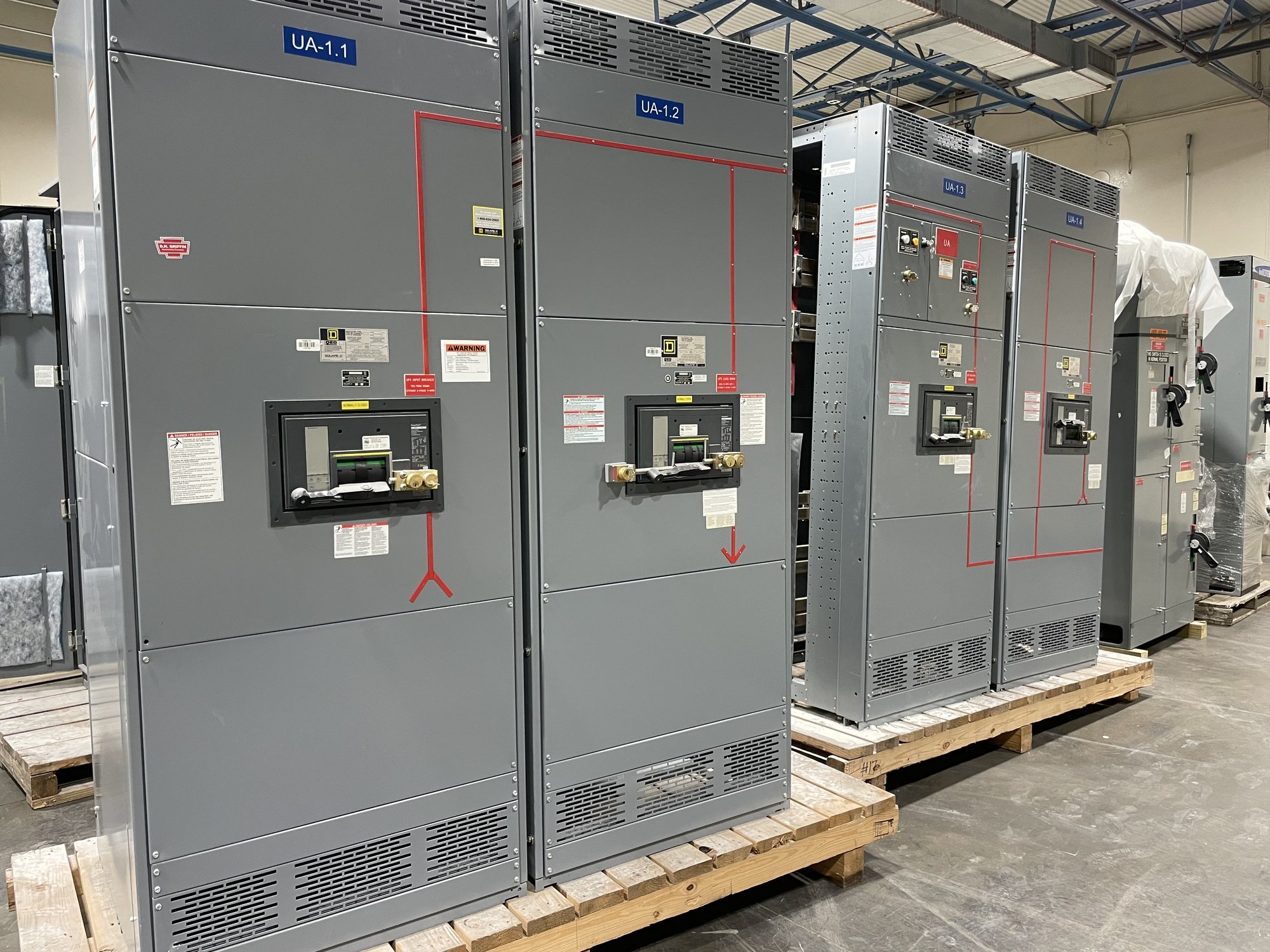
Establish the project requirements
The manufacturing process starts with the application, not a presumed equipment configuration. Share the one-line diagram, load and distribution needs, source information, project specifications, available fault-current data and the intended installation environment. Identify whether the scope calls for a UL 891 switchboard assembly or another type of switchgear; UL 891 applies to switchboards and does not establish coverage for medium- or high-voltage equipment.
Clarify project boundaries early: what equipment is included, what is supplied by others, and where field connections begin. Useful questions include the required system voltage and phase, main and feeder arrangements, metering or control needs, cable entry and exit directions, and any space, access or interface limits. Where details are not final, identify assumptions and open items rather than treating them as approved design inputs.
Turn specifications into a build plan
After reviewing the available documents, engineering and project teams can resolve how the specified functions fit together in a manufacturable configuration. That work may involve checking compartment arrangement, conductor routing, device selection, bus requirements, control interfaces and enclosure constraints against the project documents. The appropriate details depend on the application; no rating, arrangement or code conclusion should be assumed without design review and acceptance by the responsible parties.
For a Georgia project, schedule and site conditions can influence the configuration and sequence of work. Confirm the required equipment footprint, room access, delivery route, receiving hours, storage conditions and the date the assembly must be ready for installation. If drawings, utility requirements or specifications conflict, flag the discrepancy before release. Resolve design changes through documented review so procurement and assembly use the same approved scope.
Coordinate procurement with the design
Once the configuration is defined, procurement decisions affect both buildability and schedule. The equipment specification, approved component requirements, acceptable substitutions and any customer-furnished devices should be clear before parts are ordered. American-made components are a focus of our work, but origin, selection and availability are confirmed for the particular order; no component should be presumed available or suitable solely from a preliminary request.
Short lead times depend on the confirmed design, component availability, approvals and production requirements. To support a realistic plan, provide required-by dates, submittal and review milestones, long-lead component preferences, and any restrictions on substitutions. Identify who can approve changes and how revisions will be issued. These details help the project team compare procurement options without separating a component decision from its effect on the complete assembly.
Assemble to the confirmed configuration
Assembly follows the released project documents and the agreed scope. Work can include mounting specified devices, building bus and conductor arrangements, fitting sections and enclosures, and completing designated control or connection work. The exact tasks depend on the assembly and order. Changes to device models, layouts, wiring or interfaces should be reviewed and recorded before they are incorporated, since even a local change can affect clearances, connections or coordination with adjacent equipment.
A custom-built configuration can address project-specific space, feeder, interface or operational requirements, but customization begins with usable inputs. Provide approved drawings, device schedules, terminal or control requirements, enclosure and access constraints, and details of connected equipment. State which interfaces must align with transformers, generators, transfer equipment or other systems. Confirm responsibility for each connection so factory scope and field scope are clear at turnover.
Verify the completed equipment
Verification checks the completed assembly against its released documents and the agreed manufacturing scope. The planned checks depend on the equipment and specifications and may include visual review, confirmation of installed components, examination of wiring and connections, and applicable electrical tests. Project teams should identify required inspection records, test documentation and witness points before work begins, then confirm how results and any open items will be handled.
Verification is not a substitute for project engineering, field inspection or approval by the authority having jurisdiction. For a UL 891 switchboard, confirm that the requested assembly scope and documentation align with the applicable standard and project requirements; do not extend that standard to other voltage classes or equipment types. Installation, commissioning and energization must be performed by qualified personnel under the approved project procedures.
Plan delivery and project handoff
Delivery planning connects factory completion to site readiness. For Georgia destinations, share the delivery address, receiving contact, access restrictions, unloading arrangements, required delivery window and any sequencing needs for multiple sections or equipment packages. Nationwide shipping is available, but route, method, packaging, timing and delivery terms are confirmed for each order. A stated project date is a planning input, not a shipping guarantee.
For a quote, send the specification and one-line diagram along with the requested configuration, schedule milestones, destination, site constraints, documentation needs and known exceptions. Ask which information remains unresolved and what approvals are needed before production release. Before delivery, align the approved equipment documents, shipping plan and receiving responsibilities with the installation team. This gives Georgia project stakeholders a practical handoff from manufacturing to qualified installation without assuming site conditions or final acceptance.