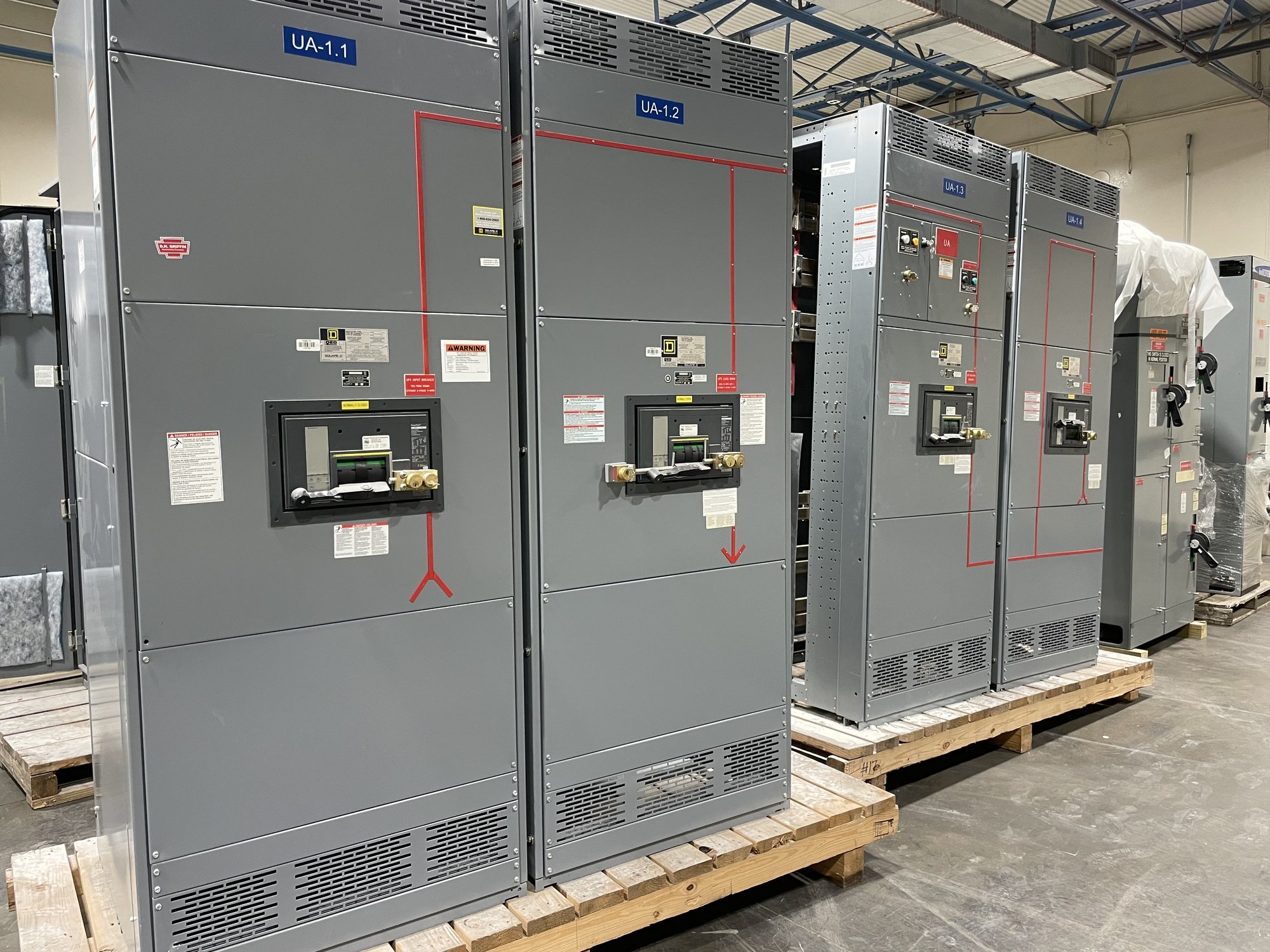
Document the condition before choosing a remedy
Record where damage occurs, how far it extends and whether it is active or longstanding. Photograph exterior and interior surfaces, seams, doors, hinges, latches, mounting points, conduit entries and the base. Note rust scale, coating loss, pitting, cracked welds, distorted panels, standing water, residue or evidence of repeated condensation. A close-up without location context is less useful than a marked enclosure view paired with an overall photograph.
Keep observations separate from conclusions. Surface oxidation on a removable cover does not establish the condition of the frame, bus supports or internal components. Conversely, clean paint does not rule out water entry through a roof, gasket, cable opening or damaged seam. Qualified personnel should follow site electrical safety procedures and determine what inspection access is permitted; do not open or handle energized equipment to gather information.
Trace corrosion and moisture pathways
Identify likely exposure conditions: washdown, outdoor weather, coastal or industrial atmosphere, chemical vapors, roof leaks, flooding, condensation, or temperature cycling. In Georgia, humidity and driving rain can make enclosure drainage, sealing and ventilation relevant, but local conditions vary by site. Record where moisture is seen, when it appears, and whether drains or louvers are obstructed or altered.
Corrosion at a seam, fastener or lower edge may indicate a pathway rather than an isolated cosmetic defect. Ask whether water reached wireways, terminals, insulating supports or protective devices, and whether deposits or corrosion products remain inside. The assessment should distinguish a repair to the enclosure skin from damage that may require separate evaluation of electrical components. Cleaning or recoating alone cannot establish that internal equipment remains serviceable.
Evaluate structure, fit and access
Check whether panels remain flat and secure, doors align and latch, hinges carry their load, and the enclosure retains its intended clearances and barriers. Inspect lifting points, base channels, anchor locations and joints for deformation or cracking. Structural damage can complicate transport, installation, door operation or the support of internal assemblies; its significance depends on the enclosure design and equipment arrangement.
A repair proposal needs the enclosure material and dimensions, construction details, damaged areas, and photographs with scale where practical. Also share the switchboard or switchgear identification, one-line diagram if available, layout drawings, and any known modifications. These details help engineering determine whether a panel or section can be replaced without disrupting internal spacing, cable routing, grounding provisions or access requirements.
Verify the required ingress protection
Describe the protection the installation needs rather than assuming an existing enclosure label still applies. State indoor or outdoor location, exposure to rain or washdown, dust or process contaminants, ambient conditions, and any required enclosure type or project specification. Report missing seals, unused openings, field-cut holes, damaged glands and altered louvers. The suitability of an enclosure depends on its complete configuration, not just the door gasket.
Any repair that changes openings, seals, cooling features, joints or construction may affect environmental protection and equipment operation. Engineering review should establish the applicable requirements and whether the proposed work preserves them. Do not treat an enclosure repair as proof of electrical safety, code compliance or agency approval; those determinations require review of the complete design by qualified professionals and the applicable authority.
Compare repair with a new assembly
Repair may be worth evaluating when damage is localized and the enclosure can retain its required structure, access and environmental protection. Replacement deserves consideration when corrosion is widespread, load-bearing areas are compromised, water has affected internal parts, or alterations make the original configuration difficult to verify. The choice also depends on equipment condition, outage constraints, future capacity needs and the effort required to integrate replacement parts.
For a new switchboard assembly, specify system voltage, phases and wires, available fault-current information, main and feeder requirements, metering, control needs, enclosure location and required environmental characteristics. UL 891 applies to switchboard assemblies; it is not a blanket listing for medium- or high-voltage switchgear. Confirm the exact scope, ratings, components and certification requirements during engineering review rather than inferring them from the existing enclosure.
Prepare a clear project handoff
For a quote, provide the equipment nameplate details, drawings, enclosure dimensions, photographs, damage locations, exposure history, requested protection requirements and the decision deadline. Include site access or outage constraints, delivery destination in Georgia, unloading limits and any contractor or engineering review milestones. Identify what is known, what remains uncertain, and whether the scope is an enclosure repair assessment, replacement enclosure, or complete new assembly.
Use the assessment to make a documented decision: define the accepted condition, unresolved risks, required engineering checks, scope boundaries and installation responsibilities before procurement. If replacement is selected, confirm configuration, availability and schedule for the specific order, then coordinate Georgia delivery with site readiness and qualified installation planning. Clear records help prevent a cosmetic repair from being mistaken for a verified solution.