Start with voltage and system duty
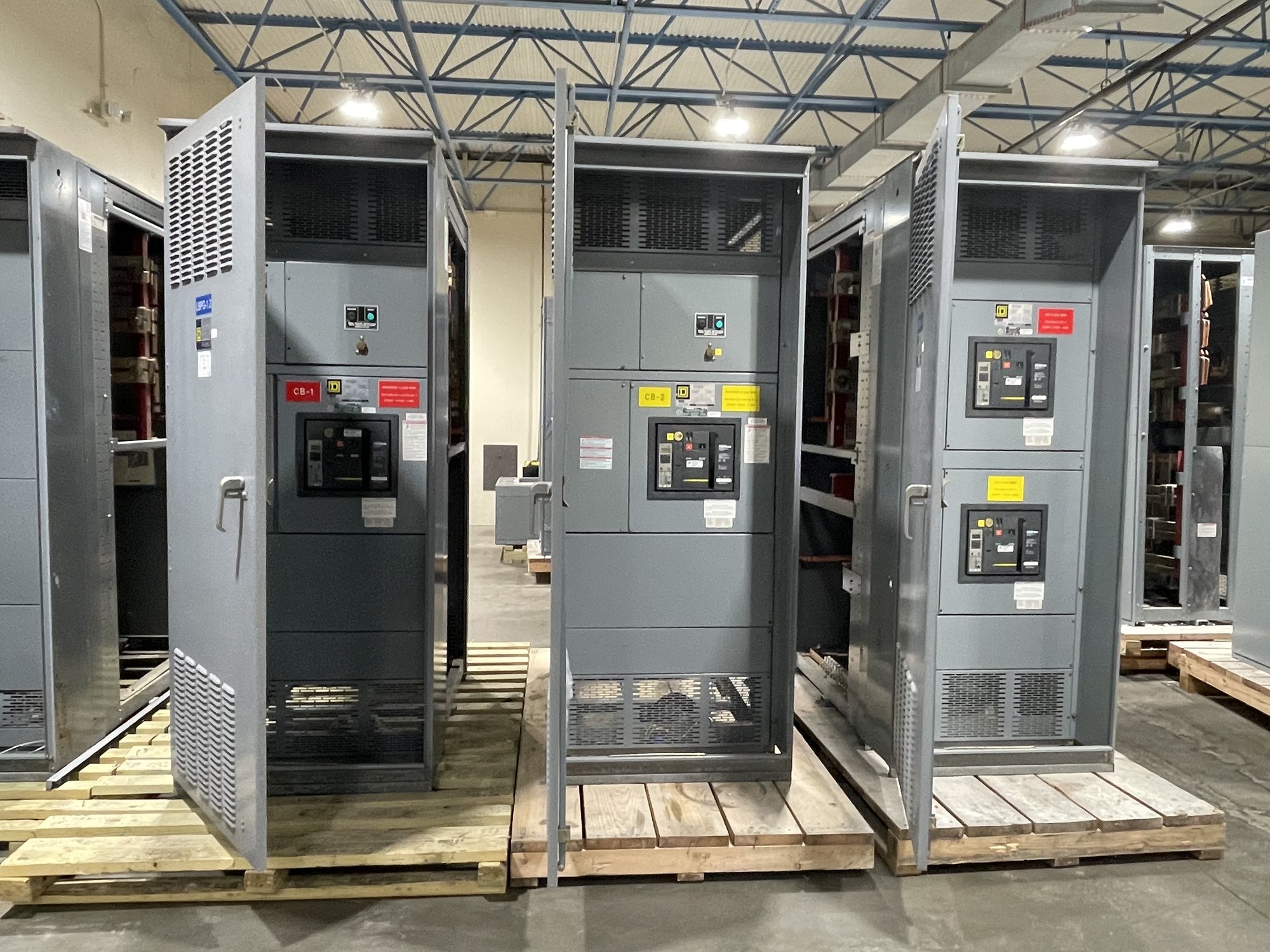
Low-voltage switchboards and low-voltage switchgear distribute power on the secondary side of a transformer, but they are not interchangeable terms for every application. A switchboard commonly groups incoming service or transformer connections with feeder overcurrent devices in a front-accessible assembly. Switchgear is generally selected where the system design calls for a different construction and operating arrangement. The one-line diagram, available fault current, main and feeder functions, and coordination requirements should drive the choice—not the name used on an older drawing.
Medium-voltage equipment serves distribution systems above the low-voltage range, including utility interfaces, campus networks and industrial feeders. Voltage class, insulation approach, switching duty, protective devices and grounding arrangement need engineering definition. Do not treat UL 891 as a medium-voltage or high-voltage listing: UL 891 applies to switchboard assemblies. The appropriate equipment standard, ratings and acceptance requirements depend on the specific design and must be established with the project engineer and authority having jurisdiction.
Match the assembly to its function
A service entrance assembly, distribution switchboard, motor-control lineup and transfer arrangement address different operating needs. A service entrance section may coordinate utility conductors, metering provisions and a main disconnect. Downstream distribution sections divide power among feeders. Motor loads can require dedicated control and protection, while standby-power systems may require transfer equipment and defined source interlocking. Identify which functions belong in the requested assembly and which are supplied elsewhere in the electrical system.
For a new UL 891 switchboard assembly, specify the intended use and configuration rather than relying on a product label alone. Share the service voltage and phase, system grounding, main-device arrangement, feeder quantities and sizes, metering needs, and any required transitions or future spaces. The project engineer should confirm the short-circuit rating and coordination basis against the available fault current and protective-device study. These inputs shape a buildable package and reduce uncertainty during drawing review.
Account for the installation environment
Indoor electrical rooms and outdoor installations create different enclosure, access and coordination demands. Confirm whether equipment will be installed indoors or exposed to weather, where cable enters and exits, available working space, room access routes and the location of adjacent equipment. Outdoor applications may call for an enclosure and arrangement suited to the specified exposure; indoor equipment still must fit through the delivery path and into its final position. The site plan and equipment layout should be checked before the configuration is finalized.
Georgia projects can involve constrained urban electrical rooms, manufacturing spaces, commercial buildings and remote utility or infrastructure sites. Climate, site exposure and building conditions should be documented by the project team rather than assumed from the state alone. Also identify seismic or other project-specific requirements when applicable, the mounting surface, conduit or bus connections, and whether maintenance access must be available from the front, rear or both. Final enclosure details and ratings depend on the approved design.
Define ratings and interfaces before release
The equipment schedule and one-line diagram should agree on nominal voltage, continuous current, phase and wire arrangement, frequency, grounding, bus configuration, main and feeder devices, and required short-circuit performance. Include protection and metering functions, control power, communications provisions and any specified auxiliary contacts. For an existing facility, provide the relevant connection dimensions and interface information; a replacement or extension must align with field conditions that drawings may not fully capture.
Procurement should distinguish mandatory requirements from preferences and identify the governing drawings, specifications and revision dates. Clarify who supplies instrument transformers, protective relays, control wiring, metering, and field-installed cables or accessories. Confirm the required submittal and approval process, testing documentation, labeling, and any project-specific inspection criteria. Exact scope, component availability and production timing are confirmed for each order, so unresolved ratings or interfaces should be surfaced before manufacturing begins.
Plan the quote, review and Georgia delivery
For a useful quote, provide the one-line diagram, equipment schedule, specification, voltage and current requirements, available fault-current information, installation setting, and requested quantities. Add enclosure and access constraints, feeder details, control or metering requirements, preferred delivery location in Georgia, and the date the equipment must be available for the project. If documents conflict or values are still under engineering review, identify the open items instead of treating an assumption as a final requirement.
After scope alignment, the project handoff should establish drawing review responsibilities, approval milestones, delivery access and receiving arrangements. Nationwide shipping supports delivery to Georgia project locations, but the route, handling needs and schedule must be coordinated for the particular order. Confirm unloading equipment, staging space, delivery restrictions and who will inspect the shipment on arrival. Installation, testing and energization belong to qualified personnel working under approved project documents and applicable authority requirements.
Turn the system design into a defined package
The strongest equipment selection begins with the electrical duty, then accounts for the setting, interfaces and operating functions. A switchboard assembly built to a project-specific configuration can address defined distribution needs, while medium-voltage applications require their own engineering basis and applicable standards. Avoid selecting by voltage label or enclosure appearance alone; the protection scheme, fault-duty requirements, available space and connection details determine whether a proposed family and arrangement fit the project.
Before requesting pricing, reconcile the one-line diagram with the schedule and list the decisions still awaiting engineer or owner approval. Send those documents with the Georgia delivery location, access conditions and project milestones so the manufacturer can confirm scope, availability and timing for a new equipment order. This gives engineering, procurement and construction teams a clear package to review before release and a practical basis for coordinating delivery to site.