Why smoke residue matters
Smoke carries fine particles and combustion products that can settle inside electrical assemblies, including areas not visible without controlled inspection. Deposits may retain moisture or form conductive paths across insulating surfaces. Heat exposure, water used for suppression, and corrosive contaminants can add separate damage mechanisms. A clean-looking door or enclosure does not establish that internal components are suitable for service.
The risk depends on the fire environment and the equipment’s construction, operating history, and exposure. Residue on barriers, bus supports, breakers, wiring, and control components can have different implications. Do not energize affected equipment or rely on a visual wipe-down as proof of condition. Have qualified electrical and fire-damage professionals define an assessment plan appropriate to the installation.
Assessment must reach insulation and connections
A useful evaluation identifies where smoke entered, which compartments were exposed, and whether deposits reached insulation surfaces, joints, terminals, or moving mechanisms. It should document soot type and extent where determinable, heat effects, moisture intrusion, corrosion, and any suppression-agent residue. Inspection methods and any electrical tests need to be selected and interpreted by qualified personnel for the equipment and conditions; a single test result cannot resolve every contamination concern.
Ask the assessor to distinguish observable condition from assumptions and to record limits on access or testing. Insulation damage may be hidden beneath deposits, while corrosion can develop at connections or plated surfaces without obvious exterior signs. Cleaning may remove visible residue yet leave chemical effects or compromised materials. The report should state whether components can be evaluated, whether remediation is technically supportable, and what uncertainty remains.
Make replacement decisions from evidence
Replacement is more likely to be appropriate when contamination is widespread, heat or water damage is documented, critical insulation cannot be reliably evaluated, or the manufacturer’s guidance does not support restoration. Repair or cleaning should not be assumed viable simply because a component operates after the event. The responsible engineer and qualified service provider should weigh equipment condition, protection and control functions, operational criticality, and the consequences of uncertain residual damage.
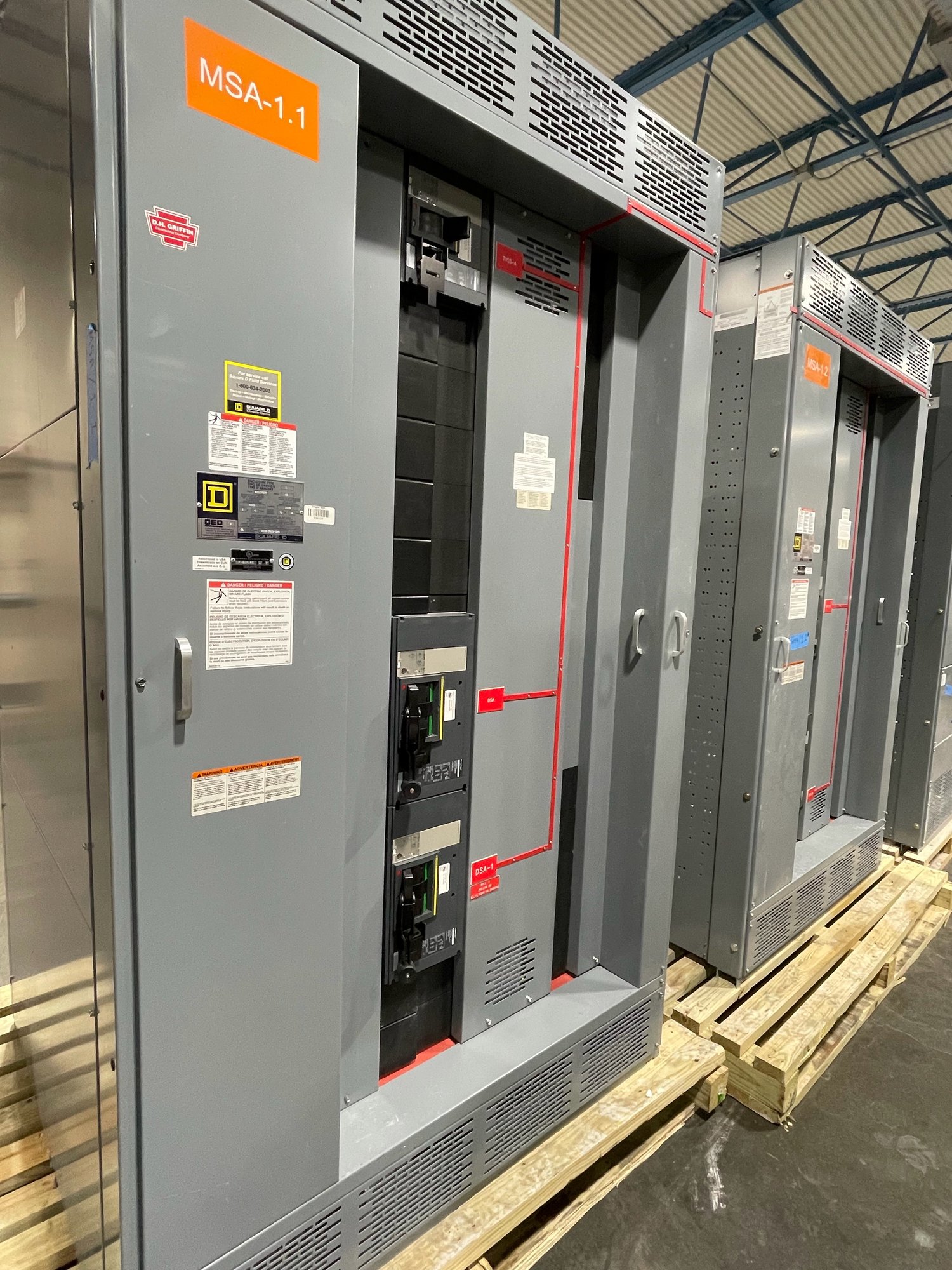
For procurement, establish the boundary of the replacement: an entire switchboard, selected sections, breakers, control assemblies, or associated distribution equipment. Confirm whether existing gear remains in service and how the replacement will interface with it. UL 891 applies to switchboard assemblies; it is not a blanket listing for medium- or high-voltage switchgear. Any design, ratings, and code acceptance require review by the project engineer and applicable authorities.
Build a specification from site records
Gather equipment nameplates, one-line diagrams, available drawings, photographs, and the assessor’s findings before requesting a replacement quote. Share system voltage, phase, frequency, main and feeder requirements, bus details if known, protective-device information, metering and control needs, enclosure conditions, and available installation space. Identify damaged sections, unaffected equipment to retain, and any known changes to the electrical system since the original installation.
Useful project questions include: What evidence supports replacement rather than remediation? Which loads must be served, and what outage window is planned? Are existing cable entry, termination, and access arrangements changing? What drawings or test records are available, and what information remains unverified? State the required delivery location in Georgia, receiving constraints, site access, and the date the equipment is needed for the project schedule. Exact scope, availability, and timeline are confirmed for each order.
Coordinate engineering, procurement, and delivery
A complete handoff gives the manufacturer a defined scope and makes open assumptions visible. Include the assessment report, replacement boundary, electrical requirements, drawing status, preferred submittal milestones, and who will review deviations. If dimensions or ratings are uncertain, identify them as items for field verification rather than treating estimates as final. Custom-built configurations can be developed around confirmed project requirements, with American-made components and nationwide shipping considered in the order scope.
For a Georgia project, coordinate delivery with the site’s receiving capability, storage conditions, construction sequence, and planned outage. Smoke-affected equipment may remain isolated while engineering and procurement proceed, but decisions about temporary power or continued operation belong to qualified project personnel. Before release, align approved drawings, utility or facility interface needs, installation responsibilities, and inspection requirements so the supplied assembly matches the reviewed design.
Move forward with a documented decision
The practical next step is to obtain a written condition assessment that addresses insulation, corrosion, heat, moisture, and inaccessible areas, then have the responsible engineer define what must be replaced. Send the report and available equipment records with the quote request, along with confirmed system requirements, scope boundaries, Georgia delivery details, and schedule constraints. This gives procurement a defensible basis for comparing replacement options and lets manufacturing confirm the configuration and order timeline.