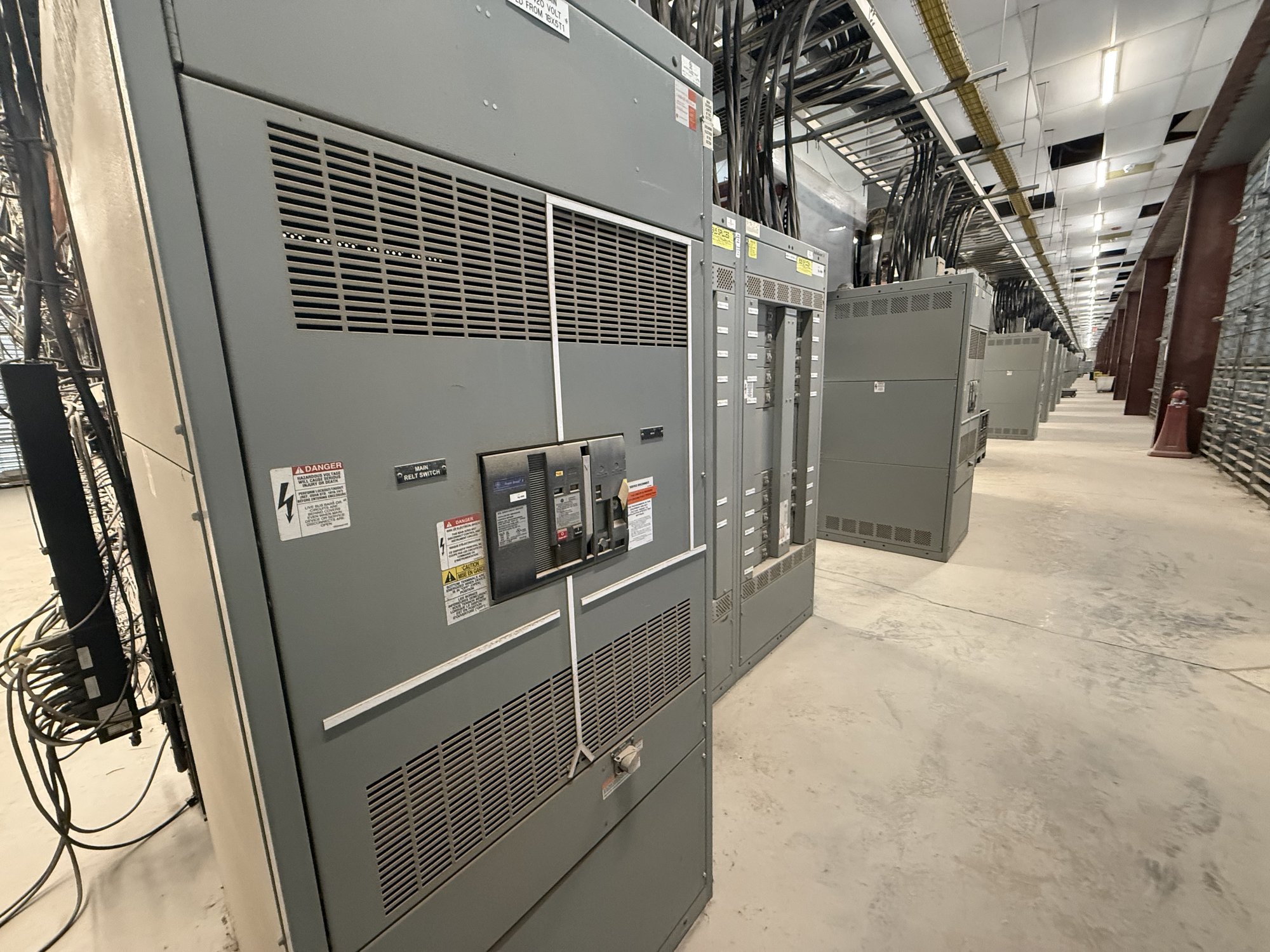
Start with pump and process loads
Pump stations and treatment plants can combine large motors, smaller process loads and critical controls on the same electrical distribution system. Share the motor list, voltage, full-load current, starting method and expected operating sequence for each pump. Clarify whether pumps run singly, alternate duty, operate in parallel or respond to variable flow. These details help the project team evaluate feeder arrangements, protective devices and space for future circuits.
Also identify mixers, blowers, screens, chemical feed equipment, dewatering machinery and other loads that must remain available during normal operation or an outage. Note which loads start automatically and whether sequencing limits simultaneous starts. The switchboard configuration must be coordinated with the electrical design and equipment controls; a load schedule alone may not convey interlocks, operating modes or process priorities.
Account for a wet, corrosive setting
Wastewater environments may expose electrical assemblies to humidity, condensation, washdown, airborne chemicals or corrosive gases. Describe the proposed switchgear location rather than relying on a general label such as indoor or outdoor. Include room conditions, nearby tanks or chemical storage, ventilation, flooding exposure, cleaning practices and any known atmosphere concerns. These conditions can affect enclosure selection, materials, finish, ventilation and equipment placement.
Confirm the installation environment and enclosure requirements with the engineer of record and applicable authorities. A particular enclosure or finish should not be assumed to address every chemical, moisture or corrosion concern. Where the site has distinct electrical rooms, pump galleries or outdoor structures, identify which assembly serves each location and how it will be accessed for inspection and maintenance.
Plan for backup power and continuity
Many wastewater facilities need selected functions to continue when normal utility power is unavailable. Explain whether the project includes a generator, transfer equipment, alternate utility source or another backup arrangement, and identify which loads are intended to receive standby power. Share available source information, expected operating sequence and any restrictions on which motors may start together. The electrical engineer must establish system coordination and confirm equipment interfaces.
Clarify whether the switchgear scope includes only distribution or must coordinate with transfer devices, generator connections, controls or other equipment furnished separately. Define responsibility for control wiring, interconnections and field terminations early. This reduces ambiguity at procurement and gives the installation team a clearer basis for reviewing drawings, source arrangements and startup requirements.
Make operator access part of the design
Operators may need to observe equipment status, respond to alarms and coordinate with maintenance staff, while qualified electrical workers perform inspection and service. Provide room dimensions, door and aisle locations, access routes, overhead obstructions and equipment removal paths. Include the intended working arrangement and any site-specific access constraints for engineering review; do not assume an assembly will fit simply because its electrical rating is suitable.
Keep routine process controls distinct from tasks that require qualified electrical personnel and established site procedures. Identify remote indications, control interfaces and any required separation of sections or access points in the project documents. Final arrangements, working clearances and operating procedures require review by the responsible engineer and authority. The switchgear manufacturer can build to the approved configuration, but does not replace that review.
Define the assembly and procurement scope
For a quote, provide the one-line diagram, load schedule, source details, preliminary layout, environmental conditions and required project dates. State whether the requested equipment is a UL 891 switchboard assembly and identify any project specifications governing construction, labeling, drawings or documentation. UL 891 applies to switchboards; it should not be treated as a blanket listing for medium- or high-voltage switchgear.
Identify preferred component requirements, feeder and main-device details, metering needs, spare or future provisions, and interfaces with controls or packaged process equipment. We manufacture and supply new equipment using American-made components where specified and can build custom configurations. Exact scope, component availability and production timeline are confirmed for each order; do not assume every component is stocked or every configuration carries a particular certification.
Coordinate Georgia delivery and handoff
For a Georgia project, share the site city, receiving contact, delivery access, unloading arrangements and any limits on truck access or delivery hours. Confirm whether the facility can receive a complete assembly or requires a particular shipping configuration. Nationwide shipping supports projects across Georgia, but delivery timing, packaging and the final configuration must be coordinated for the specific order and site conditions.
Before release, align approved drawings, equipment scope, site dimensions, interface responsibilities and the planned delivery sequence among the owner, engineer, contractor and facility team. Send the pump schedule, environmental conditions, backup-power arrangement and access constraints with the quote request. These project details give the team a practical basis to define the required new switchgear and coordinate its handoff to the Georgia installation site.