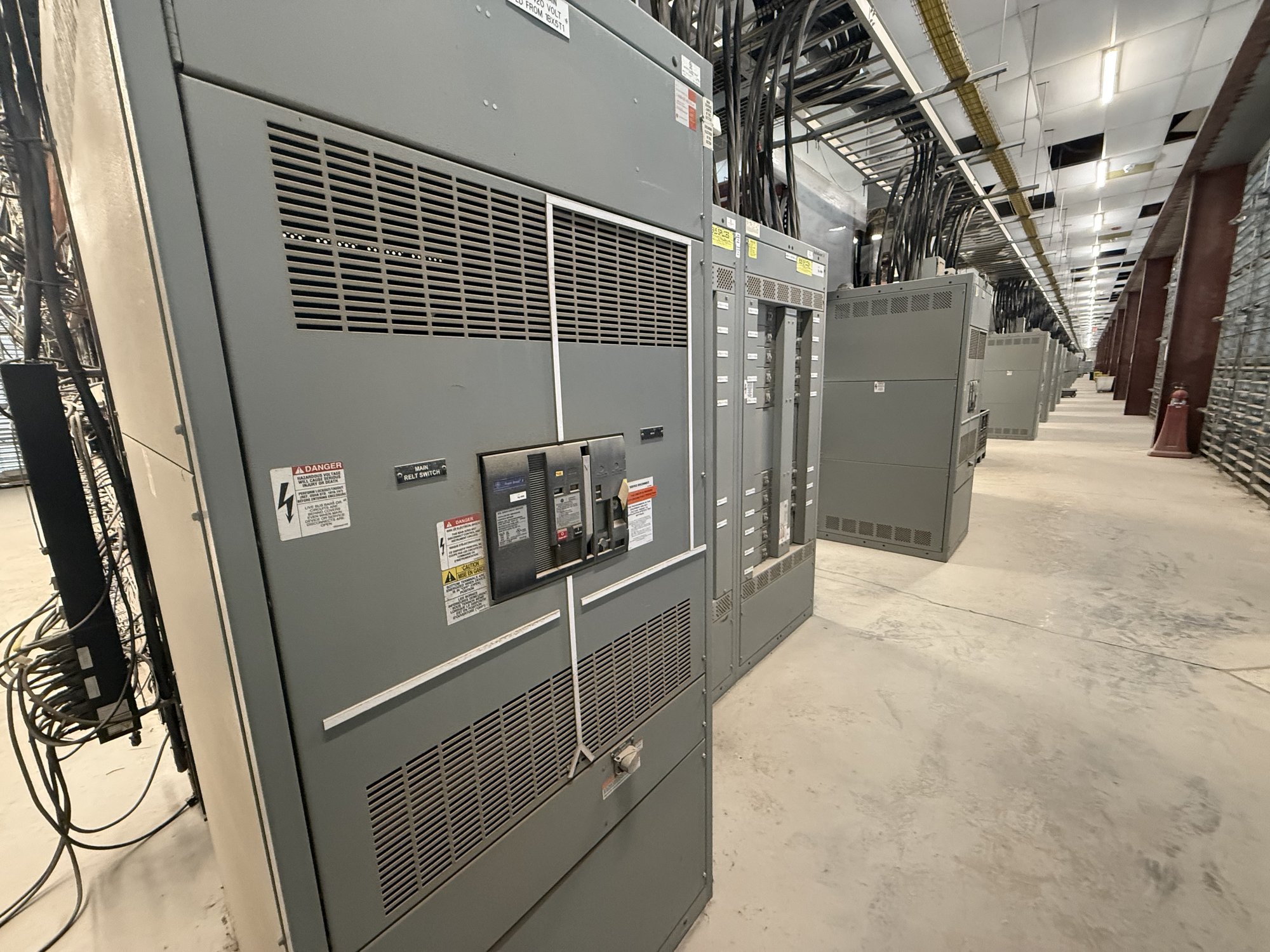
Define the ownership boundary first
Start by identifying which party owns each component, from the utility source and transformer through the customer’s main distribution equipment. The boundary may be at transformer secondary terminals, a bus connection, a service disconnect, or another point established by the utility and project documents. Mark it on a one-line diagram and equipment layout; an assumed boundary can leave gaps in responsibility for protection, operation, maintenance, and access.
For procurement, list the equipment included on each side of that boundary and who supplies connecting conductors, terminations, grounding connections, and control wiring. Confirm who provides the transformer and any utility-owned metering or protection components. These distinctions affect enclosure arrangement, incoming provisions, bus configuration, and installation sequencing. The final scope should follow utility documents and project engineering, not a generic substation arrangement.
Coordinate the protective interface
The interface must support the protection scheme selected by the project’s qualified engineer and accepted by the utility. Clarify where fault-interrupting devices are located, which devices are utility-controlled, and what relaying, trip circuits, auxiliary contacts, or communications are required. Obtain available fault-current information, transformer data, grounding assumptions, and the intended operating sequence early enough to inform equipment design.
Ask how utility and customer protective devices will be coordinated, and identify who prepares and approves the study and settings. A switchboard’s interrupting and withstand requirements depend on the actual system conditions and the selected equipment; they cannot be inferred from the service voltage alone. Provide the engineer’s documented requirements and any utility criteria for review. Equipment scope and ratings remain subject to engineering and authority review.
Plan metering as an interface, not an afterthought
Revenue metering can determine space, access, wiring routes, and the division between utility and customer work. Confirm whether metering is on the primary or secondary side, who furnishes instrument transformers and meter components, and which party installs and maintains them. Utility rules may govern meter location, enclosure access, test facilities, sealing, and the routing of secondary circuits.
Ask for current metering drawings or written requirements before fixing the lineup dimensions and section arrangement. Identify the required metering compartment, terminal blocks, conduit entry, and separation from power conductors where specified. Do not treat a convenient compartment as acceptable by default; the utility must review the proposed arrangement. Clear responsibility for meter wiring and testing also helps avoid unresolved work at commissioning.
Secure utility review before release
Approval steps and documentation vary by utility and project. Determine which drawings must be submitted, who submits them, and whether review is required before equipment release, site work, or energization. Typical coordination materials include a one-line diagram, site plan, equipment elevations, metering details, protective-device information, and connection-point callouts. Review comments can affect layout and scope, so establish a drawing schedule that allows time for revisions.
A UL 891 label applies to qualifying switchboard assemblies; it does not establish acceptance of a complete substation interface or cover medium- or high-voltage switchgear. Identify the specific assemblies and standards required in the procurement documents, then confirm utility acceptance separately. Final design, ratings, installation, and approval decisions belong with the responsible engineers, utility, and authorities having jurisdiction.
Specify equipment and delivery around the handoff
For a quote, share the project one-line, applicable utility standards, ownership boundary, service characteristics, available fault-current data, metering requirements, protective-device scope, and desired equipment arrangement. Include site constraints such as room or pad dimensions, cable entry direction, clearances, access route, and the planned division of installation work. Note which items are utility-furnished and identify open decisions rather than silently treating them as settled.
We manufacture new equipment in the United States, use American-made components where specified and available, and can build custom configurations. Scope, component availability, and schedule are confirmed for each order. For Georgia projects, coordinate the delivery destination, receiving access, unloading responsibility, and required on-site sequence with the project team. Nationwide shipping can support the planned handoff, but delivery timing and equipment configuration must be confirmed for the specific order.
Close the interface before energization
Before release, reconcile the approved drawings with the equipment schedule and identify who owns each remaining submittal, field connection, test, and inspection. Confirm that utility comments have been incorporated and that the responsible parties agree on metering access, protection signals, grounding, and the operational boundary. Keep revision control clear so the field team is working from coordinated documents.
To begin a project-specific quote, provide the latest one-line and utility requirements, mark the ownership and metering points, and list known fault data, dimensional limits, and requested delivery location in Georgia. Flag pending utility decisions and name the party responsible for resolving them. This gives engineering and procurement a concrete basis to confirm equipment scope, configuration, and schedule before the interface reaches the field.