Confirm the service point and voltage
Ask the serving utility to identify the point of service, ownership boundary, and available service voltage for the specific project address. Confirm whether the proposed service is overhead or underground, where the utility expects its conductors to terminate, and who provides the service entrance conductors and related raceways. Do not infer voltage or connection details from a nearby building; service conditions can differ by site and utility review.
Request the utility’s written service requirements and any preliminary fault-current information available for the proposed connection. Clarify whether the project is new service, a capacity change, or a replacement affecting an existing service. These details inform the engineer’s one-line diagram and equipment interface, but final ratings and design decisions require qualified engineering review and acceptance by the utility and applicable authorities.
Resolve metering before equipment layout
Ask how the utility will meter the service: at what location, with what metering arrangement, and with which party furnishing the meter socket, instrument transformers, or metering compartment. Confirm whether the utility requires a particular enclosure location, access clearance, sealing provision, or conduit route. For multiple tenants or separately billed loads, establish how many meters are expected and whether utility rules affect the service configuration.
Share the utility’s metering documents with the electrical engineer and switchboard supplier before approving layouts. Metering requirements can affect compartment dimensions, bus arrangement, barriers, access, and the location of service conductors. Verify who reviews and accepts metering drawings, whether utility-furnished devices must be accommodated, and what information must appear on drawings submitted for utility review.
Document equipment and interface rules
Obtain the utility’s current construction standards for service equipment, including requirements for service disconnects, incoming terminations, grounding and bonding interfaces, labeling, and accessibility. Ask whether the utility has restrictions on equipment location, enclosure arrangement, conductor landing space, or the use of particular service configurations. Request applicable detail drawings and identify the revision date; a verbal summary may not capture project-specific conditions.
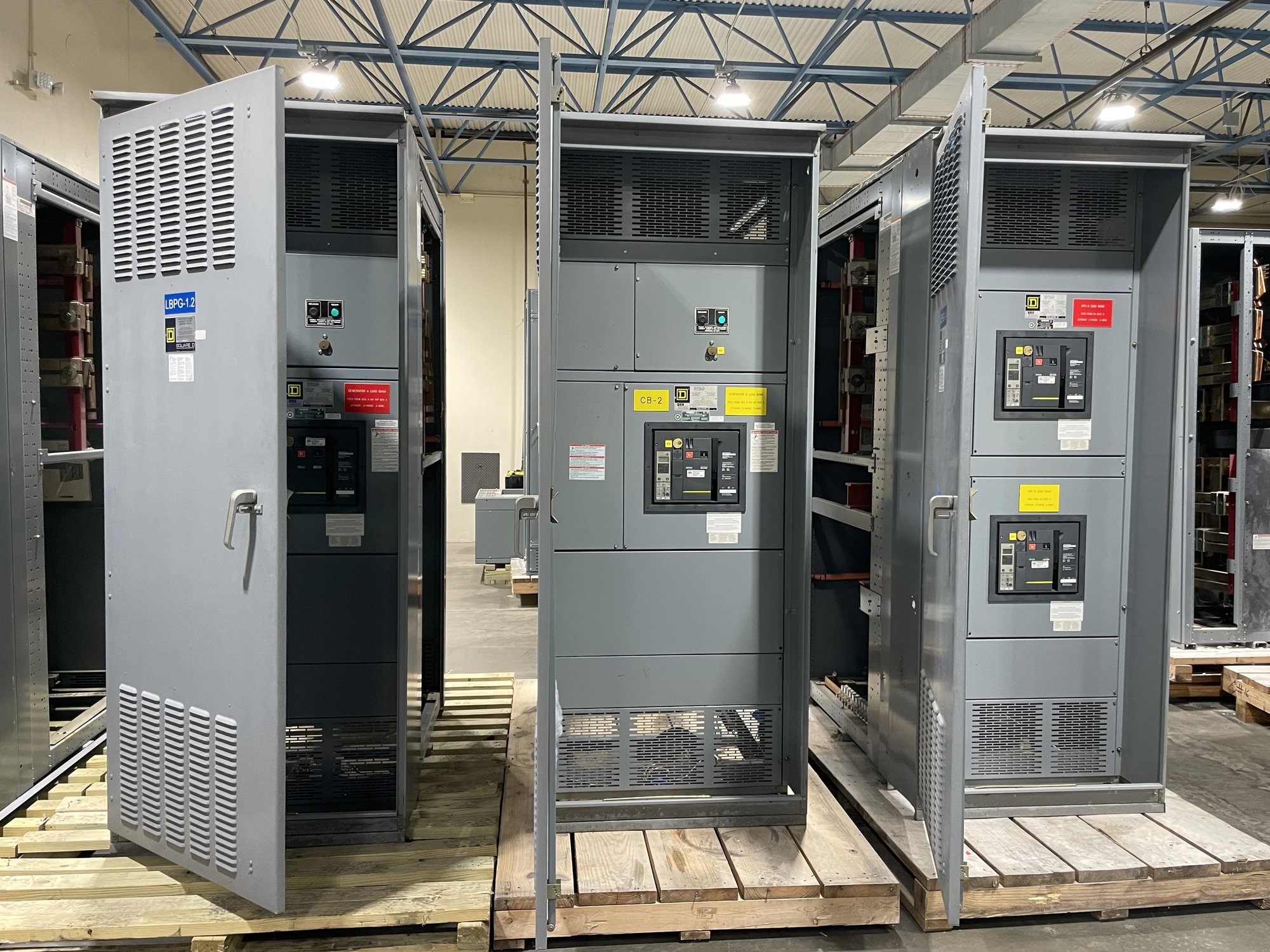
Provide those requirements alongside the project one-line diagram, load information, site plan, and equipment room constraints when requesting a switchboard quote. State the intended service voltage, main and feeder scope, incoming cable approach, metering needs, and any known utility-furnished components. UL 891 applies to switchboard assemblies; it does not establish a blanket listing for medium- or high-voltage switchgear. Confirm the required equipment type and standards for the actual application.
Map reviews, approvals, and dependencies
Ask the utility to describe its application, engineering, drawing review, inspection, and service-release steps. For each step, identify the required submission, responsible reviewer, expected sequence, and conditions that could delay approval. Request current schedule guidance rather than assuming a standard turnaround, and ask when the utility needs final equipment drawings, load data, easements, or site readiness information.
Build utility milestones into the project schedule before setting equipment release and installation dates. Distinguish utility review from electrical design approval, permitting, inspection, and energization authorization; they may involve separate parties and dependencies. Record open questions, assigned owners, and dates for follow-up. Equipment availability and fabrication timing are confirmed for each order, so align the proposed procurement schedule with the utility’s documented review path.
Prepare a complete quote and handoff
For a useful manufacturer quote, provide the service address in Georgia, utility name, confirmed voltage, service point details, metering requirements, available fault-current information, one-line diagram, load and feeder schedule, and applicable utility standards. Include room dimensions, access and delivery constraints, preferred incoming orientation, and the target dates for drawing review, release, and delivery. Mark unresolved items clearly rather than treating assumptions as approved requirements.
Before releasing drawings for manufacture, compare the utility’s written requirements with the approved equipment documents and identify who will obtain any remaining utility acceptance. Confirm the final shipping destination, receiving access, unloading plan, and requested delivery window for the Georgia site; delivery timing depends on the project order and confirmed logistics. Send the utility’s latest comments and approval status with the quote request so equipment scope, engineering decisions, and project handoff stay aligned.