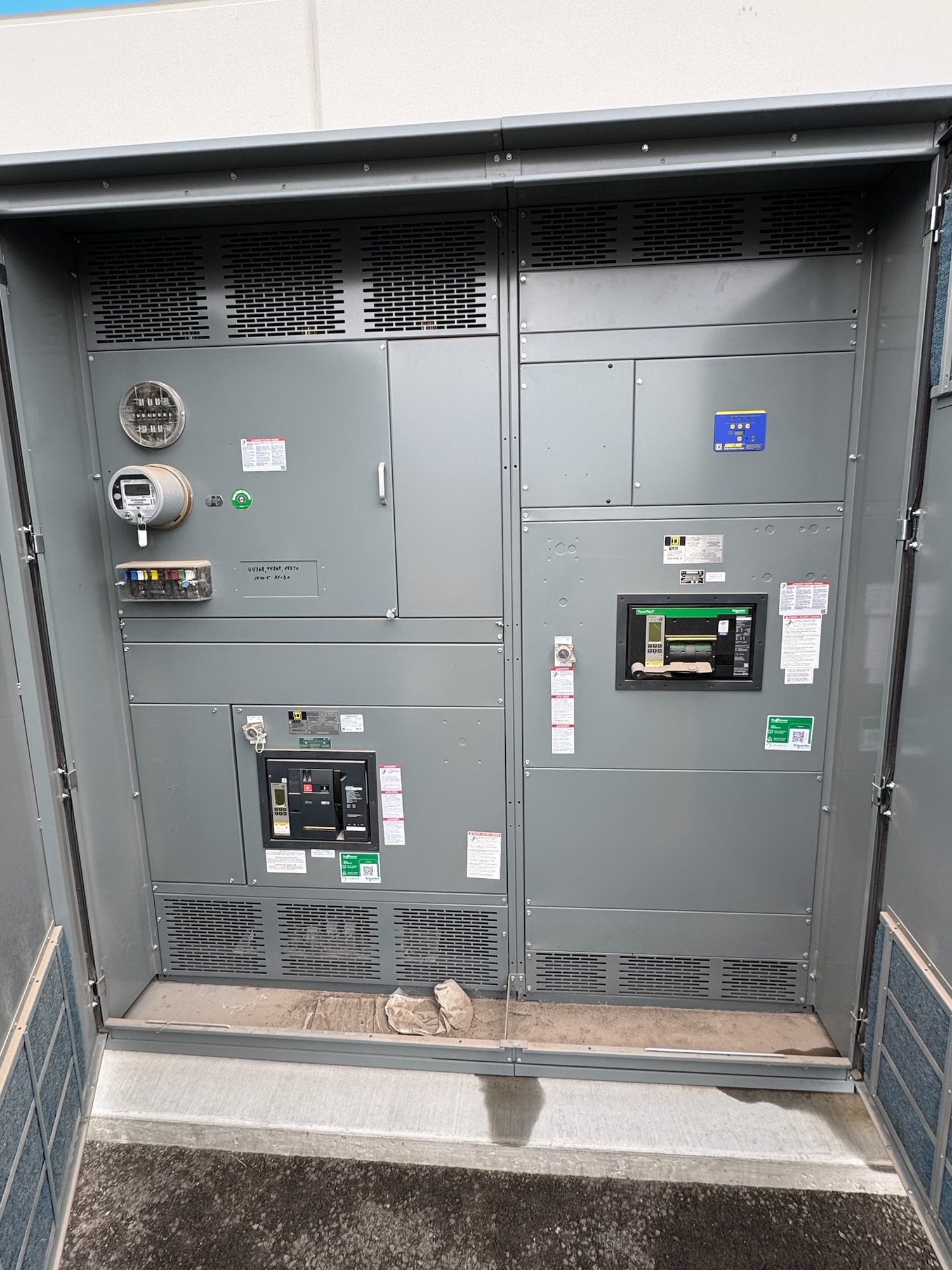
Set a defensible growth basis
Begin with the loads served now, then distinguish committed additions from possible future projects. Record load type, expected demand, operating schedule, starting or inrush characteristics, and the year each addition may come online. Note which loads are essential, which can be shed, and whether future capacity is intended for a specific expansion or general flexibility. A list of equipment without timing and operating assumptions gives designers little basis for sizing.
Identify the source of each estimate: measured demand, equipment schedules, a facility master plan, or an early planning allowance. State assumptions and uncertainties rather than presenting a forecast as a guaranteed load. Ask the responsible electrical engineer to reconcile the projections with applicable demand, diversity and operating assumptions. This creates a traceable basis for decisions and helps procurement compare configurations against the same growth scenario.
Document bus capacity and fault duty separately
For the bus, provide the system voltage, phase and wire arrangement, present and anticipated load, and the expected operating conditions used to establish the required current rating. Explain whether growth is expected through additional feeder sections, larger future loads, or both. An uprated bus does not, by itself, create usable expansion capacity: incoming equipment, protective devices, conductor paths and downstream distribution must also suit the planned load.
Fault-duty requirements need a separate engineering basis. Share available fault-current information at the proposed equipment location, its source and study date, and any known changes to transformers, utility service or upstream protective devices. Identify the required ratings and coordination study status if established by the project engineer. Do not assume a future utility contribution or a bus rating from an existing lineup remains valid after system changes; have the engineer verify the duty for the proposed configuration.
Make feeder growth explicit
Prepare a feeder schedule that separates installed, spare and planned positions. For each planned feeder, provide expected load, voltage, phase, protective-device needs, destination, cable or busway approach, and approximate route length where known. Note any requirements for metering, controls, communications or selective coordination. These details help determine whether expansion calls for reserved spaces, a lineup extension, a separate section, or a different distribution arrangement.
Clarify what “spare” means in the project: an empty compartment for later equipment, a complete breaker position, or simply unused capacity on an existing circuit. Record when each addition is expected and whether future work must occur while adjacent equipment remains energized. That operating constraint can affect section arrangement, access and installation planning. Final switching, protection and work methods belong with qualified personnel and the project’s engineering and safety review.
Reserve real installation space
Capture the proposed lineup location with dimensions, access paths and nearby obstructions. Include available wall length, ceiling height, floor conditions, door swings, structural limits, cable-entry direction and the route from the delivery point. Document required working space and access conditions for engineering review rather than assuming a future section can fit beside the existing gear. A floor plan, equipment-room photos and marked-up elevations can expose constraints before a configuration is quoted.
Ask whether an addition must match an existing lineup’s manufacturer, construction, bus arrangement, finish, connection points or operating interface. Compatibility should be assessed from drawings and equipment data, not appearance alone. If the existing gear cannot be extended, an adjacent lineup or separate distribution point may be considered, subject to system studies, room limits and project requirements. Record the preferred outage window and any phasing constraints for the installation plan.
Coordinate the utility-service boundary
Record the service voltage, number of services, transformer information available to the project, metering arrangement, ownership boundary and utility point of connection. Include the utility’s documented limits or requirements for service capacity, fault current, metering and planned changes. If information is pending, identify who will obtain it and when. Georgia service conditions vary by site and serving utility; do not treat a nearby project or an old service record as a substitute for current project-specific data.
Expansion may be constrained upstream even when switchboard bus capacity appears adequate. Ask the engineer to check transformer and service capacity, conductors, overcurrent protection, voltage drop and any required system studies against the forecast. Confirm which party is responsible for utility coordination, approvals and revisions to the service design. This boundary information belongs in the specification so equipment selection does not quietly rely on an unverified future service upgrade.
Turn planning records into a quote package
For a manufacturer quote, share the one-line diagram, load and feeder schedules, available fault-current data, utility service details, room drawings, existing equipment nameplates and a clear list of present versus future requirements. Include target delivery timing, site delivery address in Georgia, unloading and access limitations, and the project’s decision milestones. Identify items still under engineering review instead of filling gaps with assumed ratings. The quoted scope, availability and timeline can then be confirmed against the defined configuration.
Before release, have the project engineer reconcile the growth forecast, bus and fault-duty basis, feeder plan, physical arrangement and utility information, and identify any open decisions. Confirm which future provisions are included in the new equipment and which depend on later utility, construction or engineering work. Send the approved drawings and current service data with the quote request, and assign an owner and due date to each unresolved item. This gives procurement a clear comparison basis and gives the Georgia delivery plan a defined destination and project context.