Start with nominal system voltage
Nominal voltage is the familiar designation for a power system, such as 208Y/120 V, 480Y/277 V or 4.16 kV. It identifies the system’s general voltage level; it is not necessarily the exact voltage present at every point or under every operating condition. The specification should state the nominal voltage and, where relevant, the phase, frequency, grounding arrangement and whether the system is three-wire or four-wire.
Confirm the source and load conditions rather than relying only on a panel nameplate or a legacy drawing. A facility may have more than one voltage level, a transformer between the service and the switchgear, or a planned system change. Ask the engineer of record to resolve discrepancies in one-line diagrams, utility information and existing equipment records before procurement.
Distinguish system voltage from equipment class
Equipment voltage class describes the range for which an assembly and its components are designed. It is not interchangeable with the nominal system voltage, and choosing a class solely because its number appears higher is not a complete compatibility check. The required class depends on the system, applicable standards, equipment type and the manufacturer’s design limits.
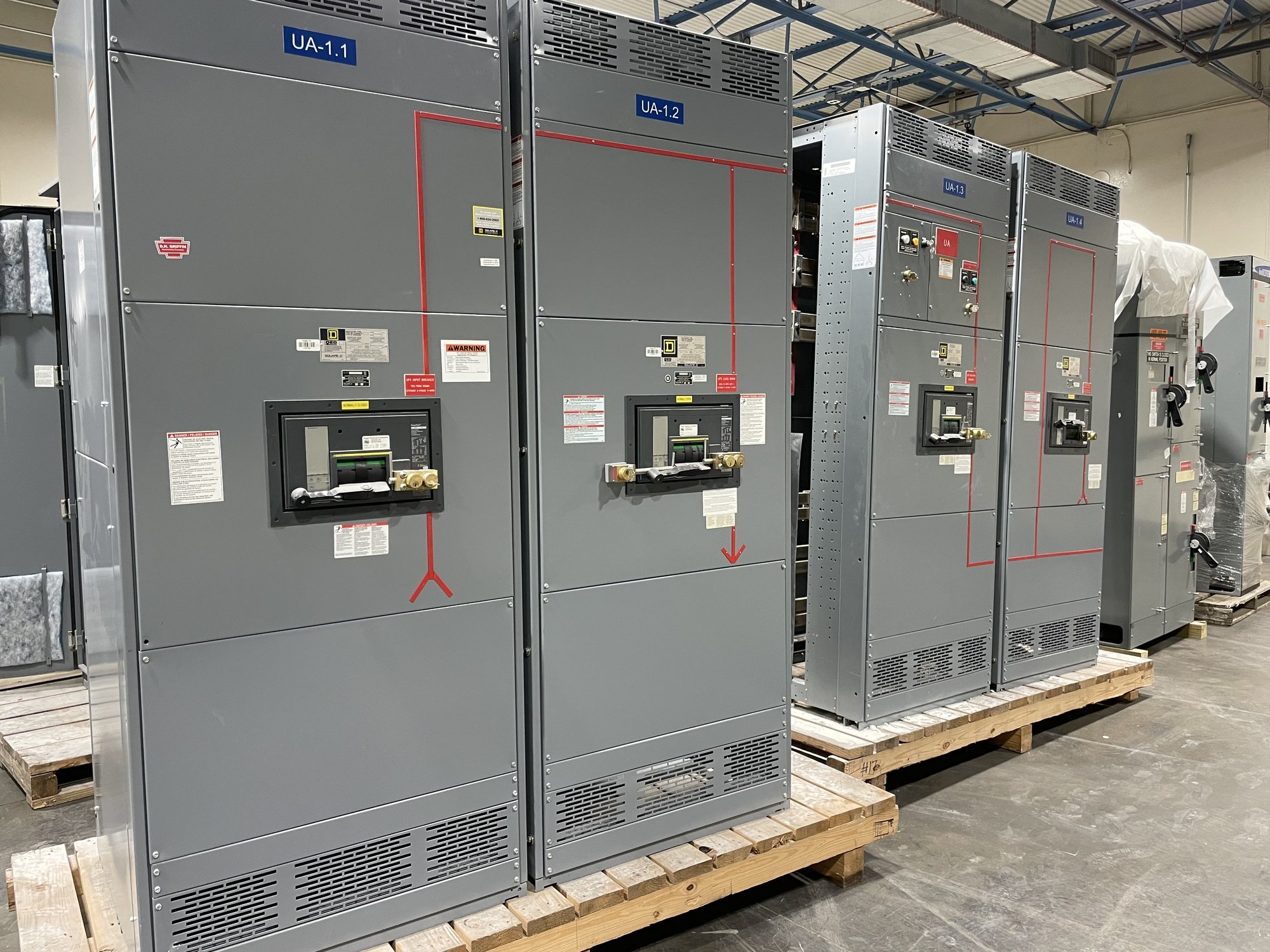
For low-voltage distribution, specify the nominal voltage and the exact switchboard or switchgear type required. UL 891 applies to switchboard assemblies; it is not a blanket listing for medium- or high-voltage switchgear. For medium-voltage applications, identify the system voltage and the intended equipment class from the project’s engineering documents, then confirm that the proposed construction is appropriate for that application.
Specify insulation for the real electrical stresses
Insulation requirements address more than nominal voltage. Depending on equipment type and system, the design may need to account for maximum operating voltage, power-frequency withstand, impulse withstand, clearances and the insulation of bus, terminations and connected components. Medium-voltage specifications may state insulation levels explicitly; the engineer should establish those values for the application rather than infer them from a nominal voltage alone.
Environmental and installation conditions also matter. Altitude, temperature, contamination, moisture and enclosure location can affect insulation performance or the selection of equipment and accessories. Identify indoor or outdoor installation, site conditions and any unusual exposure in the project documents. The manufacturer can review stated requirements and confirm the offered configuration’s scope, but the responsible engineer determines design criteria and the authority having jurisdiction reviews applicable requirements.
Check compatibility across the complete system
Voltage compatibility must hold from the source through the assembly to the connected loads. Review transformer ratios, grounding and neutral arrangements, control power, metering, surge protection and the voltage ratings of breakers, fuses and other components. A component with a suitable nominal marking may still be unsuitable if its interrupting capability, insulation level or application limits do not match the system.
Voltage is only one part of equipment selection. Available fault current, continuous current, short-circuit withstand, protective-device coordination and switching duty require separate engineering review. Confirm these values from current study information and project requirements. Do not treat a voltage-class match as proof that the assembly is suitable for the fault conditions or operating duties at the installation.
Give procurement unambiguous rating data
For a quote, share the one-line diagram and state nominal system voltage, phase, frequency, wire count, grounding method and equipment type. Include the requested voltage class and insulation requirements where the design specifies them, along with source details, incoming and outgoing arrangement, connected loads and the applicable fault-current and short-circuit requirements. Flag any drawing conflicts or assumptions that still need engineering resolution.
Also provide the installation location, indoor or outdoor service, site environmental conditions, required interfaces and project schedule. For Georgia delivery, identify the jobsite location and desired delivery window so shipping can be considered alongside the project sequence. Exact configuration, component availability and timing are confirmed for each order; do not assume that a standard label resolves project-specific requirements.
Close the rating review before release
Before approving submittals or releasing equipment for manufacture, compare the proposed nameplate voltage and class with the approved one-line diagram and specifications. Check that insulation requirements and component ratings are documented, and route any deviations to the responsible electrical engineer. Keep the final rating basis with procurement records so field teams can identify what was specified and what was supplied.
A useful next step is to send the current one-line diagram, written voltage and insulation criteria, fault-study information, site conditions and Georgia delivery location with the quote request. Ask the manufacturer to identify the offered assembly’s stated ratings and any open technical questions. Resolve those questions with the engineer of record before approving the configuration for the intended application.