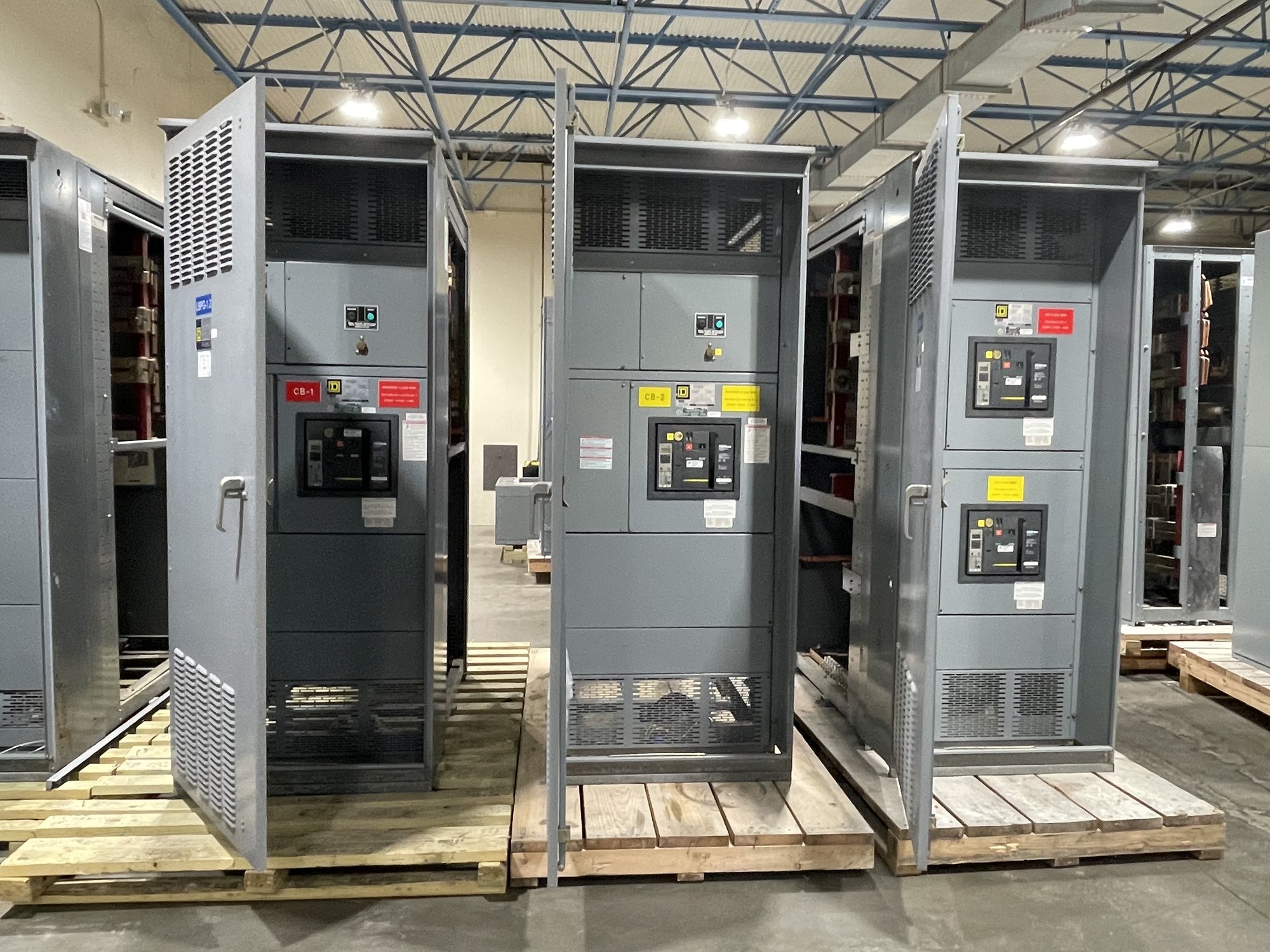
Define the duty before choosing the lineup
Start with the one-line diagram and identify what the 4000-amp rating applies to: service entrance, main bus, a section of the distribution system or another defined point. Confirm system voltage, phase, frequency, grounding arrangement, number and type of incoming sources, and whether normal and alternate sources must be accommodated. A nominal ampere value alone does not establish the equipment configuration.
Document the expected load, demand assumptions, major motor or process loads, future capacity needs and planned load growth. Identify main-device requirements, feeder quantities and ratings, metering, control power, protective functions and any transfer or tie arrangement. These details determine section count and arrangement; a 4000-amp assembly is not a single interchangeable design.
Resolve available fault current and bracing
Ask the electrical engineer to establish the available fault current at the proposed equipment location, including the utility or upstream source data and relevant transformer and conductor information. Specify the required short-circuit withstand or interrupting performance for the applicable devices and assembly. The appropriate values depend on the system and protective-device coordination, not on the ampere rating by itself.
Bus bracing and other short-circuit design details must match the specified fault duty and the equipment configuration. Confirm the basis for the required rating, protective-device characteristics and any assumptions about upstream protection. The engineer of record should review the final one-line, coordination information and equipment submittals; do not infer fault capability from a product description or use a generic rating in place of project data.
Reserve a workable footprint and access route
Obtain preliminary dimensions and section arrangements for the proposed configuration, then coordinate them against the electrical-room plan. Check wall and column locations, clearances required by the applicable design, door swing, cable entry and exit, overhead obstructions, ventilation provisions and access to operating and service points. Room layout and working space require project-specific review by the responsible design professionals and authorities.
For a 4000-amp lineup, plan the delivery route as carefully as the installed footprint. Confirm door and corridor widths, turning space, floor transitions, loading access, lifting approach and any limits on shipping-section size or weight. If the assembly must be divided for transport, establish the section boundaries and field reconnection plan during design rather than after the route is fixed.
Plan staged installation around interfaces
Staging may help keep a facility project moving when construction, shutdown windows or room readiness do not align. Identify which sections can be delivered and set first, what must remain energized, and when incoming and feeder conductors can be terminated. Coordinate the sequence with the electrical contractor, engineer, facility representative and other trades, including temporary protection and control of the work area.
Agree on section identification, shipping splits, joining details, lifting points and the documents needed to reconnect and verify the lineup. Establish responsibility for receiving inspection, storage conditions, setting, anchoring, bus connections, cable terminations, testing and commissioning. Only qualified personnel working under the approved project procedures should install, inspect, test or energize the equipment.
Prepare a complete procurement package
For a useful quote, provide the one-line diagram, equipment schedule, voltage and phase, 4000-amp application, main and feeder device requirements, fault-duty basis, bus and section arrangement, metering and control needs, enclosure details, cable-entry preferences and available room dimensions. Include project specifications, drawing requirements, target ship window, requested submittal schedule and any known constraints on shipping-section size. Call out alternates or future provisions explicitly.
Before release, review the proposed drawings for dimensions, access, device locations, cable space, section splits and field interfaces. Confirm that device ratings and assembly details align with the engineer’s design documents and the authority’s review. Exact scope, component availability and schedule are confirmed for each order; American-made components and custom-built configurations can be specified where available for the project.
Coordinate delivery across Georgia
Georgia delivery planning should account for the actual jobsite, receiving hours, unloading equipment, site access and the construction sequence. Share the delivery address, receiving contact, restrictions on truck access, preferred delivery window and whether the site can accept the complete lineup or needs staged shipments. Nationwide shipping is available, with shipment details and timing confirmed for the specific order; do not assume a guaranteed arrival date or that every section can be split as requested.
Before shipment, align the approved drawings, shipping configuration, receiving plan and installation milestones among procurement, the contractor and facility team. Confirm who will inspect for transit damage, where equipment will be stored if the room is not ready, and what documentation must accompany each stage. With footprint, fault duty, bracing and sequence resolved early, the 4000-amp specification can move from design review to a coordinated installation plan.