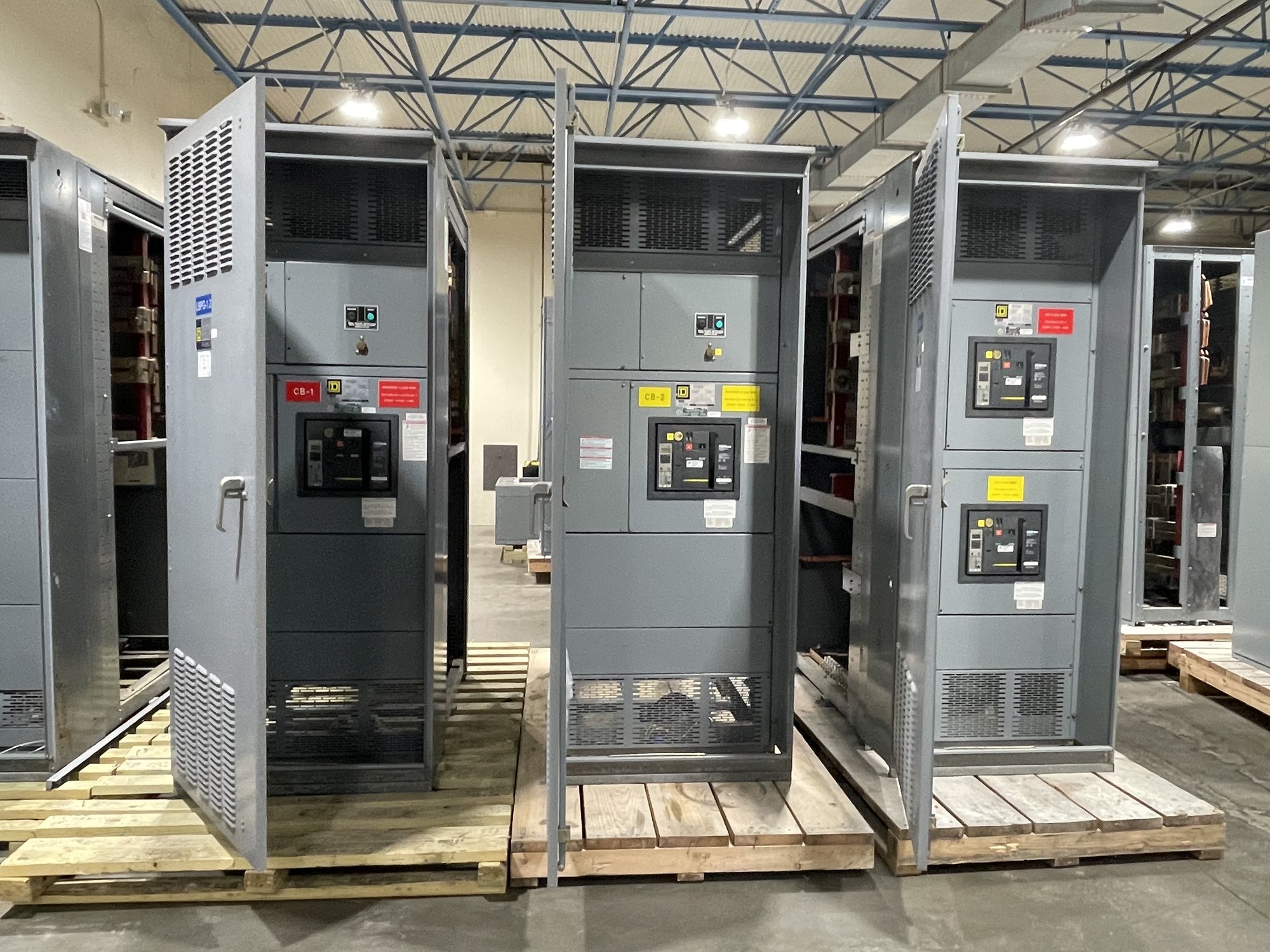
Define the inspection scope
Start by identifying the equipment and the purpose of the inspection. Record the manufacturer, model, serial number, assembly type, voltage class, and available drawings or nameplate data. Confirm whether the review concerns a new switchboard, replacement equipment, or an existing installation; the applicable checks and acceptance criteria depend on the design and project requirements.
Visual and mechanical review is not a substitute for electrical testing, protective-device coordination, or engineering evaluation. Establish access limits, equipment status, required documents, and who will perform the work. Only qualified personnel following applicable procedures should open, handle, or operate electrical equipment. Do not infer that an assembly is suitable for service from appearance alone.
Look for physical damage
Inspect accessible enclosure surfaces, doors, hinges, handles, mounting points, barriers, and internal supports for dents, distortion, cracks, corrosion, loose or missing hardware, and signs of impact. Check whether doors close evenly and whether seams, gaskets, and covers appear intact. Photograph findings with enough context to locate them, then note the compartment, component, and observed condition rather than relying on broad labels such as “damaged.”
Damage can have consequences beyond appearance. A bent door may interfere with closure or access; a distorted support may affect component alignment. Do not straighten, tighten, or replace parts without approved instructions and engineering review. For procurement or corrective work, distinguish confirmed defects from questions requiring evaluation, and identify any drawings, measurements, or manufacturer guidance needed to determine disposition.
Check alignment and mechanical fit
Review the fit and alignment of doors, removable panels, barriers, racking features, operating handles, and other mechanisms included in the equipment design. Look for binding, uneven gaps, misaligned openings, interference, excessive looseness, or visible wear. Compare observations with approved drawings and manufacturer instructions where available; a visual estimate should not replace specified tolerances or a functional test.
If an operating or racking mechanism appears misaligned or does not move as intended, stop and document the condition. Do not force it or attempt repeated operation to see whether it clears. Record the mechanism position, related compartment, and any prior service history available. Engineering review can determine whether adjustment, repair, replacement, or a different acceptance check is appropriate for the specific assembly.
Identify contamination and moisture evidence
Look for dust, construction debris, metal particles, oil, residue, insects, water marks, condensation evidence, or corrosion on accessible surfaces. Note where material is found and whether it appears isolated or spread across barriers, insulators, bus supports, or operating parts. Include the surrounding conditions when known, such as recent construction, storage exposure, or a reported leak, without assuming the source.
Contamination can obscure damage and may affect the condition of insulation or moving parts, so avoid brushing, vacuuming, or applying cleaners as an informal inspection step. Any cleaning or remediation should follow equipment-specific instructions and be performed by qualified personnel under the required safety controls. Record whether the finding is visible only or has been assessed further; that distinction helps engineering decide what additional evaluation is needed.
Verify labels and identification
Compare nameplates, circuit and compartment labels, warning markings, and identification tags with the approved one-line diagram, schedules, and equipment drawings. Check that text is legible, securely attached, and consistent with the intended circuit or device. Flag missing, damaged, contradictory, or handwritten labels, and capture the exact location and wording rather than silently correcting the record.
Label discrepancies can complicate installation, commissioning, maintenance, and future troubleshooting. Resolve them against controlled project documents and engineering direction; do not treat a label as proof of the equipment’s rating or electrical configuration. For new switchboard procurement, provide the required naming convention, circuit schedule, marking details, and drawing revision so the manufacturer can confirm how identification will be incorporated into the proposed assembly.
Turn findings into project decisions
A useful inspection record pairs each observation with a location, photograph, reference drawing, and status such as confirmed issue, information needed, or engineering review. Share the inspection date, equipment identification, access limitations, and any relevant maintenance or storage history. This makes it easier to decide whether the project needs repair planning, further testing, replacement equipment, or revised documentation without overstating what a visual review establishes.
For a quote on new equipment, send the one-line diagram, equipment schedule, required ratings, enclosure and configuration requirements, labeling conventions, drawing revision, delivery destination in Georgia, and the inspection findings that affect the replacement scope. State requested submittals, site delivery constraints, and the project schedule; availability and timing are confirmed for each order. Before handoff, assign responsibility for open findings and confirm which documents and inspections are required before installation or energization.