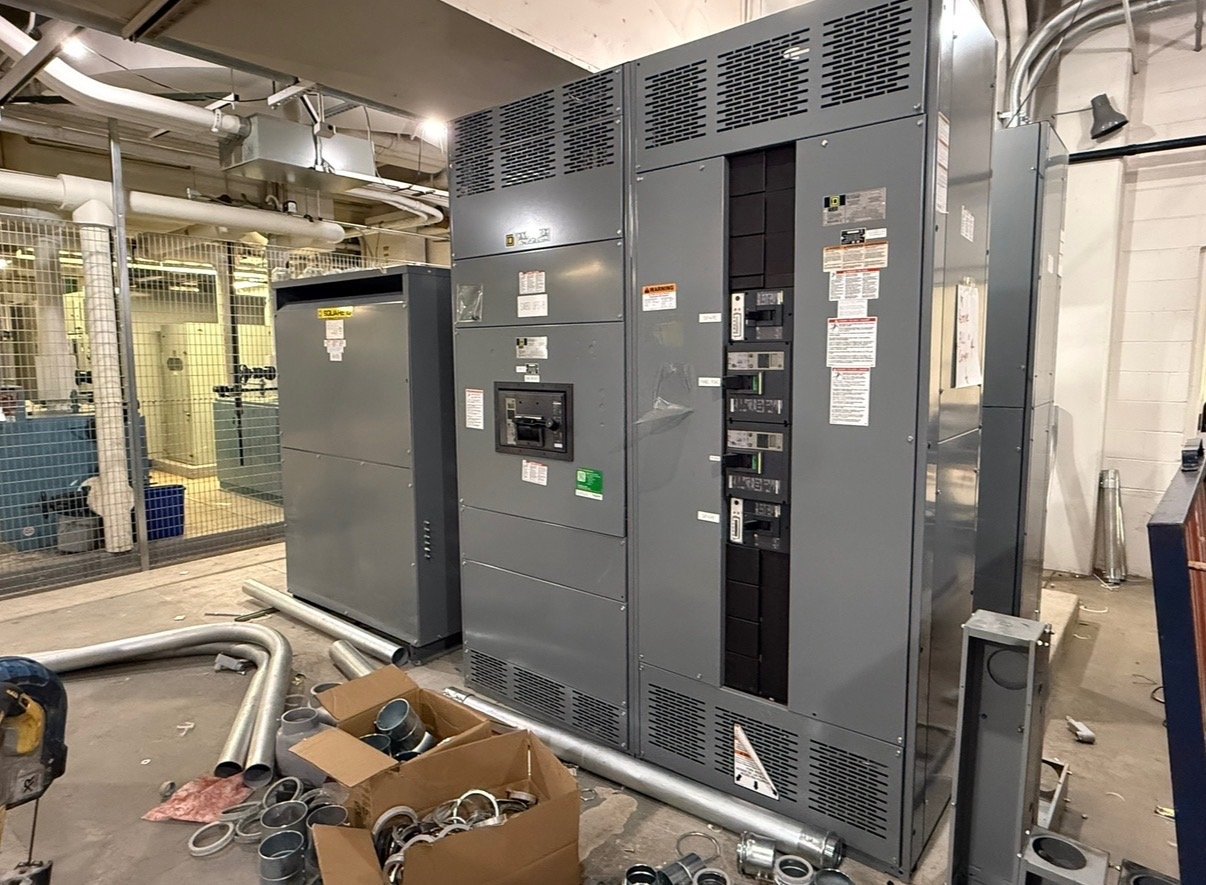
What an infrared survey can reveal
An infrared camera detects surface temperature patterns without contact. During a qualified inspection, the technician compares similar phases, connections and components under comparable operating conditions. A localized hot area may point to increased electrical resistance, an overloaded component, uneven phase loading, restricted cooling or another condition that merits investigation. The image identifies a thermal difference; it does not establish the root cause.
Useful findings depend on context. A small temperature difference can matter at a critical connection, while a warmer component may be operating as designed or reflecting its material and geometry. Emissivity, reflected heat, camera angle, enclosure openings and viewing distance affect readings. Thermograms should be interpreted alongside visible-light images, equipment labels, circuit information and operating data.
Load and timing shape the results
Inspection is most informative when equipment is carrying a representative, stable operating load. A lightly loaded switchboard may show little evidence of a connection problem that becomes apparent during higher demand. Load conditions should be recorded by phase and, where available, by feeder or major circuit so that temperature patterns can be evaluated in context rather than treated as standalone numbers.
Plan the survey for a period that reflects ordinary facility operation, and note unusual conditions such as temporary generators, recently transferred loads, seasonal production changes or recently energized equipment. A snapshot cannot predict behavior under every future load. If operating demand changes materially after inspection, discuss whether repeat imaging at a more representative condition is appropriate.
Safe access is a prerequisite
Infrared work around energized equipment requires qualified personnel, an approved work plan and controls suited to the installation and site rules. The inspection method may involve viewing through a purpose-designed infrared window or another approved access arrangement. Opening an enclosure can change the exposure and hazard conditions; it should never be treated as a routine shortcut. Only authorized, qualified personnel should determine access, boundaries and required protective measures.
Before scheduling, clarify which gear can be viewed without altering its normal configuration, whether infrared windows are present and usable, and what site procedures govern access. If a safe viewing condition cannot be established, the affected area should not be inspected by an improvised method. Coordinate the work with facility operations and the electrical safety program, including any outage or switching needs identified by qualified personnel.
Prepare useful inspection records
Gather one-line diagrams, equipment schedules, prior thermograms, maintenance findings and known load information when available. Identify the equipment sections, lineup names and circuits in scope, including any critical loads or recurring concerns. Clear identification helps connect an image to the correct phase and component and makes later comparison more useful. Records should distinguish observed temperatures from interpretations and recommendations.
For a new switchgear project, consider how future inspection access will work during design and procurement. Ask about the intended inspection approach, enclosure provisions, labeling, documentation and the equipment configuration needed for the facility’s maintenance program. For UL 891 switchboard assemblies, that standard applies to switchboards; it does not establish inspection conditions or cover medium- and high-voltage switchgear. Confirm the applicable equipment scope with the project engineer.
Turn observations into decisions
A thermal anomaly should trigger review, not an automatic repair instruction. The responsible electrical professional can compare readings with load, phase balance, component type, equipment history and visual evidence, then determine whether additional testing, controlled de-energization or corrective work is warranted. Loose or deteriorated connections, contamination, component aging and load issues require different responses. Do not touch, adjust or energize equipment based on a camera image alone.
Inspection reports are most actionable when they identify equipment and location, document operating conditions, include clear images, rank findings by stated criteria and explain limitations. Agree in advance on how urgent observations will be communicated, who receives the report and who has authority to assess follow-up. Preserve baseline images and records so future surveys can be compared under similar load and viewing conditions.
Plan scope, supply and handoff
For a quote or a new equipment discussion, share the equipment type and voltage class, lineup or switchboard scope, drawings if available, operating-load expectations, access method, prior findings, site safety requirements and desired inspection or delivery window. For manufacturer-built new equipment, also provide configuration, component and documentation requirements. Scope, availability and schedule are confirmed for each order; inspection findings cannot be promised before conditions are evaluated.
Georgia delivery can be coordinated with the project schedule, receiving hours, unloading arrangements and any site restrictions, with exact shipping timing confirmed for the order. After inspection, hand off the report to the facility’s qualified electrical lead and project engineer, then document agreed actions and any conditions that require reinspection. Start by defining the equipment and expected load, and confirm that safe viewing access can be established before setting the survey date.