Check coverage without assuming a local office
A search result that appears close to your Georgia project does not establish that a supplier has a local office, warehouse, service crew, or equipment available nearby. Confirm what the manufacturer actually provides for your order: equipment design and build coordination, shipment to the specified destination, and the information your team needs to receive and plan the assembly. Ask which responsibilities remain with your electrical contractor, engineer, or site team.
Coverage also depends on the project’s location and delivery conditions, not just the state name. Share the installation address or project area, site access constraints, receiving hours, and any restrictions on truck or unloading access. A manufacturer can then assess the delivery request for that destination; the route, shipment arrangement, and timing must be confirmed for the individual order.
Match the request to the equipment scope
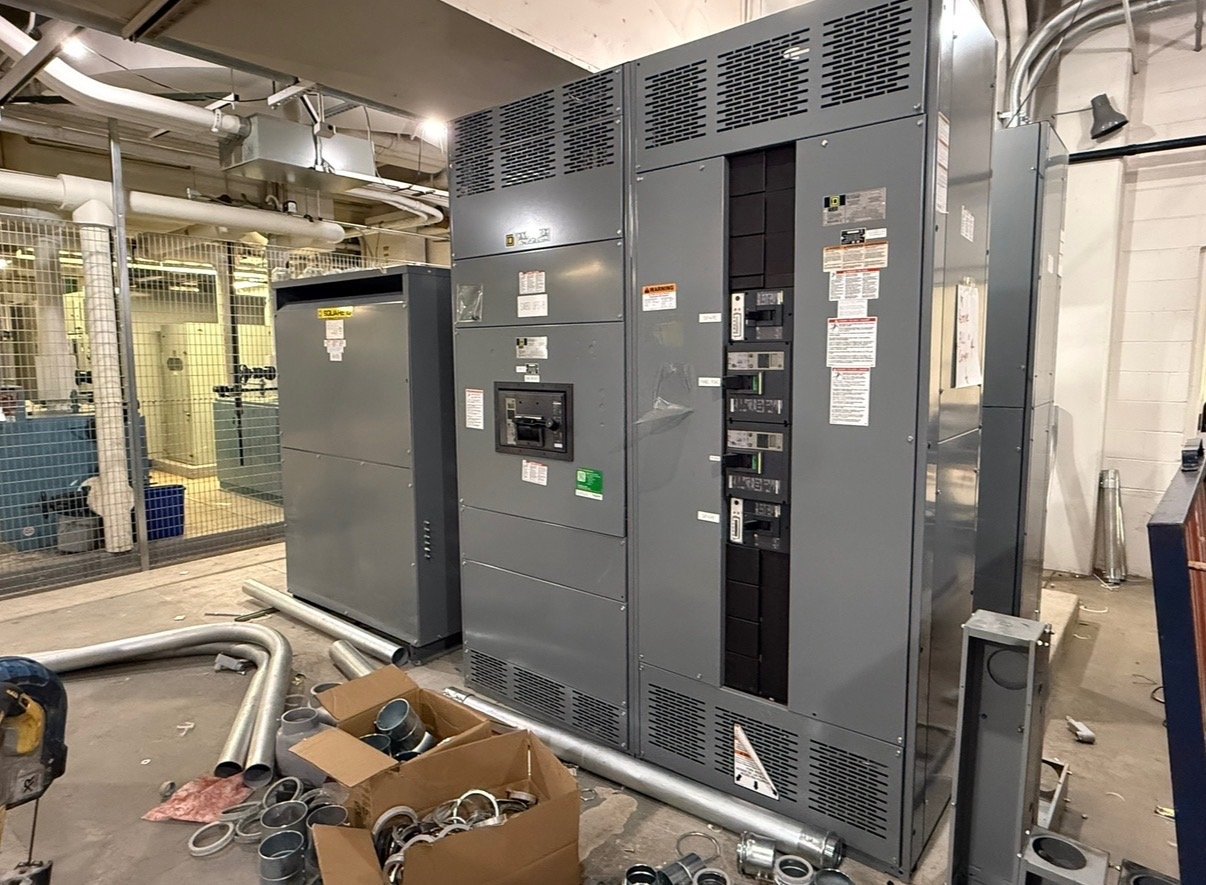
Before comparing suppliers, define what you need manufactured. Identify whether the project calls for a low-voltage switchboard assembly, switchgear, or another distribution arrangement, and provide the one-line diagram, system voltage, phase, frequency, and available fault-current information when established. Include the service or feeder arrangement, main and branch device requirements, and any metering or control features shown in the design documents.
For a switchboard specified to UL 891, state that requirement explicitly and identify the assembly boundaries covered by the project specification. UL 891 applies to switchboards; it should not be treated as a blanket listing for medium- or high-voltage switchgear. If the documents use “switchgear” broadly, ask the project engineer to clarify the intended equipment type, standard, and required documentation before requesting a firm configuration.
Ask how custom configuration affects delivery
A custom-built assembly may need to coordinate with existing gear, room dimensions, cable entry, bus arrangement, access clearances, or a planned shutdown. Send the latest approved drawings if available, and flag dimensions or interfaces that are still preliminary. Confirm which items the manufacturer will review, which decisions require the engineer of record, and what drawing review or approval steps must occur before fabrication can proceed.
Do not rely on a general statement about short lead times as a project schedule. Ask for the expected sequence for your specified configuration, including design information needed, approval milestones, manufacturing assumptions, and the point at which a delivery window can be confirmed. Component availability, engineering changes, and incomplete submittals can affect timing, so document the assumptions and obtain order-specific dates rather than planning around an unverified estimate.
Plan shipment to the Georgia site
Delivery planning should account for the site’s ability to receive the equipment. Determine who will accept the shipment, whether unloading equipment or a rigging contractor is required, where the truck can stop, and whether the assembly must arrive in a particular sequence. Share gate instructions, appointment requirements, dock or laydown details, and any limits on delivery hours before the shipment is arranged.
Ask how the equipment will be prepared for transport, what shipment information will be provided, and how the order’s packaging and handling needs will be communicated. Coordinate delivery with the electrical contractor and site superintendent so the receiving area is ready and the equipment can be moved to its intended location. Nationwide shipping supports Georgia projects, but freight method, shipment timing, and site-specific arrangements are confirmed for each order.
Make supplier comparisons on clear terms
A useful comparison looks beyond the quoted equipment price. Check whether each proposal addresses the same electrical ratings, lineup arrangement, device types, enclosure requirements, metering, accessories, and documentation. List exclusions and unresolved items, and ask how substitutions or changes will be reviewed. American-made components may be available for the specified build, but component selection and availability should be confirmed rather than assumed from a general statement.
Clarify who owns each project handoff. Identify the person responsible for technical questions, drawing approvals, purchase-order changes, shipment coordination, and receipt at the site. Confirm what is included in the manufacturer’s scope and what must be provided by the project engineer, contractor, or owner. This prevents a delivery quote from being mistaken for installation, commissioning, or field service coverage.
Prepare a complete quote request
For a practical quote, provide the project location, requested delivery window, one-line diagram, equipment schedule, applicable specifications, required standards, and available fault-current data. Add the intended equipment type, voltage and current requirements, main and feeder details, enclosure and environmental needs, cable entry preferences, metering or control requirements, and any physical or interface constraints. Mark unknown values clearly instead of filling gaps with assumptions.
Include the project stage, approval path, receiving contact role, site access conditions, and any required submittal or documentation milestones. Ask the manufacturer to identify open technical questions, confirm the proposed equipment scope, and state which schedule and shipping details remain subject to order review. With those details assembled, Georgia buyers can evaluate coverage and delivery on the facts of their project before placing an order.