Two ratings answer different questions
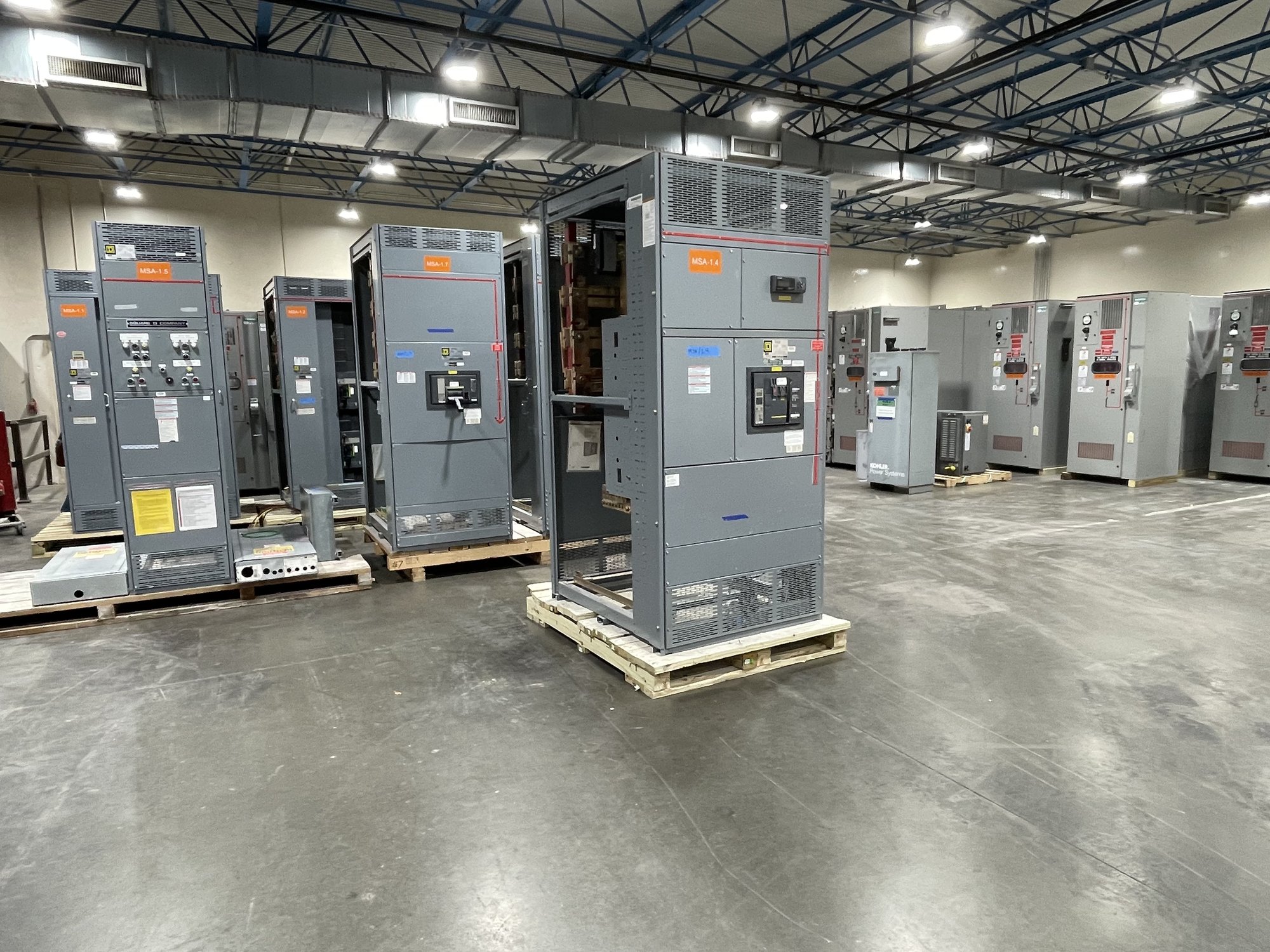
An assembly short-circuit withstand rating describes the fault-current stress the assembled switchboard is designed and verified to endure under stated conditions. It concerns the equipment as a system, including its bus structure, supports, connections, and other construction details. The rating must be interpreted with its applicable voltage, duration, and test or evaluation basis; it is not a general measure of how much current every component can interrupt.
A device interrupting rating applies to a circuit breaker or other interrupting device. It indicates the fault current that device can interrupt at specified conditions. A switchboard may have a stated assembly withstand capability while individual breakers have their own interrupting ratings. Both must be appropriate to the application, but one cannot substitute for the other or establish the other by itself.
Understand short-time current and duration
A short-time rating expresses an assembly’s ability to carry a specified fault current for a defined interval without unacceptable damage, where the design and applicable evaluation support that rating. The time element matters: a current value without duration is incomplete for this purpose. Short-time capability can be relevant when protective coordination relies on intentional delay, such as allowing a downstream device time to clear a fault before an upstream breaker trips.
Do not assume that every switchboard assembly or breaker has a short-time rating suitable for a delayed trip scheme. Confirm the rating, duration, device settings, and permitted configuration together. The engineer responsible for the system should determine whether the proposed coordination approach is appropriate and verify that any required withstand capability is documented for the exact assembly and arrangement.
Compare fault duty with equipment capability
The available fault current at the switchboard location is a key design input. It depends on the source and system conditions, including utility contribution, transformer characteristics, conductor impedance, and other connected sources where applicable. The project engineer should establish the calculated value and operating conditions for the point of connection, then compare that duty with the proposed assembly and the interrupting ratings of devices that may clear the fault.
A breaker’s interrupting rating should be checked at the system voltage and against the applicable available fault current, using the device’s documented conditions. Likewise, assembly withstand capability must be verified for the proposed switchboard construction and arrangement. A higher number on one component does not automatically resolve a mismatch elsewhere; engineering review must consider the complete protective scheme and equipment configuration.
Specify the basis, not just a number
For a useful quotation, share the nominal system voltage, phase and wire arrangement, calculated available fault current at the equipment terminals, and the source or study basis for that value. Identify the required assembly withstand or short-time current and duration, if established by the design, and provide the intended protective-device types, ratings, and coordination requirements. Include drawings or a one-line diagram when available so the requested configuration can be reviewed in context.
Also identify any project requirements that affect construction, such as main and feeder arrangement, service conditions, metering, incoming conductor details, or specified devices. These details help distinguish the assembly requirement from individual breaker requirements and reveal where a requested rating depends on a particular arrangement. If fault-current data or duration is still being developed, flag that clearly rather than treating an unconfirmed value as final.
Keep standards and scope precise
UL 891 applies to switchboard assemblies; it is not a blanket listing for medium- or high-voltage switchgear, nor does the standard alone establish that a particular project’s fault duty is acceptable. For a UL 891 switchboard request, confirm the required assembly scope and supporting documentation for the offered configuration. Device markings and documentation remain important because assembly-level information does not replace each breaker’s interrupting rating.
Final suitability depends on the actual design, fault study, protective-device selection, and applicable authority review. Do not infer approval from a rating copied from another project or from a similar-looking assembly. The manufacturer can confirm the scope, configuration, and available documentation for the proposed new equipment; the project’s qualified electrical engineer and relevant authorities determine whether it meets the application’s requirements.
Coordinate submittals and Georgia delivery
Resolve rating questions before releasing drawings for approval or locking the equipment schedule. The project handoff should identify the confirmed fault-current basis, assembly rating and duration where applicable, device interrupting ratings, and any coordination assumptions. If the engineering study changes, communicate the revision promptly so the equipment configuration and documentation can be checked against the updated requirements before manufacture.
For Georgia projects, provide the delivery location, requested on-site date, receiving constraints, and any sequencing needs with the equipment inquiry. Nationwide shipping can support delivery to the project, while exact configuration, availability, and timeline are confirmed for each order. Before requesting a quote, gather the one-line diagram, fault-study value and basis, voltage, desired device arrangement, and rating-duration requirements; that gives the manufacturer and project engineer a clear starting point for reviewing the assembly and its interrupting devices.