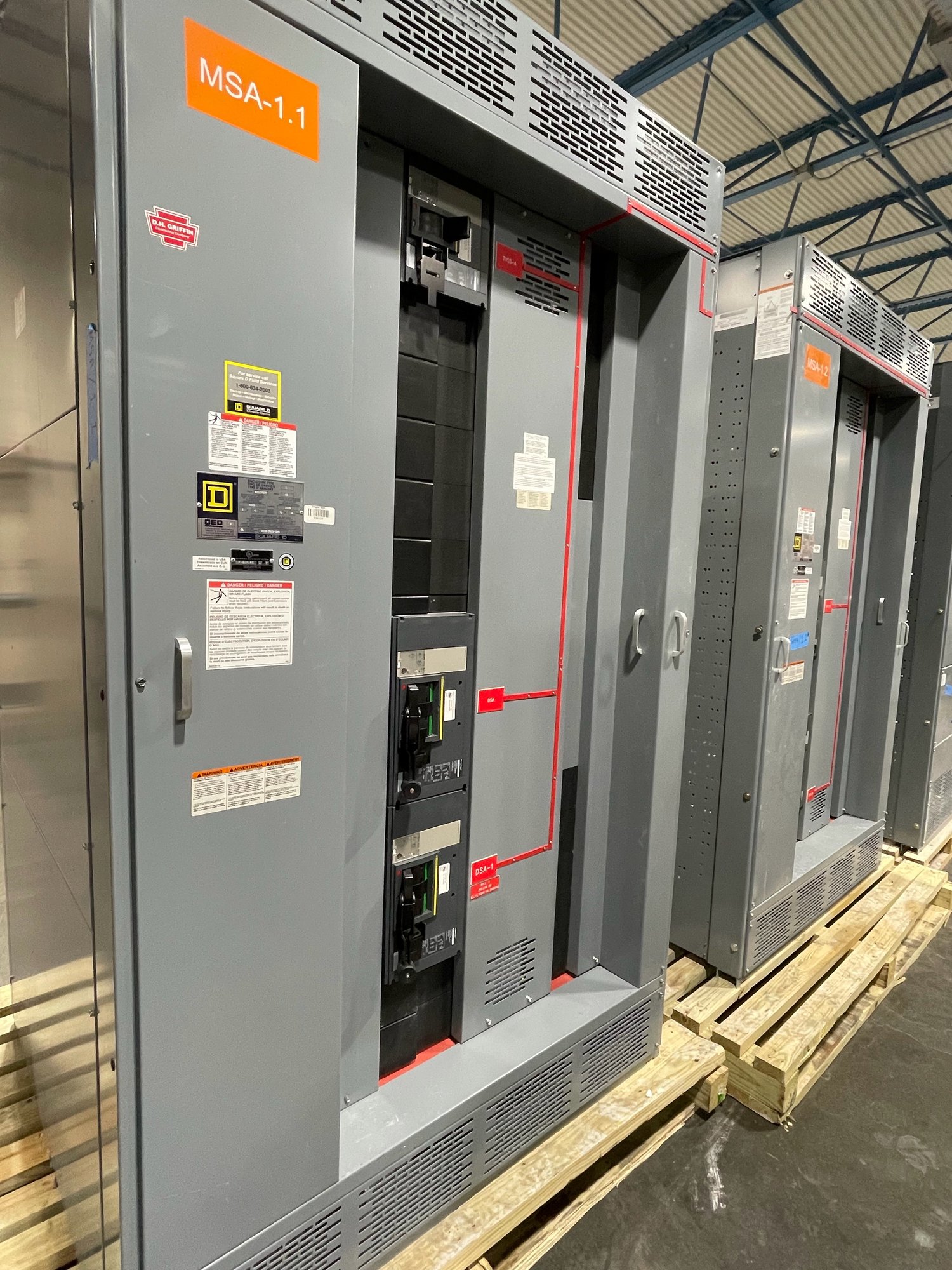
What the assembly rating means
Short-circuit current rating, or SCCR, identifies the short-circuit current an electrical assembly is rated to withstand or interrupt under specified conditions. For a switchboard, the applicable rating belongs to the assembly as configured and evaluated, not automatically to its highest-rated component. A breaker’s interrupting rating, a bus rating, and a switchboard SCCR describe different things; one does not establish the others.
The available fault current at the switchboard’s installation point is a key design input. The specified assembly rating must be suitable for that condition, with the applicable system voltage and configuration considered. The engineer of record and authority having jurisdiction determine the project requirements and review the proposed application. A manufacturer can use the supplied design information to develop a configuration for review, but should not assume the site fault current or declare a design compliant without that review.
Why component labels are not enough
A switchboard contains interacting parts: protective devices, bus, supports, joints, enclosures, and, where applicable, feeder sections or other equipment. The assembly rating depends on the combination and arrangement of those parts and the conditions under which the design is evaluated. A component marked with a high interrupting rating does not by itself prove that the complete switchboard has the same SCCR.
Protective-device type and placement can matter, as can upstream current-limiting devices and any conditions tied to an evaluated combination. Do not assume that substituting a breaker, changing its frame or trip unit, moving a device, or altering the lineup preserves the original rating. Any proposed change should be checked against the manufacturer’s documentation and the project’s engineering requirements before it is accepted or built.
Check the complete configuration
Start with the assembly nameplate and the manufacturer’s documentation for the exact switchboard configuration. Verify that the stated SCCR applies to the complete assembly at the relevant voltage, and compare it with the available fault-current information for the installation point. Review the specified main and feeder devices, bus arrangement, section layout, and any documented conditions that qualify the rating. Do not infer an assembly rating from a parts list alone.
For a new design, ask the manufacturer to identify the SCCR for the proposed configuration and provide the supporting documentation needed for engineering review. Confirm whether the rating depends on a particular protective device, upstream device, or other stated condition. If the project documents call for a rating that cannot be established for the proposed arrangement, resolve the difference before release rather than relying on an informal assumption or a component substitution.
Questions to settle during specification
Before requesting a quote, share the system voltage, available fault current at the switchboard, source and transformer information available to the design team, and the required assembly SCCR. Include the one-line diagram, service or feeder arrangement, main-device preference, feeder-device schedule, and any specified protective-device combinations. Note whether the project requires documentation or review at a particular design milestone.
Also identify the intended lineup, incoming and outgoing orientation, section constraints, and any planned coordination with upstream protection. If fault-current data is pending, say so and identify who will provide it and when; do not present an estimate as a confirmed value. These details help establish whether the requested rating fits the actual configuration and show which questions must be closed before final drawings or production approval.
Manage changes and project handoff
Keep the SCCR requirement visible through submittal review, procurement, and installation planning. Compare approved drawings and device schedules with the ordered assembly, then confirm the delivered nameplate and documentation match the released configuration. If field conditions, protective-device selections, or fault-current calculations change, route the revision to the responsible engineer and manufacturer for review before treating the original rating as applicable.
For Georgia projects, delivery planning should connect the approved design and release documents with the receiving site’s access, unloading arrangements, and installation sequence. Nationwide shipping can support projects across the state, but the order’s scope, availability, and timeline are confirmed for that specific configuration. Do not let a delivery or schedule change prompt an undocumented equipment substitution that could affect the assembly rating.
Make the rating a documented decision
A useful handoff records the required SCCR, the available fault current used for design, the applicable system voltage, and the exact switchboard configuration reviewed. Keep the manufacturer’s rating documentation with approved drawings and the final device schedule. That record gives the engineering, purchasing, installation, and inspection teams a common reference and makes later changes easier to identify and evaluate.
For a new switchboard quote, provide the one-line diagram, confirmed or pending fault-current data, required SCCR, device schedule, and layout constraints, then ask for the rating of the complete proposed assembly and any conditions attached to it. Have the engineer of record and applicable authority review the design before release. Resolve discrepancies before ordering or changing components; this is the practical way to keep the specified rating tied to the equipment that reaches the Georgia project.