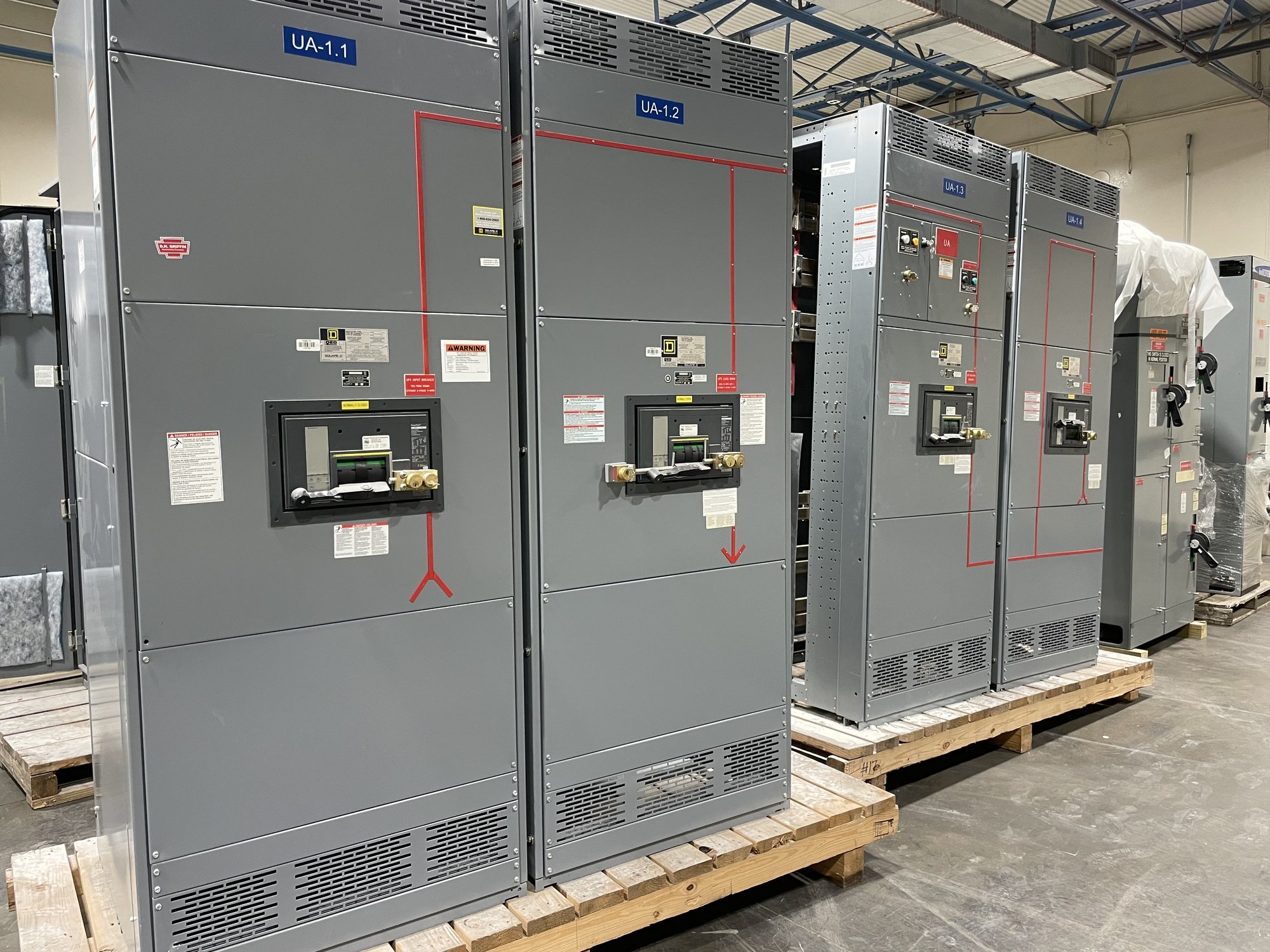
Match the rating to available fault current
A circuit breaker’s interrupting rating is the maximum fault current it is designed to interrupt under stated conditions. Available fault current is the prospective current the electrical system could deliver at the breaker’s location during a short circuit. The breaker’s applicable rating must be at least as high as the available fault current determined for that point. A rating adequate at one location may not be adequate at another, even within the same facility.
Do not select a breaker based only on its ampere rating or on a value copied from an older drawing. Interrupting capability and continuous-current capacity answer different questions. The available-fault-current calculation depends on the actual electrical system, including utility supply, transformer characteristics, conductor impedance, and connected sources. Qualified electrical professionals should establish the design basis and verify the selection against applicable project requirements.
Establish the calculation point and system conditions
The relevant comparison is made at the breaker’s installed point, using the project’s defined operating configuration. For a service switchboard, that may be near the incoming source; a downstream distribution point can have a different available fault current because of intervening transformers and conductors. Multiple utility feeds, generators, parallel transformers, or other sources can change the calculation. Identify which sources may operate together rather than assuming the normal configuration is the only one that matters.
Ask the engineer of record for the calculated fault current, the calculation location, and the assumptions behind the value. Confirm whether the study considers maximum source contribution and relevant system configurations. If the service, transformer, feeder length, or generation plan is still changing, treat the fault-current result as provisional. A changed source or impedance can alter the breaker requirement and may affect the switchboard design.
Read ratings in the context of the assembly
Review the exact breaker and equipment arrangement, not just a catalog description. Voltage class, breaker type, poles, frame, trip unit, and the assembly’s documented configuration can affect what rating applies. A rating stated at one voltage must not be assumed to apply at another. Confirm the nameplate and manufacturer documentation for the specific selection, and have the responsible engineer check that the proposed equipment matches the approved one-line diagram and specifications.
Series-rated combinations require particular care. In some applications, a tested and documented combination of upstream and downstream overcurrent devices can provide a system rating different from the individual downstream breaker’s standalone interrupting rating. This is not a general permission to pair devices or infer a higher rating from a larger upstream breaker. The exact combination, conditions, labeling, and applicable requirements must be verified by qualified design personnel.
Resolve gaps before equipment is released
If the available fault current exceeds the breaker’s applicable interrupting rating, do not treat the mismatch as a paperwork issue. The design team must determine an acceptable solution, which may involve selecting equipment with a sufficient rating or revising the system design. Any change can affect enclosure configuration, device coordination, dimensions, connections, cost, and schedule. Equipment should not be released on an assumed future correction or an unverified interpretation of a rating.
Procurement should compare submittals against the same engineering basis used for the project, including the system voltage and fault-current value at each relevant location. Flag missing calculations, inconsistent one-line diagrams, or unclear series-rating documentation before approval. UL 891 applies to switchboard assemblies; it is not a blanket interrupting-rating determination for every breaker or a listing for medium- or high-voltage switchgear. Confirm the applicable equipment documentation and scope for the specified assembly.
Provide the right information for a quote
For a new switchboard quotation, share the one-line diagram, system voltage and phase, calculated available fault current at the equipment, and the study date or revision. Include source and transformer data when available, breaker quantities and functions, ampere and trip requirements, incoming and outgoing connection details, and any specified series-rated combinations. Identify the required UL 891 scope, enclosure and installation conditions, and project submittal requirements. These details help clarify the intended configuration without substituting for engineering approval.
For projects in Georgia, provide the delivery location, receiving constraints, requested delivery window, and any sequencing needs alongside the technical package. We manufacture and build new switchgear in the United States, with custom configurations and nationwide shipping; exact component availability, scope, and timeline are confirmed for each order. Keep the electrical engineer, contractor, procurement team, and equipment supplier aligned when a fault-current study or source configuration changes.
Close the handoff with verified documents
Before final release, confirm that the approved drawings, breaker schedule, and equipment submittal show the same voltage, fault-current basis, device selection, and configuration. Record the source assumptions and calculation revision so later changes can be evaluated against the original selection. At installation and commissioning, qualified personnel should follow the approved documents and applicable procedures; any discrepancy between installed conditions and the design basis should be referred to the responsible engineer before energization.
Start with the fault-current value at the breaker’s actual location, then verify the specific breaker rating and assembly documentation against it. If that value is unavailable, changing, or inconsistent across project documents, resolve the discrepancy before approving the equipment for production. Send the current one-line diagram, study information, and delivery requirements with the RFQ so the proposed new switchboard can be scoped against a clear engineering basis.