Start with the project conditions
A useful quote begins with the application, not a guessed equipment lineup. Identify the building or process served, whether the work is new construction or a replacement, the project stage, and the intended equipment location. Explain what the switchgear must connect to and what equipment or loads it will serve. These details help clarify whether the request is for a switchboard assembly, another type of switchgear, or a coordinated equipment package.
Share the project’s electrical one-line diagram and equipment schedule when available, along with the specified voltage, phase, frequency, and system grounding arrangement. Include available fault-current information, main and feeder requirements, and any required metering or protective devices. If design information is incomplete, identify what is confirmed and what remains under engineering review. Do not substitute assumptions for values that must come from the project engineer or utility.
Resolve configuration questions early
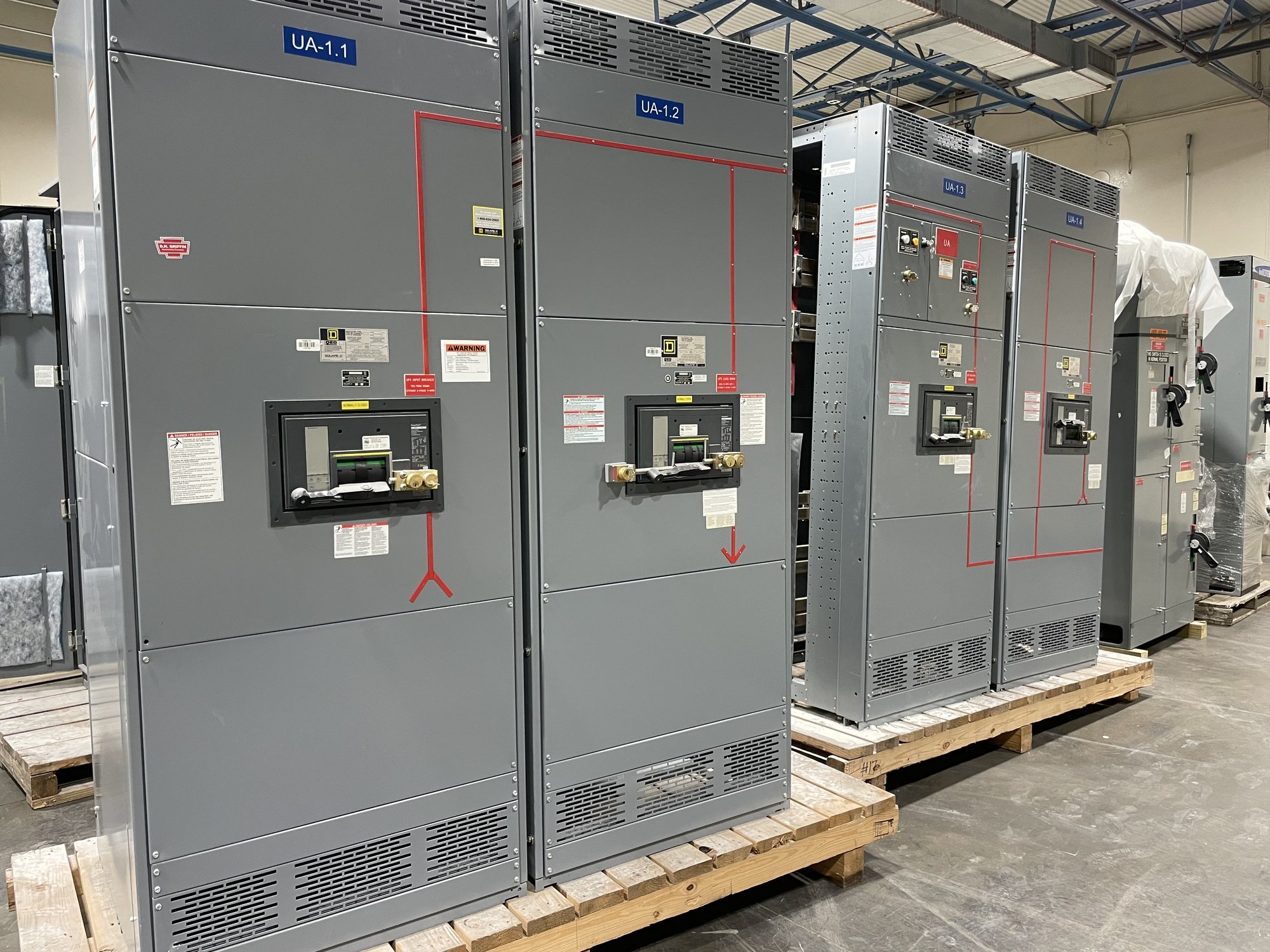
Switchboard layout depends on more than amperage. Clarify the number and type of incoming sources, whether transfer equipment or tie provisions are required, and how many feeder ways the design calls for. Note breaker types and frame requirements only when they are specified, and identify future provisions, spare spaces, or expansion needs. Confirm the intended room arrangement and access requirements so the proposed sections can be evaluated against the project layout.
For a UL 891 switchboard assembly, state that the project specification calls for this standard and share the relevant design documents. UL 891 applies to switchboards; it should not be treated as a blanket listing for medium- or high-voltage switchgear. If the project requires equipment outside a switchboard scope, provide the applicable specifications and ask for the proposed scope to be identified clearly. Final construction details depend on engineering review and the order’s confirmed requirements.
Coordinate engineering and procurement
Engineering teams should identify governing drawings, division of responsibility, and the review process for submittals. Confirm who will provide utility data, protective-device settings, short-circuit or coordination studies, and final approval of the equipment design. Where project documents conflict, record the discrepancy for resolution rather than silently choosing one requirement. The manufacturer can build to an agreed scope, but project design decisions and acceptance remain subject to the responsible engineers and authorities having jurisdiction.
Purchasing teams can make the quote easier to compare by separating required features from preferences and listing approved substitutions or prohibited alternatives. Share the specification revision, drawing dates, requested submittal milestones, and any procurement conditions that affect release. Ask which assumptions, exclusions, and open technical items appear in the proposal. American-made components and custom-built configurations may be considered as part of the requested scope, but component availability and exact construction are confirmed for each order.
Plan delivery to the Sandy Springs site
Georgia delivery planning should account for the actual receiving location and how equipment will move from the delivery point to its final position. Provide the site address, receiving hours, unloading arrangements, access restrictions, dock or grade conditions, and any limits on truck size or delivery timing. Note whether the equipment must pass through gates, corridors, or door openings, and share dimensional constraints early. The project team should verify the route and handling plan against the selected configuration.
Coordinate delivery with construction sequencing, room readiness, and electrical contractor availability. Identify whether the space will be dry, accessible, and prepared to receive the equipment, and establish who will inspect the shipment and manage storage if installation cannot begin immediately. Nationwide shipping supports projects in Sandy Springs, but route, carrier arrangements, shipment details, and timing depend on the order and destination. Confirm these items during order planning rather than relying on an assumed delivery window.
Prepare a complete quote request
A practical quote package includes the one-line diagram, equipment specifications, load or feeder schedule, site location, and requested quantity. Add known electrical ratings, enclosure or environmental requirements, dimensions, incoming and outgoing cable or bus arrangements, and required accessories. Include the current drawing revision and identify the decision-maker for technical questions. If documents are not ready, send a concise description of the application and list the details still being developed so the scope can be clarified.
Also state the target order-release date, requested submittal and delivery milestones, and any constraints tied to shutdowns or construction phases. Ask for the proposed equipment scope, open questions, and schedule assumptions to be made explicit. Lead times are confirmed for each configuration and order; they should not be inferred from a general estimate or another project. A complete, consistent request gives engineering and procurement a sound basis for reviewing options and planning the next project handoff.
Move from quote to project handoff
Before releasing an order, reconcile the proposal with the latest approved electrical documents and confirm that ratings, device functions, quantities, layout assumptions, and delivery destination match the project. Route technical submittals to the responsible engineer, and close out deviations in writing. Confirm which documents are needed for approval and production release, who will return them, and how revisions will be controlled. Clear ownership prevents an outdated schedule or drawing from becoming the basis for construction.
For a Sandy Springs project, assemble the latest design documents, site receiving details, procurement milestones, and unresolved technical questions into one quote package. Have the project engineer verify design inputs and the purchasing lead identify required commercial and delivery conditions. Request a written scope that records assumptions and open items, then use the agreed review process before release. This gives the project team a practical starting point for evaluating new switchgear and coordinating its delivery to the site.