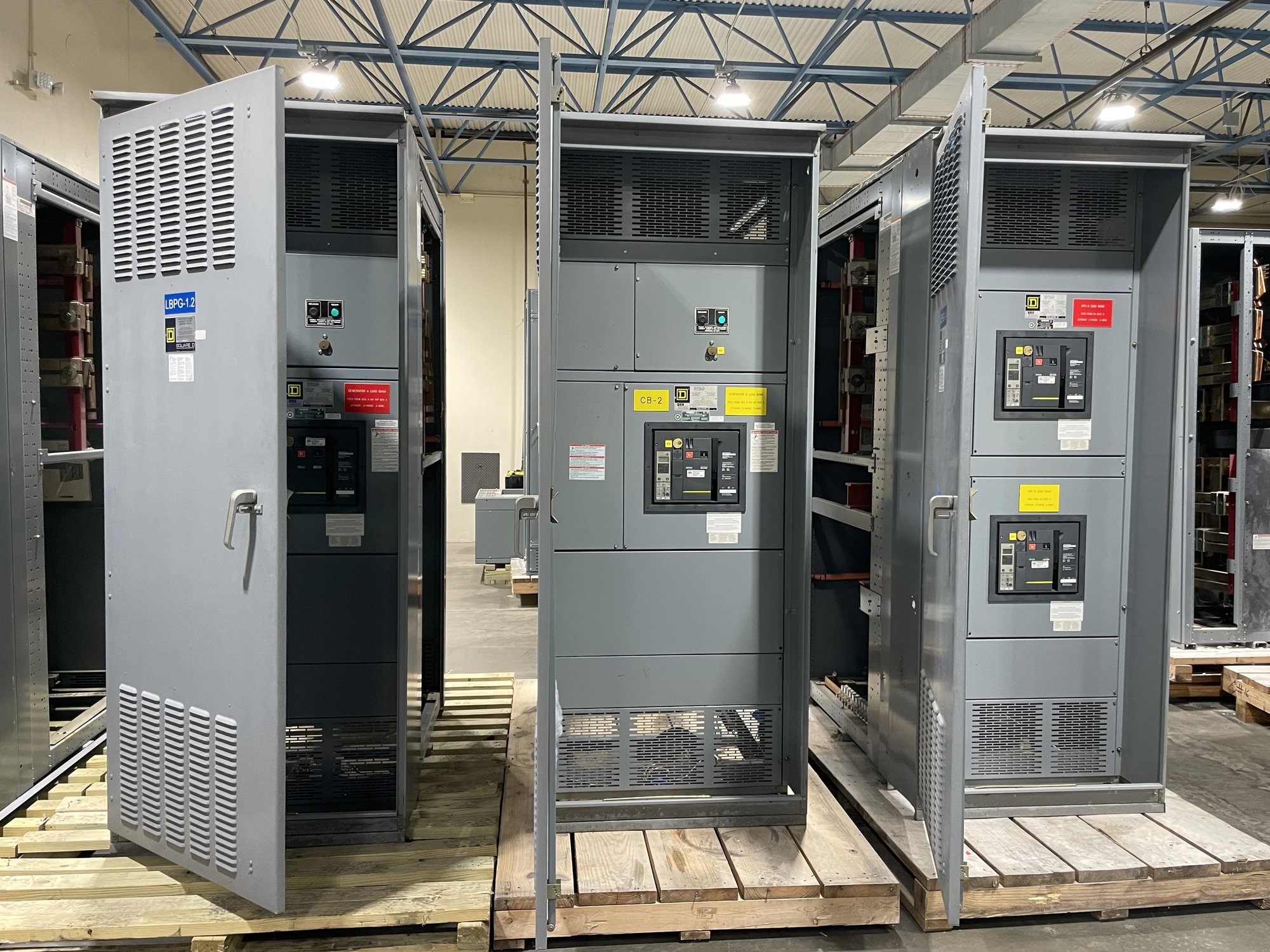
Define the project scope before selecting equipment
Start by identifying the equipment’s role in the facility: service entrance, distribution, a replacement lineup, or a new building or process area. Share the one-line diagram or a preliminary electrical drawing if available, along with the system voltage, phase, frequency, available fault-current information and the intended source and load arrangement. These details help establish the configuration to evaluate; they do not substitute for the project engineer’s design decisions.
Clarify whether the request is for a switchboard assembly or another type of switchgear. UL 891 applies to switchboard assemblies, not as a blanket listing for medium- or high-voltage switchgear. The voltage class, application and governing project requirements determine what equipment is appropriate. If the scope is still developing, identify open design items so they can be addressed before a final configuration is specified.
Resolve layout and interface questions early
A useful quote request includes the desired lineup arrangement, incoming and outgoing connections, number and type of feeder devices, metering needs, control requirements and any specified protective devices. Include the electrical drawings, equipment schedules and specification sections that define these items. If a particular manufacturer, device type or construction detail is required, state that explicitly; otherwise, identify where the design permits alternatives for review.
Room constraints can shape the build. Provide available equipment width, height and depth, working-space and access constraints, cable-entry direction, conductor routing, housekeeping-pad information and the planned location of adjacent equipment. Note whether doors, corridors, elevators or loading areas limit movement. Final dimensions, clearances and installation arrangements must be checked by the project’s qualified design and installation professionals against site conditions and applicable authority requirements.
Coordinate engineering and procurement decisions
Before release, align the electrical design, procurement package and construction schedule. Confirm who will review submittals, resolve drawing comments, approve device and accessory selections, and authorize fabrication. Identify required project documents, including drawings, equipment schedules, specification revisions and any requested test or closeout documentation. A clear approval path reduces uncertainty when the design team, electrical contractor and purchasing manager are working from different document versions.
Budget and schedule decisions should reflect the equipment scope rather than an assumed standard package. Custom-built configurations can be developed around project requirements, while component availability and the requested arrangement affect what can be offered and when. We confirm exact scope, availability and timeline for each order. Share the required on-site date, the date equipment must be ready for installation and any dependencies, such as room completion or utility coordination, when requesting a quote.
Plan delivery to the Alpharetta site
Shipping to Alpharetta is part of the project plan, not a separate afterthought. Provide the complete delivery address, receiving contact or designated site representative, preferred delivery window and any carrier or site instructions. Describe access from the public road to the receiving point, including gate procedures, construction traffic limits, dock availability, unloading equipment and restrictions on vehicle size or delivery hours. These details help evaluate the appropriate shipment and handoff arrangements.
Confirm who can receive the equipment and where it should be staged before installation. Switchgear may arrive as one or more sections, so the project team should verify receiving access, storage conditions, protection from construction activity and the route to the final electrical room. Do not assume the shipment includes unloading, rigging, placement or installation. Establish those responsibilities with the project’s qualified contractor and coordinate delivery timing with site readiness.
Prepare a complete quote request
For a quote, provide the project name and Alpharetta delivery location, requested quantity, target schedule, one-line diagram, equipment specifications and the latest available layout. Include system and fault-current data, main and feeder requirements, enclosure or environmental conditions, metering and control needs, cable-entry preferences, and any mandated components or documents. When information is unknown, mark it as pending rather than guessing; the open items can then be identified for clarification.
Also state what is included in the requested scope and what remains with others, such as field wiring, installation, commissioning, protection coordination or site modifications. Identify the engineer or other authorized reviewer responsible for design approval and note any utility or authority review requirements. This distinction helps purchasing compare proposals on the same basis and gives the project team a clearer path from quote evaluation through approved submittals and delivery.
Move from quote to site handoff
Once the proposed scope is reviewed, reconcile the quotation against the project drawings and specifications before purchase authorization. Resolve differences in device counts, ratings, dimensions, accessories, documentation and delivery assumptions in writing. After authorization, keep the approved configuration and revision record aligned across engineering, procurement and construction so field teams are not working from superseded information.
To begin, assemble the latest electrical documents, equipment-room dimensions, delivery constraints and required dates, then identify any unresolved design questions. Submit those details with the requested configuration and quantity. This gives the project team a practical basis for evaluating new switchgear for its Alpharetta facility, confirming the order scope and coordinating a Georgia delivery with the site’s installation sequence.