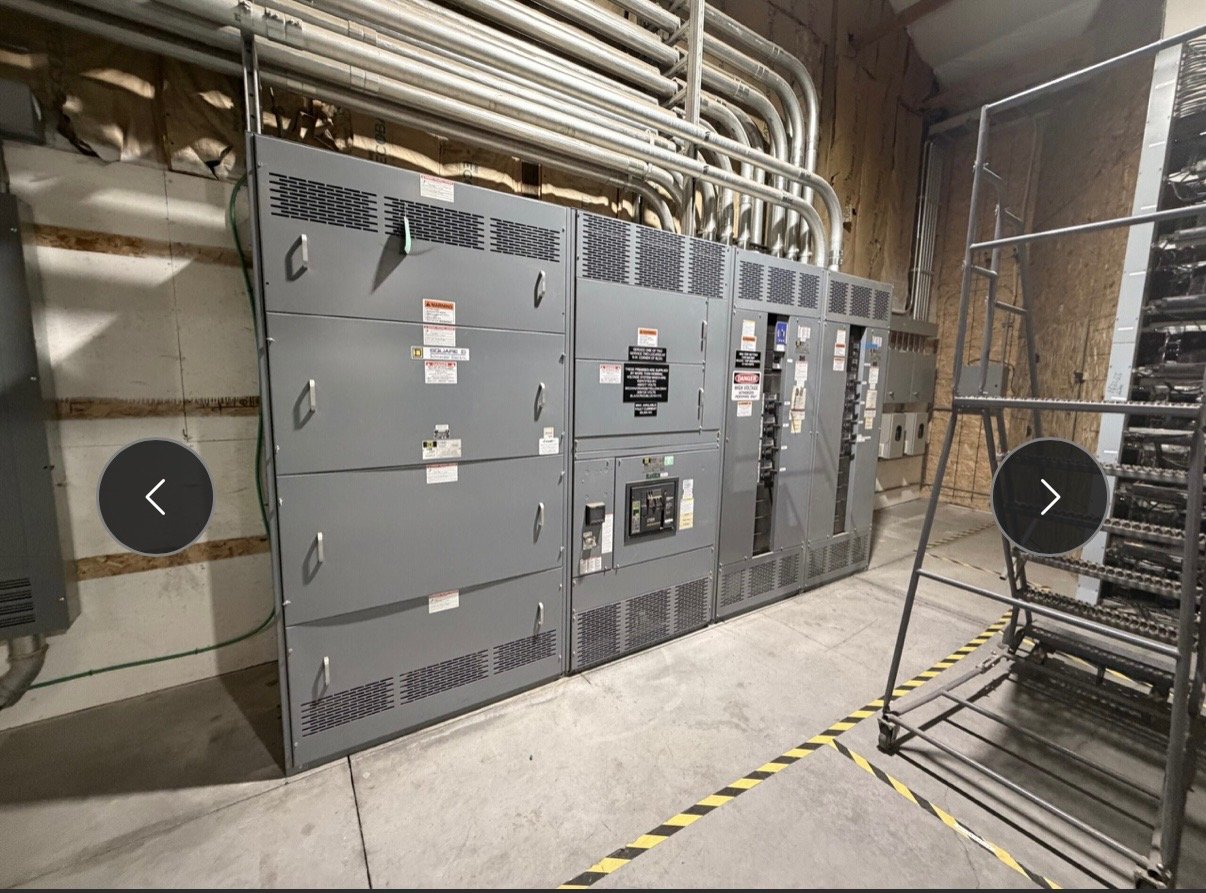
Translate redundancy targets into an equipment scope
Start by defining what redundancy means for the specific facility, not just naming a topology. Share the one-line diagram and identify the intended sources, distribution paths, normal operating arrangements and loads each path must serve. Clarify whether equipment needs to support maintenance isolation, planned transfers, or separation between concurrently maintainable sections. These decisions affect lineup divisions, bus arrangements, protective devices, controls and interconnections.
Switchgear alone does not establish end-to-end availability. Generator, UPS, transfer, cooling and downstream distribution designs also shape performance, and the project engineer must coordinate their interfaces. We can build to an approved equipment specification, but the owner’s engineering team and authority having jurisdiction determine the design basis, ratings, protection coordination and applicable approvals. Confirm each assembly’s scope and documentation before procurement.
Plan for data hall growth without guessing at future loads
Capacity growth may mean adding a data hall, increasing rack density, expanding power conversion equipment or using a staged utility and generation buildout. Each scenario creates different requirements for present bus capacity, future feeder provisions, lineup extension points and reserved space. Provide the project’s current load schedule and the basis for planned phases, including which future loads are defined and which remain estimates.
A future-ready configuration still has physical and electrical limits. Available floor area, access routes, working clearances, cable entry, heat management and the sequence for installing later sections can constrain expansion. Ask the design team to identify the intended final arrangement and what can be installed during each phase. We will confirm whether requested provisions fit the specified assembly and site interface rather than assume that unused spaces or spare capacity are available.
Set ratings and protection from project data
For a quote, provide system voltage, frequency, bus and feeder requirements, available fault current, grounding method and the required short-circuit and withstand ratings. Include protective device types, trip functions, metering, control power and any communications or monitoring interfaces. If the utility contribution, transformer data or generator operating conditions are still being finalized, identify the open items and who will supply the approved values.
Redundant paths can create operating states that change fault exposure, including tie positions and multiple sources in parallel. Protection settings and interlocks therefore need review against the actual operating sequence and coordination study. UL 891 applies to switchboard assemblies; it is not a blanket listing for medium- or high-voltage switchgear. State the equipment class and required standards for each lineup so the scope is clear and properly reviewed.
Resolve layout, interfaces and phasing early
Data center electrical rooms are often coordinated with structural, architectural, mechanical and cable-routing plans. Share equipment-room dimensions, doorway and turning constraints, floor loading information, cable approach, top or bottom entry preferences, and the locations of adjacent equipment. Confirm whether the lineup must connect to transformers, generators, UPS equipment, busway or other assemblies, and define responsibility for each connection and control interface.
For phased construction, identify the delivery and installation sequence, required lineup breaks, future tie-in locations and the boundary between current work and later work. A configuration that fits the initial room may not fit the completed arrangement or the route to the room. Review approved drawings, access constraints and interface schedules before release for manufacture; engineering changes after release can affect configuration and timing.
Coordinate procurement and Georgia delivery
Procurement teams can reduce uncertainty by issuing a consistent package: approved one-line diagrams, equipment schedules, specifications, site plans, interface points, requested submittals and the target delivery window. Note required deviations, preferred manufacturers or components, spare-device expectations and any owner standards. We use American-made components where specified and can build custom configurations; exact component availability, scope and schedule are confirmed for each order.
We ship new equipment nationwide, including to project sites in Georgia. For Alpharetta delivery planning, share the receiving address, site access and unloading arrangements, delivery restrictions, storage conditions and the construction phase that will accept the equipment. The project team should coordinate receiving, movement into the electrical room and installation with qualified personnel. Delivery timing and logistics depend on the confirmed order and site requirements.
Prepare a quote package that supports a clean handoff
A useful request identifies the project phase, equipment quantity and voltage class, required lineup functions, electrical ratings, enclosure and environmental conditions, protective and metering devices, controls, communications, and required drawings or test documentation. Attach current one-lines and schedules, then list unresolved engineering questions separately. Include the planned release date and requested ship window, while recognizing that the final schedule depends on the confirmed scope and component availability.
Before authorization, align the owner, engineer, contractor and procurement team on the approved configuration, responsibility for settings and coordination, site interfaces, submittal review and change control. Send the current project documents and note the redundancy objective, planned growth phases, site constraints and delivery assumptions. That gives us a practical basis to confirm an equipment scope and quote for the Alpharetta data center.