Establish the governing project criteria
Start with the project’s adopted building code, referenced standards, owner criteria and authority requirements. The applicable seismic design category or other specified basis is only part of the picture; the project engineer should identify the required design parameters and how they apply to electrical equipment. Requirements can differ by facility, system importance, occupancy, site classification and governing jurisdiction, so a Georgia location alone does not establish the design basis.
For a quotation, provide the project specification and relevant structural or electrical criteria, including the stated seismic parameters, equipment importance factor where applicable, and any required performance or qualification language. Identify whether the requirement applies to the complete assembly, individual components, anchorage, or all of these. If documents conflict or omit a basis, resolve that through the project engineer and authority having jurisdiction before treating a configuration as acceptable.
Define the equipment and installation condition
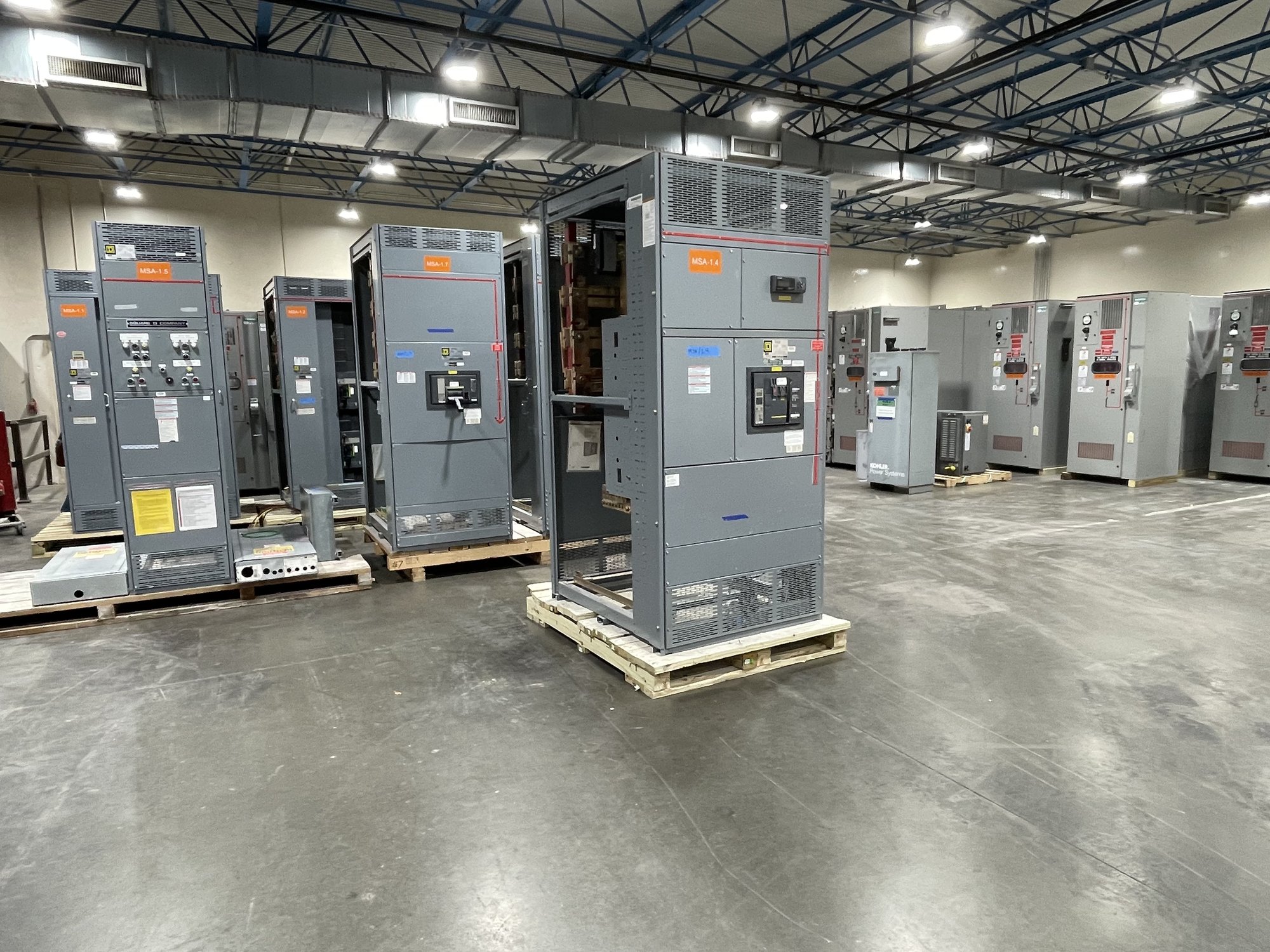
Seismic evaluation depends on the actual equipment, not only its catalog description. Specify switchboard or switchgear type, lineup arrangement, section dimensions, installed components, bus configuration, doors and accessories, and any unusual internal loads. Changes such as adding a large device, altering section order, or modifying a frame can affect mass distribution and the configuration covered by supporting qualification documentation.
Describe where and how the assembly will be mounted. Relevant information includes floor or housekeeping-pad construction, support framing, mounting elevation, anchorage surface, available edge distances, and whether the lineup is adjacent to walls or other equipment. Provide layout drawings and the structural designer’s interface details when available. The manufacturer can develop the equipment around defined project inputs, but the building structure and final attachment design require coordination with the responsible project professionals.
Coordinate anchorage and structural interfaces
Anchorage is a design interface, not an afterthought. The project team should establish who is responsible for selecting anchors, designing embedded plates or support steel, verifying the concrete or structural substrate, and checking load transfer into the building. Equipment base details, hole locations, base channels and access for installation should be coordinated with the structural design before foundations or supports are finalized.
Avoid assuming that a standard base pattern, anchor size or installation detail applies to every seismic condition. Actual loads and attachment requirements depend on the equipment configuration and project-specific analysis. Confirm that the proposed anchorage can be installed with required clearances and that conduits, cable entries, housekeeping pads and adjacent assemblies will not obstruct it. Final anchor selection and structural adequacy should be reviewed by the responsible engineer and authority where required.
Request qualification evidence that matches scope
When project documents require seismic qualification, clarify the accepted method and evidence. The specification may call for shake-table test documentation, analysis, a qualification report, or other project-approved substantiation. Ask which equipment model and configuration the evidence must cover, what deviations are permitted, and whether the documentation must address installed accessories, internal devices, anchorage, or post-event operation. Do not infer qualification from a general product description or from a standard applying to a different equipment category.
Qualification is configuration- and criteria-dependent. Confirm the report’s stated design basis, mounting assumptions, equipment boundaries and limitations against the project requirements. UL 891 applies to switchboard assemblies; it is not, by itself, seismic qualification and does not establish a blanket listing for medium- or high-voltage switchgear. Any required certification, evaluation or acceptance must be confirmed for the specific assembly and project rather than presumed.
Make procurement and delivery part of the plan
For a useful quote, send the one-line diagram, equipment schedule, specification sections, seismic criteria, preliminary layout, mounting details and required submittal list. State the requested equipment type and ratings, site address in Georgia, delivery access constraints, and dates that affect coordination. Identify whether the order requires a particular qualification package, project-specific drawings, witness or review steps, or approval before fabrication. Scope, availability and schedule are confirmed for each order.
Georgia delivery should be coordinated with the construction sequence, not treated as separate from seismic planning. Confirm the receiving location, unloading responsibility, storage conditions and route from the delivery point to the final electrical room. Equipment may need to be protected and stored according to its documentation while structural work and anchorage are completed. Before release, align the approved configuration, anchorage interface, qualification documents and delivery plan; then have the project’s responsible engineers resolve any open design questions before installation and energization.