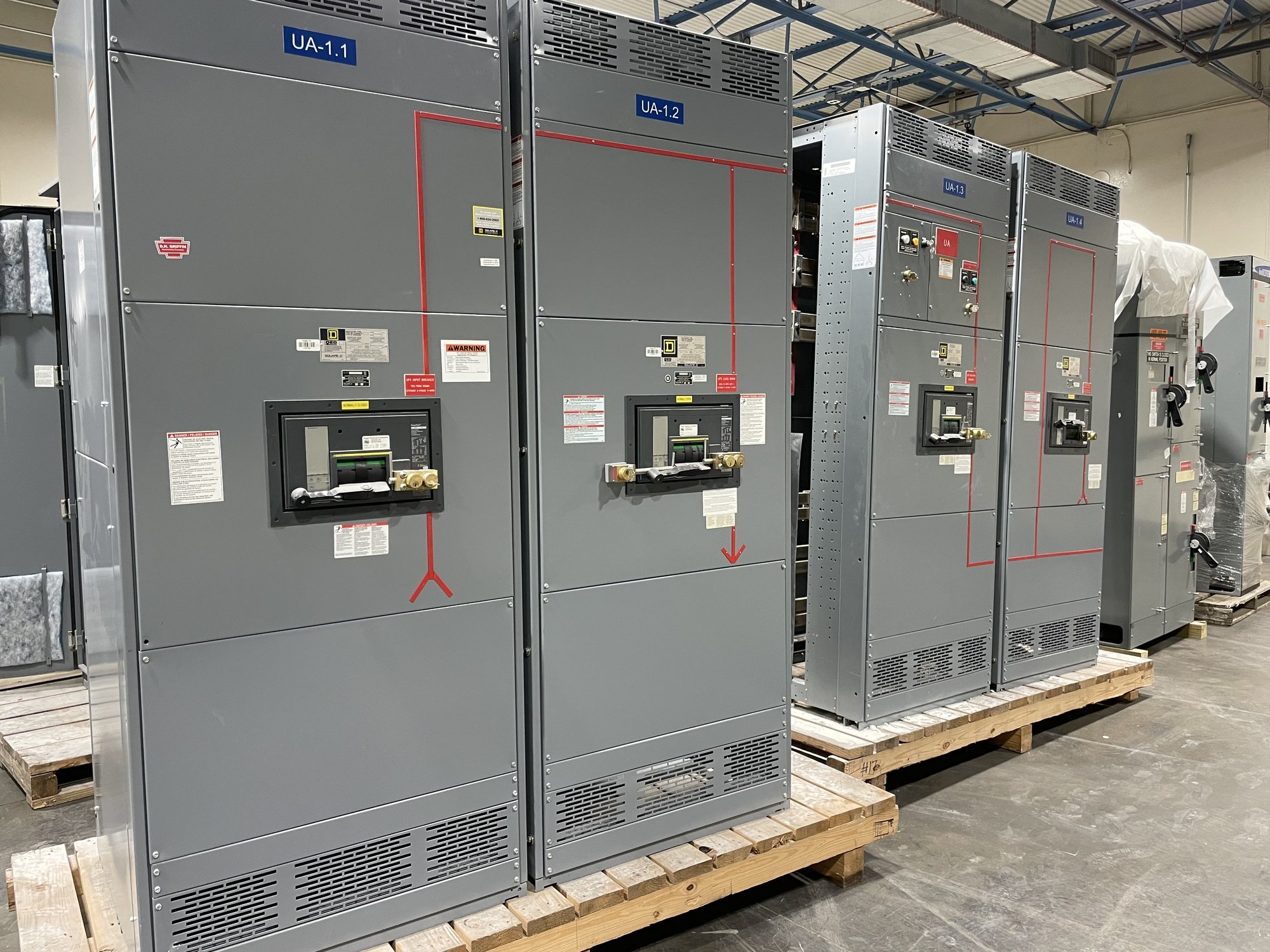
Separate operating weight from shipping weight
A switchgear lineup can have different weights in its installed and shipping configurations. Shipping splits, removable sections, packaging, temporary skids, and handling fixtures may change both the total load and where it bears during unloading or movement. The installed operating weight may also include components or accessories that are not present in a shipping unit. Request documented weights for the actual proposed configuration rather than relying on a general catalog value.
For a useful comparison, establish whether stated weights include doors, internal devices, bus, cable or conduit compartments, and any specified options. Clarify whether the value applies to each shipping section, the complete lineup, or a component. Weight figures alone do not establish floor suitability: section dimensions, base geometry, support locations, and the route from the receiving area to the final position all matter.
Trace the load path to the structure
The floor beneath a lineup transfers load through its slab or framing to beams, columns, walls, foundations, or other structural elements. A concentrated reaction at a base rail or support point can matter even when the lineup’s average weight per square foot appears modest. The structural engineer needs to understand how the equipment bears on the floor and whether the load is distributed continuously, at discrete supports, or through a separate housekeeping pad or curb.
Nearby conditions can affect the review. Openings, trenches, pits, joints, raised floors, suspended slabs, edges, and changes in slab thickness may interrupt or alter the load path. A lineup placed near a column may behave differently from one centered in a long-span bay. Do not assume a concrete floor can carry the equipment based on appearance or building use; an engineer familiar with the building must evaluate the relevant structure and load cases.
Give the engineer usable design inputs
Provide the engineer with the proposed lineup dimensions, total operating weight, section-by-section weights, base or support layout, and equipment center of gravity when available. Identify whether the floor carries the equipment directly or through a pad, rails, or other support arrangement. If manufacturer documents do not yet show final reactions or support details, note that clearly so the engineer can determine what additional information is needed before approving placement.
The review should account for more than the final static condition. Depending on the project, the engineer may need to assess concentrated reactions, floor vibration or deflection limits, anchorage, seismic requirements, and temporary loads during delivery or installation. Applicable design criteria and acceptance belong to the project’s licensed professionals and authorities. A switchboard assembly built to UL 891 does not establish the building floor’s capacity, and that standard should not be treated as structural approval.
Check the delivery and handling route
A receiving dock, corridor, elevator, ramp, or floor opening can impose constraints different from the final equipment location. Confirm the maximum weight and dimensions of each shipping section, including packaging and handling aids, then compare them with the documented limits for the route. Turns, slopes, thresholds, temporary plates, and floor transitions may create concentrated loads or restrict the movement method. The contractor and site team should plan handling with qualified personnel and appropriate equipment.
For Georgia delivery, identify the jobsite receiving point, access restrictions, unloading arrangement, and intended path to the electrical room when requesting a quote. Share known dock or elevator limits and whether delivery must be coordinated around construction phases. Shipping plans and section breakdowns depend on the ordered configuration and confirmed logistics; do not assume a particular shipment size or handling method until those details are reviewed for the project.
Coordinate procurement and the handoff
Early procurement information should connect the electrical design to the structural review. Send the intended lineup arrangement, voltage and application requirements, approximate dimensions, known weight limits, and any floor or access constraints with the quote request. Identify the project location in Georgia, the required delivery sequence, and the date by which structural inputs are needed. Exact configuration, documentation, availability, and timeline are confirmed for each order.
Before release for fabrication, align the approved equipment layout with the structural support plan and the route used to place it. Record who will verify floor capacity, who will coordinate anchorage and any pad or rail details, and which equipment documents the engineer still requires. After the final configuration is established, provide the applicable weight and support information to the project team and have the responsible engineer review it. This handoff helps prevent a late change to the room, supports, or delivery plan.