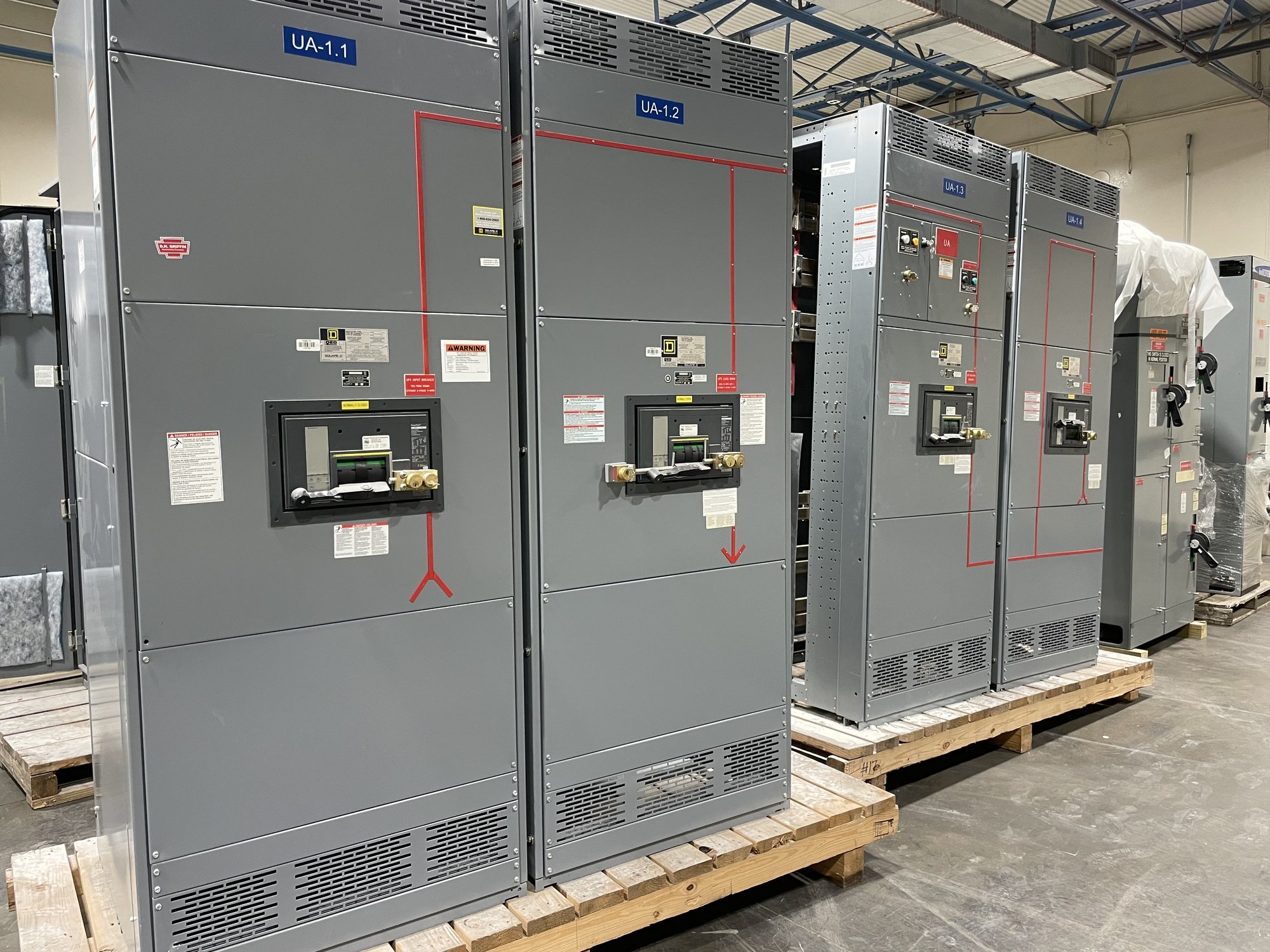
1. Establish the field-survey baseline
Begin by documenting the existing equipment and the conditions around it. Record manufacturer and model information where available, nameplate data, dimensions, lineup arrangement, access routes and the condition of connected conductors. Photograph labels and terminations only under site procedures and with qualified personnel. Include available one-line diagrams, control schematics, maintenance records and prior modification notes; identify discrepancies rather than assuming drawings match the installation.
The survey should clarify what the replacement must connect to and what cannot change. Note feeder and load quantities, incoming and outgoing cable or bus arrangements, metering and protective-device functions, grounding details, enclosure environment and working-space constraints. Confirm the location, delivery path, floor or structural limitations, and whether adjacent equipment must remain in service. These details help determine whether a replacement can follow the existing footprint or needs a broader engineering and installation plan.
2. Define scope and resolve design questions
Use the survey to establish a written scope before requesting a firm equipment proposal. Identify the equipment type and intended application, system voltage, continuous current, available fault-current information, required interrupting or withstand characteristics, number and function of circuits, and control or metering needs. For low-voltage switchboards, specify whether the project calls for a UL 891 assembly and define the intended configuration; that standard applies to switchboards, not as a general certification for medium- or high-voltage switchgear.
Ask the engineer of record to confirm system studies, protective-device coordination, fault-duty assumptions, conductor interfaces and applicable project requirements. Resolve which existing devices or functions are to be reused, replaced or changed, and who supplies field wiring, transition sections, accessories and documentation. Final ratings and construction depend on verified system data and design review. Keep open items visible in the specification so they can be answered before fabrication rather than becoming late changes.
3. Build a realistic procurement sequence
A useful schedule separates quote development, technical review, approval, release for production, fabrication, inspection, shipment and site receipt. Assign a decision-maker for each milestone and allow time for review of drawings, exceptions and submittals. Procurement should compare the proposed configuration against the approved scope, including dimensions, circuit arrangement, connection details, device functions and documentation. Confirm availability and schedule for the exact configuration with the manufacturer; component sourcing and build timing are order-specific, not assumptions to carry forward from another project.
For a quote, provide the survey findings, one-line diagram, equipment photographs, required ratings, circuit schedule, desired functions, site constraints and target outage or installation window. State the Georgia delivery address, receiving hours, unloading capability, access restrictions and whether equipment must arrive in a particular sequence. Identify who will review technical documents and how quickly decisions can be made. Clear answers help the manufacturer assess scope, identify missing inputs and confirm the order-specific availability and timeline.
4. Coordinate outage and installation readiness
Treat installation planning as a parallel workstream, not a task that begins when the equipment ships. The contractor and facility team should map shutdown boundaries, affected loads, temporary power needs, switching responsibilities, removal and rigging sequence, connection work, inspection hold points and restoration steps. Confirm who prepares and approves the outage plan, who controls access, and which qualified personnel perform electrical work. If the replacement changes footprint or connections, resolve demolition, supports, conduit, cable lengths and transition design before the site window is fixed.
Georgia delivery planning should account for the actual site and route, not just the destination city. Verify dock or ground-level receiving, door and aisle clearances, turning space, staging area, weather exposure and secure storage. Agree on who receives and inspects the shipment, how damage or shortages are documented, and when the equipment can move from staging to installation. Confirm shipment timing for the order and coordinate it with site readiness; do not schedule an outage around an unverified delivery assumption.
5. Complete testing, turnover and closeout
Before energization, define the inspection and test plan, required records, witness points and acceptance authority. The responsible engineering and installation teams should establish tests appropriate to the equipment and project, which may include visual and mechanical checks, connection verification, control-circuit checks, protective-device settings and functional testing. Confirm test equipment, procedures, approved settings and prerequisites in advance. Testing and energization must be performed by qualified personnel under the project’s safety procedures and with required engineering and authority review.
Closeout should connect the installed equipment to its approved design and operating records. Collect final drawings, device and setting information, test results, equipment documentation, unresolved-item records and maintenance guidance, then route them to the facility team. For a Georgia replacement, appoint one coordinator to align survey completion, technical approvals, manufacturer order release, delivery access, outage readiness and acceptance criteria. Share those inputs before requesting a quote so the proposed schedule can be tied to the real project constraints.