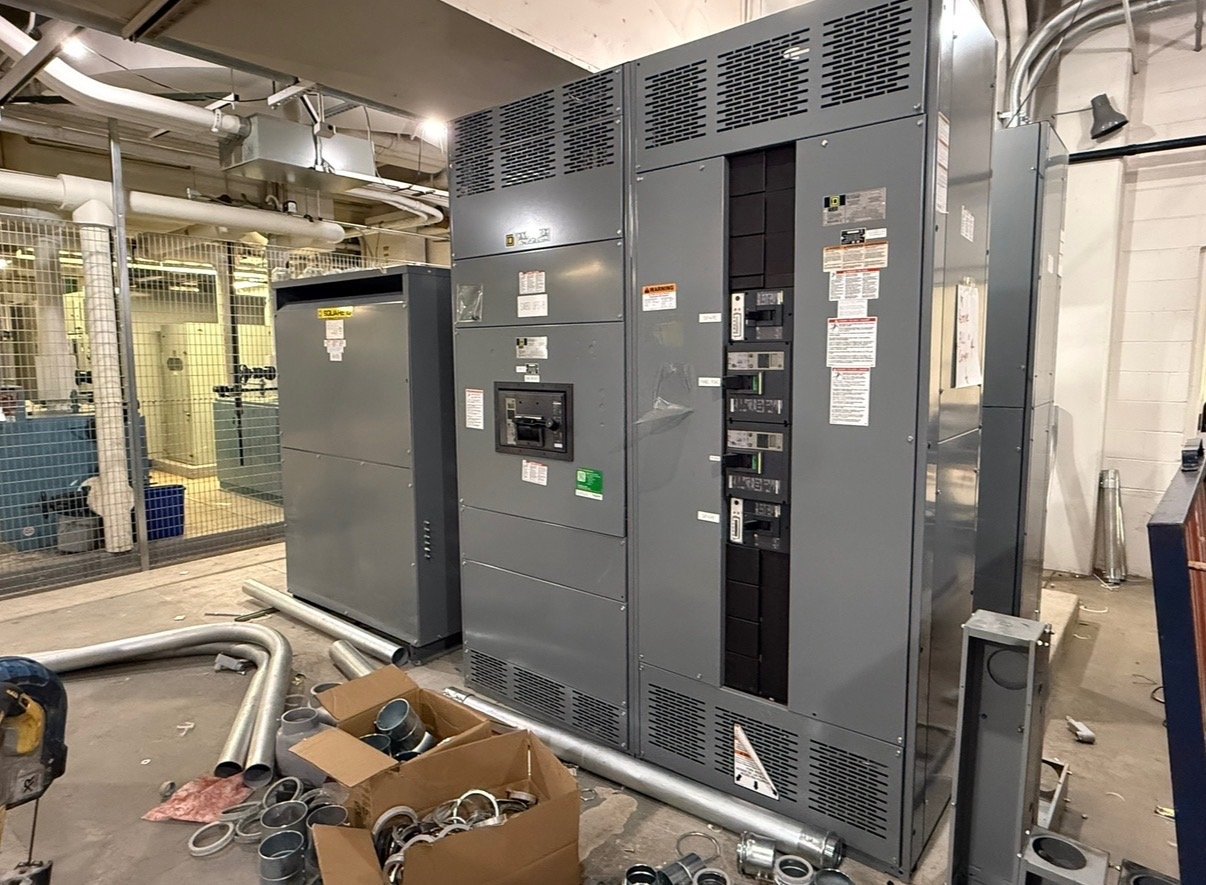
Freeze the approved scope
Start with a line-by-line comparison of the quotation, specification, and purchase order. Identify the equipment being ordered, including switchboard sections, mains, feeders, metering, protective devices, enclosures, and specified accessories. State what is included and what is excluded; avoid relying on a general phrase such as “per quote” if the quote has revisions or open exceptions.
Resolve technical exceptions before release. Confirm that the approved documents identify the intended application, system voltage and phase, bus arrangement, available fault-current basis, and required equipment ratings. For UL 891 switchboard assemblies, verify that the specified assembly and documentation requirements are represented in the order. UL 891 applies to switchboards; it does not establish a blanket listing for medium- or high-voltage switchgear. Engineering review and the authority having jurisdiction determine project acceptance.
Match ratings to the project basis
Check each rating against the current one-line diagram and project specification, rather than copying values from an earlier package. Questions to close include whether the equipment is service entrance equipment, the required bus and neutral configuration, interrupting or withstand requirements, main and feeder device types, and any metering or control functions. Confirm the basis for short-circuit ratings and coordination with the project’s upstream and downstream equipment.
Also document environmental and installation constraints that affect configuration: indoor or outdoor use, enclosure requirements, ambient conditions, cable entry and exit direction, access clearances, and connection details. Confirm who supplies lugs, transition sections, external accessories, and field-installed items. Do not treat an unreviewed rating or layout as approved; route discrepancies through the responsible electrical engineer before purchase.
Control drawings and revisions
Name the governing drawing set in the purchase order by document number, revision, and date. Include the approved one-line diagram, plan or elevation requirements, and any schedules or project specifications that define the ordered equipment. If the manufacturer’s quotation contains assumptions or deviations, list each disposition explicitly so neither party has to infer whether it was accepted.
Set a clear process for submittals and changes. Identify who reviews drawings, how comments are returned, and what approval is needed before fabrication proceeds. Confirm that the order does not authorize an outdated drawing revision. Changes after approval can affect design, price, and schedule, so direct the project team to issue revisions through a documented change process and obtain the manufacturer’s confirmation of their impact.
Reconcile price, schedule, and payment
Compare the order total and line-item basis with the current quotation, including options, engineering or drawing charges if stated, freight, taxes, and any separately priced scope. Check quotation validity and record accepted alternates or exclusions. If the project requires separate billing milestones, retain the agreed amounts or percentages and the documents that trigger payment; do not assume standard terms when the quotation states otherwise.
Make the schedule measurable. Confirm the schedule basis, the event that starts it, required submittal and approval dates, and any information the project must provide to maintain progress. Ask which dates are estimates and which are contractual commitments. Exact availability and timing are confirmed for each order, so include the manufacturer’s written schedule confirmation rather than inserting an assumed lead time into the purchase order.
Plan Georgia delivery and receipt
Specify the complete delivery address in Georgia, receiving contact, site access limits, delivery hours, and any restrictions on truck size, unloading, or staging. State the required delivery point and clarify who arranges freight, unloading, rigging, and movement from the receiving area to the electrical room. Confirm packaging, shipment notification, and documentation expectations with the manufacturer; do not presume a delivery appointment, special handling, or guaranteed transit time unless agreed.
Coordinate delivery with construction readiness. Check that the room, housekeeping pads, openings, access route, and storage conditions will accommodate the ordered sections and shipment sequence. If the site cannot receive the entire order at once, ask whether staged shipments are available and document their cost and schedule effects. Nationwide shipping can support Georgia projects, but the exact destination, freight arrangement, and timing must be confirmed for the order.
Make the handoff unambiguous
Before release, assign an owner for each open item: engineering approval, commercial exceptions, drawing control, delivery coordination, and invoice review. Confirm the purchase order identifies the manufacturer’s quotation and the exact accepted revision, while avoiding conflicting boilerplate that changes scope or terms without discussion. Ask for written acknowledgment of the order, noted exceptions, payment terms, and schedule basis.
A practical release check is to circulate the final purchase order with the approved scope, ratings, drawing references, price breakdown, schedule assumptions, delivery instructions, and payment milestones highlighted for engineering and procurement review. Resolve every mismatch in writing, then issue the controlled document set to the manufacturer and project team. This gives Georgia contractors and facilities teams a clear starting point for submittals, fabrication coordination, and receiving.