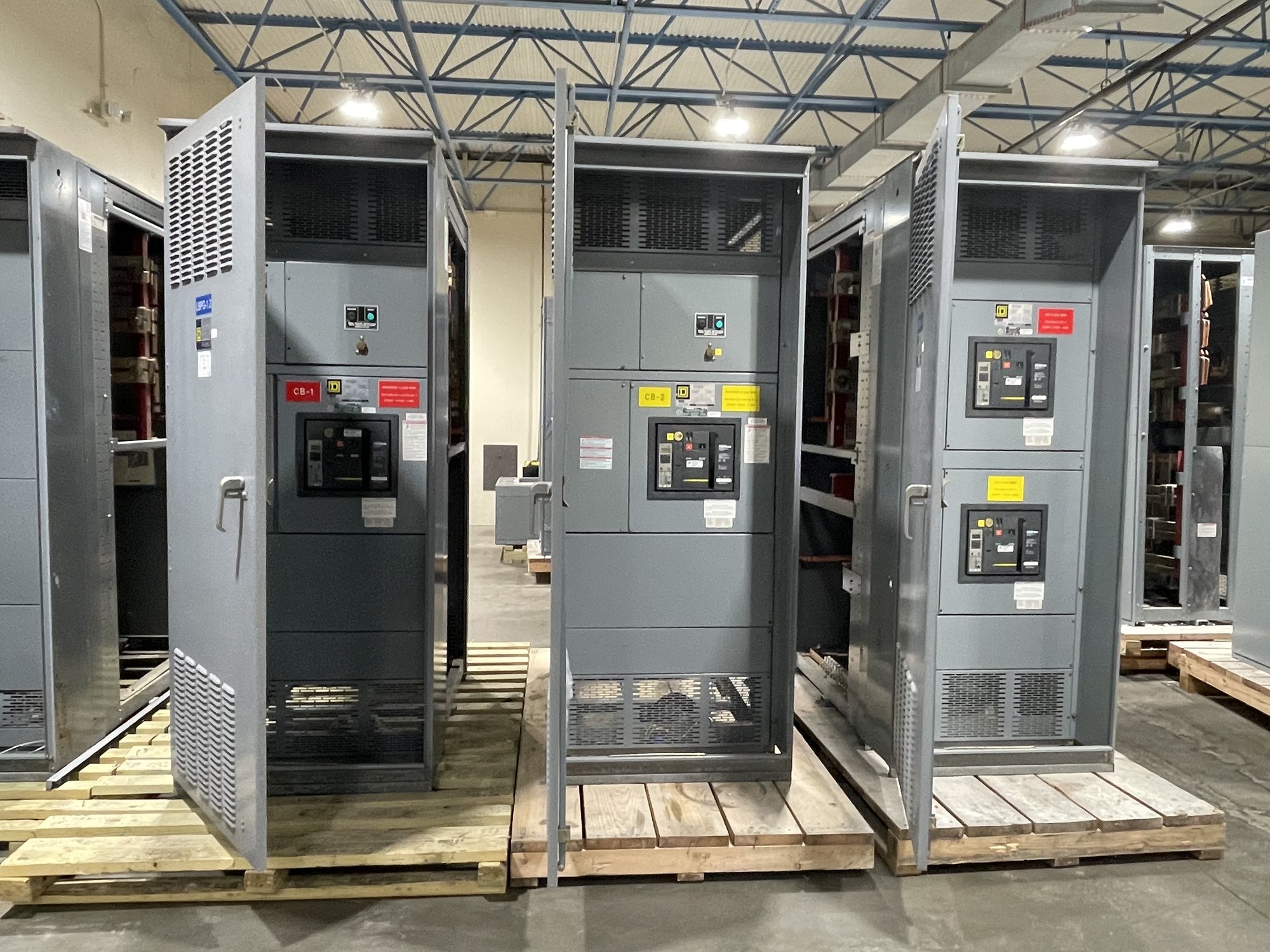
Match experience to the equipment
Ask what kinds of assemblies the manufacturer has built that are relevant to your specification. A useful discussion distinguishes low-voltage switchboards from medium-voltage gear, and addresses configuration, service arrangement, indoor or outdoor application, and coordination with upstream and downstream equipment. Request examples of the manufacturer’s work scope without assuming that a similar project proves suitability for yours.
For a new UL 891 switchboard assembly, ask how the proposed configuration aligns with that standard and which components or assembly details fall within the offered scope. UL 891 applies to switchboards; it should not be presented as a blanket listing for medium- or high-voltage switchgear. Confirm the equipment class and applicable standards directly against the project specification.
Examine quality controls and records
Ask the manufacturer to explain how design information, bills of material, assembly instructions, inspections, and test records are controlled from order review through shipment. Clarify how revisions are approved and communicated, who resolves a discrepancy between drawings and specifications, and what documentation will accompany the finished equipment. The answers should identify actual records and responsibilities, not rely on broad claims about quality.
Discuss inspection and testing requirements before purchase approval. Determine which routine checks are included, which tests are optional or project-specific, what witness or hold points are possible, and how results are documented. If the project requires a particular quality-system certification, ask for its exact scope and current supporting documentation; do not infer certification from a manufacturer’s general quality practices.
Verify certifications by project scope
Translate the specification’s certification language into equipment-specific questions. Identify the required standard, listing or certification, the assembly to which it applies, and any exceptions or approved alternatives. Ask the manufacturer to confirm what documentation can be provided for the exact proposed configuration. Component markings, assembly certification, and a project’s authority requirements are separate matters and should not be treated as interchangeable.
Resolve certification questions before drawings are approved or equipment is released for production. Share the project specification, one-line diagram, jurisdictional requirements, and any owner or engineer criteria that affect acceptance. The design professional and authority having jurisdiction determine project acceptance; a manufacturer’s statement alone does not establish that a particular design meets every code or approval requirement.
Define support before and after shipment
Ask what technical support is included at each stage: specification review, submittal preparation, drawing revisions, factory testing, shipment coordination, and documentation turnover. Confirm who answers technical questions and what information the manufacturer needs to investigate an issue. Separate manufacturer support from field installation, commissioning, maintenance, and system engineering, which may require qualified contractors or other project parties.
Agree on the handoff package and responsibilities in writing. Identify required approved drawings, final equipment schedules, operating and maintenance information, test records, and any spare-parts information included in the order. If field assistance is needed, state the requested scope and timing for confirmation rather than assuming it is included. Only qualified personnel should install, service, or energize electrical equipment.
Check schedule and Georgia delivery fit
A manufacturer’s schedule should be evaluated against the project’s actual milestones, not a general lead-time statement. Ask when the schedule can be confirmed, what events affect it, and how drawing approval, component availability, specification changes, and testing fit into the production plan. Availability and timing depend on the final scope and are confirmed for each order.
For a Georgia project, provide the delivery address or site region, receiving hours, access limitations, unloading arrangements, and required delivery window when requesting a quote. Nationwide shipping can support Georgia delivery, but the project team should confirm the shipment plan, packaging, carrier coordination, and responsibility for receiving and moving equipment at the site. Check that delivery sequencing fits construction access and storage conditions.
Prepare a useful qualification request
For a focused quote and qualification review, share the one-line diagram, equipment schedule, specification, required standards, voltage and current information, fault-duty and system coordination requirements, enclosure conditions, available space, cable entry details, and any special metering or control needs. Include the required submittal dates, testing provisions, certification documents, shipping location, and project milestones. These details let the manufacturer identify open questions without guessing at the design.
Ask for a written response that separates confirmed scope from assumptions, identifies requested exceptions, lists deliverables, and states what remains subject to engineering review or order confirmation. Compare manufacturers on evidence, clarity, and ability to close project-specific gaps—not on unverified general assurances. Before issuing a purchase order, reconcile technical comments, certification requirements, support boundaries, schedule assumptions, and Georgia delivery arrangements with the project team.