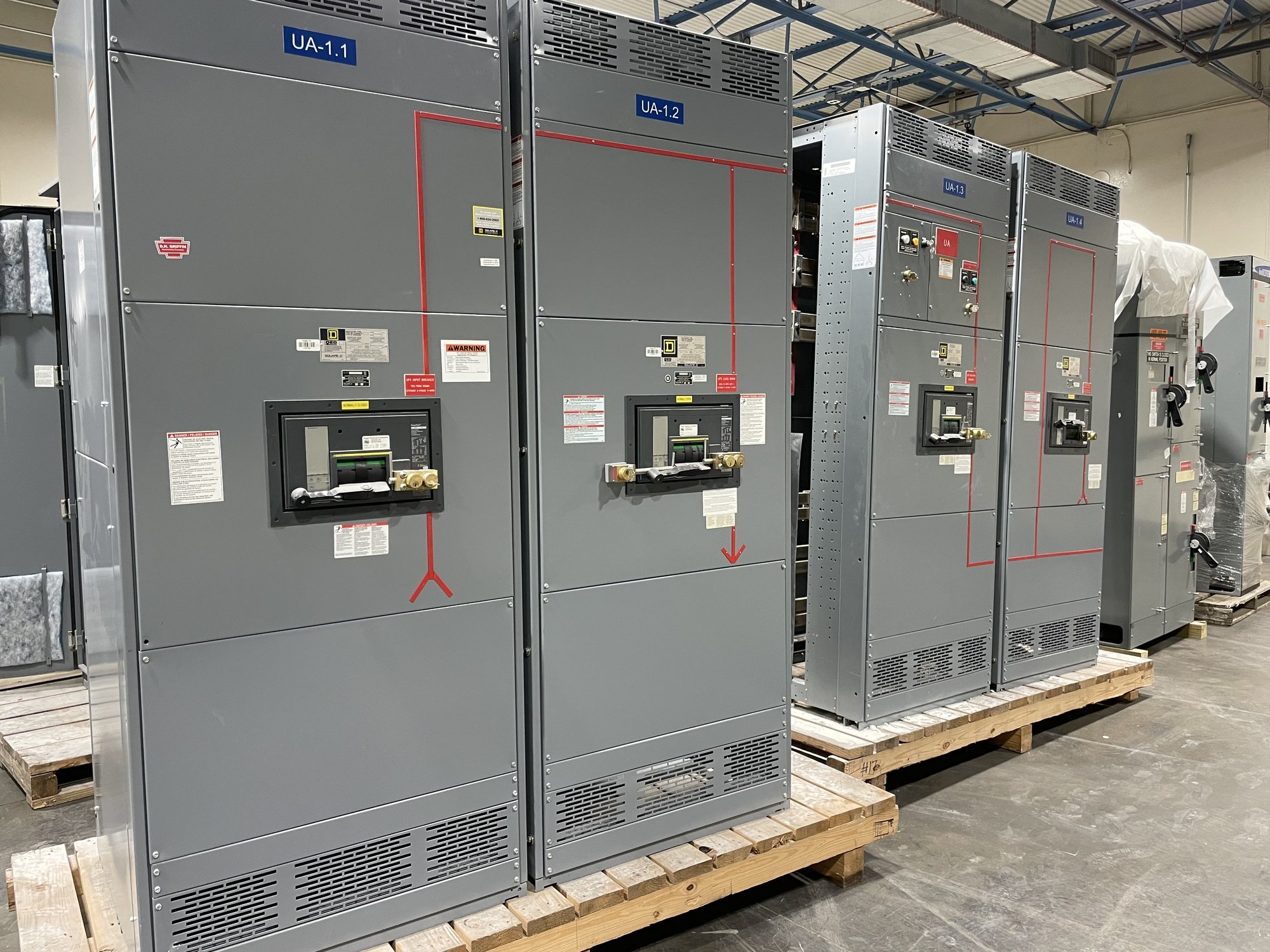
Confirm the source and scope of supply
Start by distinguishing a distributor that can supply new equipment from a company that only circulates product listings or relays inquiries. Ask whether the proposed scope is manufacturer-built switchgear, a complete switchboard assembly, or selected components, and identify what is included in the quoted supply. For UL 891 switchboard assemblies, confirm the proposed assembly scope and applicable documentation; UL 891 applies to switchboards, not to medium- or high-voltage switchgear as a blanket certification.
Request the manufacturer’s equipment description, proposed configuration, and the basis for any stated standard or certification. Confirm whether the equipment is built to the project specifications or offered in a defined configuration, and identify exclusions such as field wiring, installation, startup, or protective-device coordination. A clear scope lets engineering and procurement compare equivalent proposals rather than treating different packages as interchangeable.
Verify inventory and availability claims
Treat an inventory statement as a specific, dated claim to verify, not a general assurance. Ask which exact assemblies or components are available, whether they are allocated to your order, and whether the configuration matches the one being quoted. If the equipment is custom-built, ask which design inputs, approvals, materials, or manufacturing steps control the schedule. Availability and timing should be confirmed for the particular order; do not infer that a standard item is in stock from a product description.
For schedule evaluation, request the assumptions behind the quoted completion and shipment dates, including when approved drawings or other required information must be returned. Ask how a design revision affects the schedule and when the supplier will notify your team of a change. Compare proposals using the same required delivery point and scope. That gives the project team a more useful basis for planning than an unsupported promise of a short lead time.
Test technical support before award
Evaluate whether support reaches the people who can resolve equipment questions. Share the one-line diagram, load and voltage information, system arrangement, fault-duty requirements, metering and protection needs, enclosure conditions, and any specified dimensions or cable-entry constraints. Ask which items the supplier will review, what information remains subject to engineering confirmation, and how deviations from the specification will be identified. Do not assume a quote alone demonstrates suitability for the application.
For custom configurations, establish who prepares and reviews drawings, how comments are recorded, and which party approves the final design. Clarify responsibility for protective-device settings, coordination studies, and interface details with other equipment; these may require separate engineering work. Ratings, design choices, and code requirements depend on the actual project and applicable authority review. A capable procurement process records open technical questions and resolves them before release to manufacturing.
Define commercial and delivery responsibilities
Compare more than the equipment price. Check the quote’s validity period, payment milestones, freight terms, packaging assumptions, shipment destination, and any stated exclusions. Ask how changes in quantities, options, or approved drawings are priced and authorized. Confirm whether the quoted delivery date means shipment or arrival, and who arranges unloading, storage, and movement to the electrical room. These details matter when a Georgia project has a constrained site, coordinated construction sequence, or limited receiving hours.
Nationwide shipping can support projects across Georgia, but the route, delivery appointment, carrier arrangements, and site readiness still need coordination for the specific order. Provide the project address, receiving contact, access limits, requested delivery window, and any requirements for liftgate, staging, or special handling. Confirm which arrangements are included rather than assuming shipment guarantees or local service. Aligning these details early reduces avoidable confusion between procurement, the general contractor, and the receiving team.
Make post-sale support explicit
Before awarding, ask what support continues after shipment and who owns each task. The written scope should distinguish equipment documentation and manufacturing questions from installation, field service, testing, commissioning, and ongoing maintenance. Confirm how to request replacement parts or resolve a discrepancy, what records accompany the shipment, and whether remote technical assistance or site work is included. Do not rely on informal expectations about response times or services that are not stated in the proposal.
Plan the handoff to the installing electrical contractor and facility team. Identify the approved drawings, final equipment schedule, shipping records, operating and maintenance information, and any project-specific instructions that must reach them. Ensure qualified personnel handle installation, service, testing, and energization in accordance with the approved design and applicable requirements. A documented handoff helps preserve the decisions made during procurement and makes responsibilities visible through commissioning.
Use a consistent evaluation checklist
For each proposal, record the equipment source, exact scope, configuration basis, verified availability, schedule assumptions, technical-review responsibilities, exceptions, freight terms, and post-sale commitments. Ask the supplier to answer unresolved points in writing and revise the proposal when an answer changes price, scope, or schedule. Bring engineering, construction, facilities, and purchasing into the review so that a commercial advantage does not conceal an unresolved interface or delivery constraint.
For a Georgia quote request, share the project location, required delivery date, one-line diagram, applicable specifications, system voltage and fault-duty information, lineup dimensions, options, and receiving constraints. Identify which details are confirmed and which remain under design review. Then compare suppliers against the same requirements and select only after the equipment scope, availability, engineering boundaries, and handoff responsibilities are clear for your order.