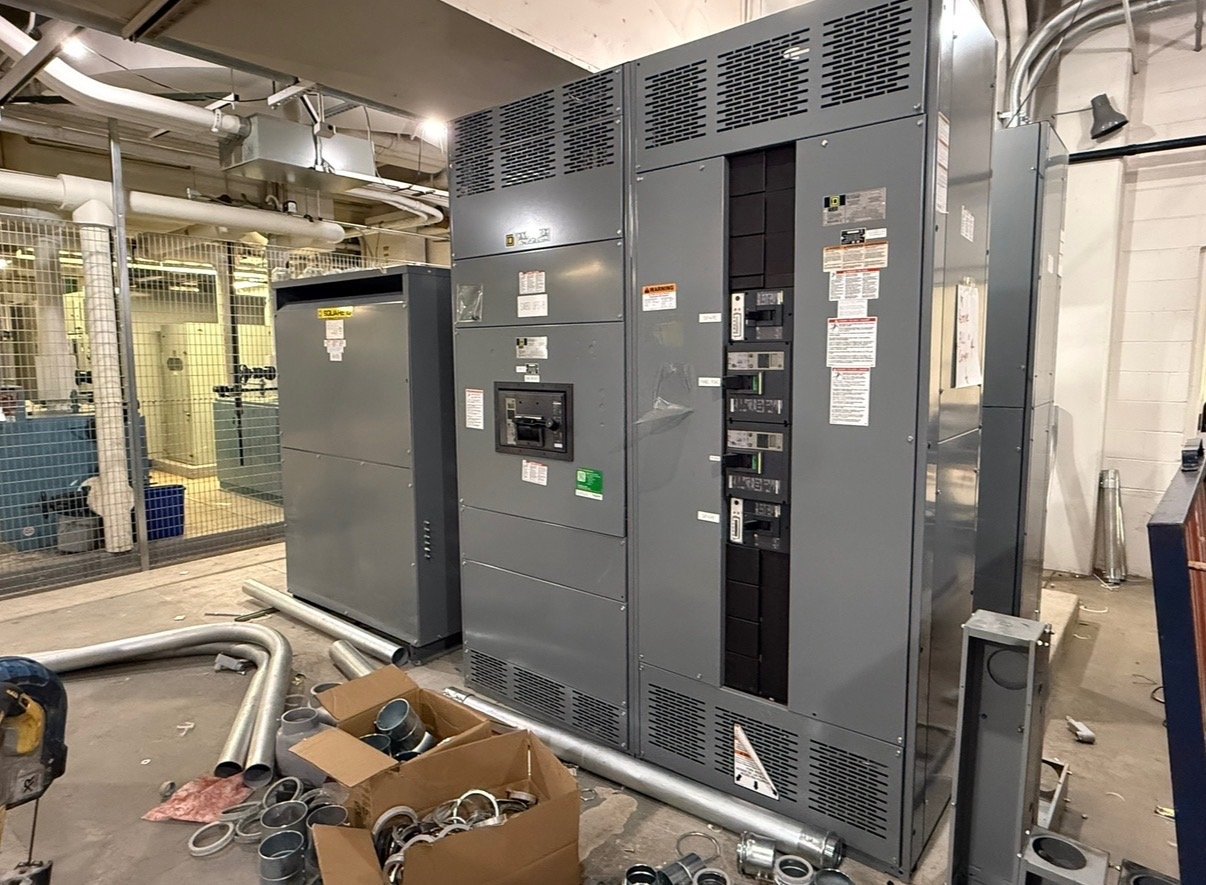
Start with the construction sequence
Map the equipment decision to the project schedule. Identify when the electrical room will be weather-tight, when housekeeping pads and embedded items will be complete, when conduit routes will be established, and when the installation crew can set and connect the assembly. These milestones help determine the required delivery window and whether the equipment must arrive in one shipment or in coordinated sections.
Ask the project team which dates are fixed and which can move. Include the dates for approved drawings, submittal review, release to manufacture, site readiness and planned setting. A requested delivery date is not a confirmed production or shipping commitment; the manufacturer can review scope and availability against the project schedule and confirm the applicable timeline for the order.
Verify the room and equipment route
Provide the switchboard room plan and elevations, including usable wall space, working clearances shown on the design, door openings, ceiling height, beams, columns and nearby equipment. Distinguish finished dimensions from rough construction dimensions, and identify any obstructions that could limit placement, access or future section removal. The project engineer should resolve required clearances and code questions for the actual installation.
Check the entire route from the receiving point to the final position, not just the electrical room door. Note corridor width, turns, ramps, thresholds, elevators, loading access and overhead limits. Share door and passage dimensions, floor conditions and any restrictions on delivery vehicles or lifting equipment. These details help evaluate shipping sections and handling needs before fabrication and dispatch are planned.
Coordinate conduits and cable entry
Conduit locations can determine whether the proposed lineup works with the field installation. Share the latest floor plan, elevations and conduit schedule, showing entry direction, stub-up locations, sizes and the space reserved for bending and termination. Identify whether feeders enter from above, below or both, and whether the design calls for a bottom-entry section, top wireway or other arrangement.
Confirm who owns final conduit coordination and when that information will be stable enough for equipment drawings. Ask whether the lineup dimensions, section arrangement and connection points can be reviewed against the current model or coordinated drawings before release. Do not assume a field change will fit: altered entry locations can affect internal space, access and installation effort, so route discrepancies should be resolved through the project’s engineering review.
Define the purchase scope clearly
For a useful quotation, provide the one-line diagram, equipment schedule, project specifications, available fault-current information, system voltage and phase, main and feeder requirements, metering needs, enclosure conditions and any specified options. Identify the required assembly type and whether UL 891 switchboard construction is specified. UL 891 applies to switchboards; it should not be treated as a blanket listing for medium- or high-voltage switchgear.
State what the manufacturer is expected to supply and what remains with the contractor or other project parties. Clarify whether the request includes equipment sections, specified accessories, drawings and shipment coordination, and identify any project documentation or submittal format requirements. Engineering review and the authority having jurisdiction must determine applicable design and code requirements; do not infer approval from a quotation or a standard reference alone.
Plan labor, receiving and setting
Installation labor depends on the assembly configuration, section weights and dimensions, access route, setting method and amount of field connection work. Share known site constraints and the contractor’s intended handling plan so delivery packaging and section breakdown can be discussed. Confirm who will provide unloading, rigging, moving, anchoring, interconnection and final terminations; do not assume those tasks are included in the equipment purchase.
Name the receiving contact and identify the location, available unloading equipment, delivery-hour restrictions and staging space. Check that the site can protect the shipment from weather and damage if installation will not begin immediately. For Georgia projects, provide the complete delivery address, site access instructions and the construction milestone tied to receipt. Nationwide shipping can be coordinated, but route, timing and availability are confirmed for each order.
Close the handoff before release
Before authorizing manufacture, reconcile the approved equipment drawings with the room dimensions, conduit plan, one-line diagram and installation sequence. Record open items, responsible reviewers and the dates needed for decisions. Confirm which drawing revision governs, how proposed changes will be reviewed, and whether later site changes could affect dimensions, entry locations or delivery plans.
For a quotation, send the current project documents, requested delivery window, Georgia site details, receiving constraints, conduit-entry information and the name of the party coordinating technical questions. Ask the manufacturer to identify assumptions, exclusions and items requiring confirmation. This focused handoff gives procurement, engineering and field labor a shared basis for planning the order without treating unverified site conditions as settled.