Judge service reach by project fit
A manufacturer does not need a local office to supply a Georgia project, and a nearby address alone does not establish technical or delivery fit. Ask where equipment is built, how project questions are handled, what information is needed to develop a proposal, and whether the manufacturer can ship to the jobsite or another receiving point in Georgia. Confirm the scope and timing for the specific order rather than relying on a general statement about availability.
Clarify who will coordinate technical questions, submittals, order details and shipping arrangements. A practical evaluation should establish the proposed communication path and the documents expected at each project stage. For a custom assembly, make sure the manufacturer understands the application and the purchasing schedule; do not treat an estimated shipment window as a guarantee until the order scope and schedule are confirmed.
Start with the one-line diagram and duty
Give prospective manufacturers the latest one-line diagram and identify the equipment function: service entrance, distribution, generator connection, tie, or another arrangement. Share system voltage, phase and wire configuration, available fault-current information, upstream protective devices, grounding approach and required ampacity where established by the project engineer. These details help determine whether the requested assembly is an appropriate fit; they are not a substitute for engineering review.
For a switchboard, state whether the project calls for a UL 891 assembly and identify the sections and functions in scope. UL 891 applies to switchboards; it should not be used to imply a blanket listing for medium- or high-voltage switchgear. If the project involves equipment outside switchboard scope, describe that equipment separately and ask the manufacturer to confirm what it can supply and what standards or approvals apply to the proposed configuration.
Compare configuration details, not just price
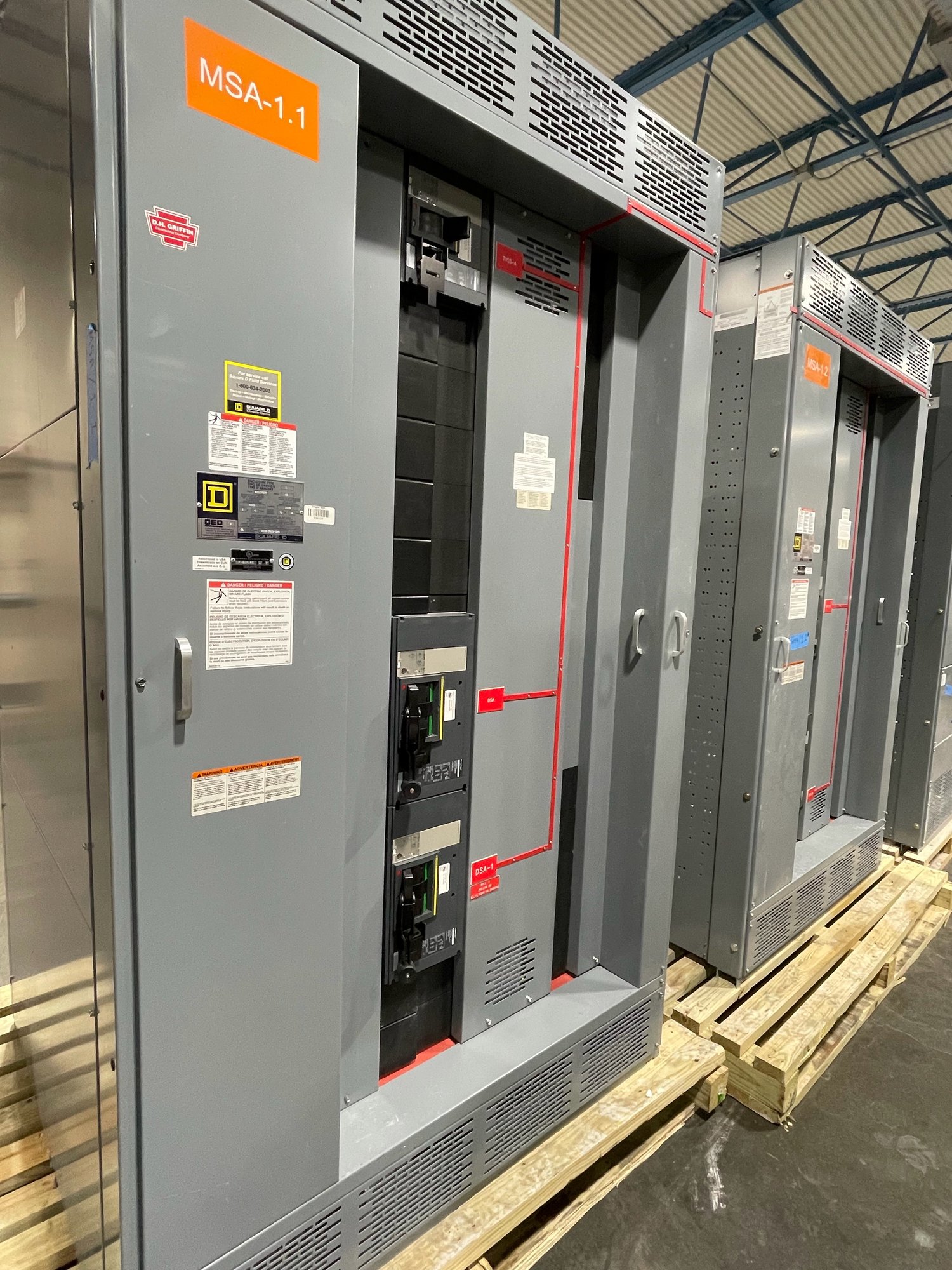
Specify the main and feeder device types, quantities, frame sizes if selected, trip or fuse requirements, metering, control power, surge protection and any communication interfaces. Identify spaces reserved for future use and distinguish them from active, equipped circuits. Ask the manufacturer to show how the quoted lineup reflects the one-line diagram, including section arrangement and the intended location of incoming and outgoing connections.
Also provide dimensional limits, cable entry and exit preferences, access clearances, indoor or outdoor installation conditions, and any known environmental constraints. Note whether the equipment must fit an existing electrical room, pad or lineup. A lowest-price comparison is meaningful only when the proposals cover the same electrical functions, enclosure needs, accessories and documentation. Resolve exclusions and assumptions before procurement rather than discovering a mismatch during submittal review.
Review engineering and submittal responsibilities
Ask what drawings and technical documents are included in the proposed scope, such as outline dimensions, elevations, elementary or connection diagrams, and device schedules where applicable. Establish who provides final design inputs, who reviews submittals, and which party approves changes. Manufacturer drawings support coordination, but the project engineer and authority having jurisdiction must review the design and applicable requirements for the installation.
Discuss the review sequence before placing an order: required submission date, review milestones, expected revision process and the information needed to release production. If the project has a specified manufacturer, approved-equipment schedule or owner standard, identify it early. A manufacturer can confirm whether it can meet a requested scope, but procurement should not assume approval, certification or technical ratings that have not been documented for the exact assembly.
Make Georgia delivery part of the comparison
Shipping to Georgia is only one part of delivery planning. Share the project city or ZIP code, receiving address type, site access limits, unloading arrangements, delivery hours and any restrictions on truck size or staging. State whether the equipment will go to a contractor’s facility, distributor, warehouse or active jobsite. Confirm how the quoted shipment is packaged, what freight assumptions apply and who coordinates the receiving appointment.
Coordinate the expected arrival with site readiness, electrical-room completion, access routes and the installation schedule. Large or sectional assemblies may need a planned path from the truck to the final location; verify dimensions and handling requirements with the project team. Confirm order-specific availability and shipping timing in writing, including any dependencies on approved drawings or final selections. Nationwide shipping does not establish a guaranteed date or remove the need for site coordination.
Prepare a quote package that supports a decision
For a useful quote, send the one-line diagram, equipment schedule, specifications, target submittal and delivery dates, project location, and known site constraints. Include the requested voltage and ampacity, fault-current data, main and feeder device requirements, enclosure conditions, metering and control needs, and any standards or owner requirements. Mark unresolved selections plainly so the proposal can identify assumptions instead of silently treating them as confirmed.
Compare each response for technical scope, exclusions, documentation, order dependencies and delivery assumptions alongside price. Before purchase, resolve open design items with the engineer, confirm the exact proposed configuration and establish the handoff for approved drawings, production release and freight coordination. This gives Georgia project teams a concrete basis for selecting a manufacturer that can supply the specified new equipment without relying on proximity alone.