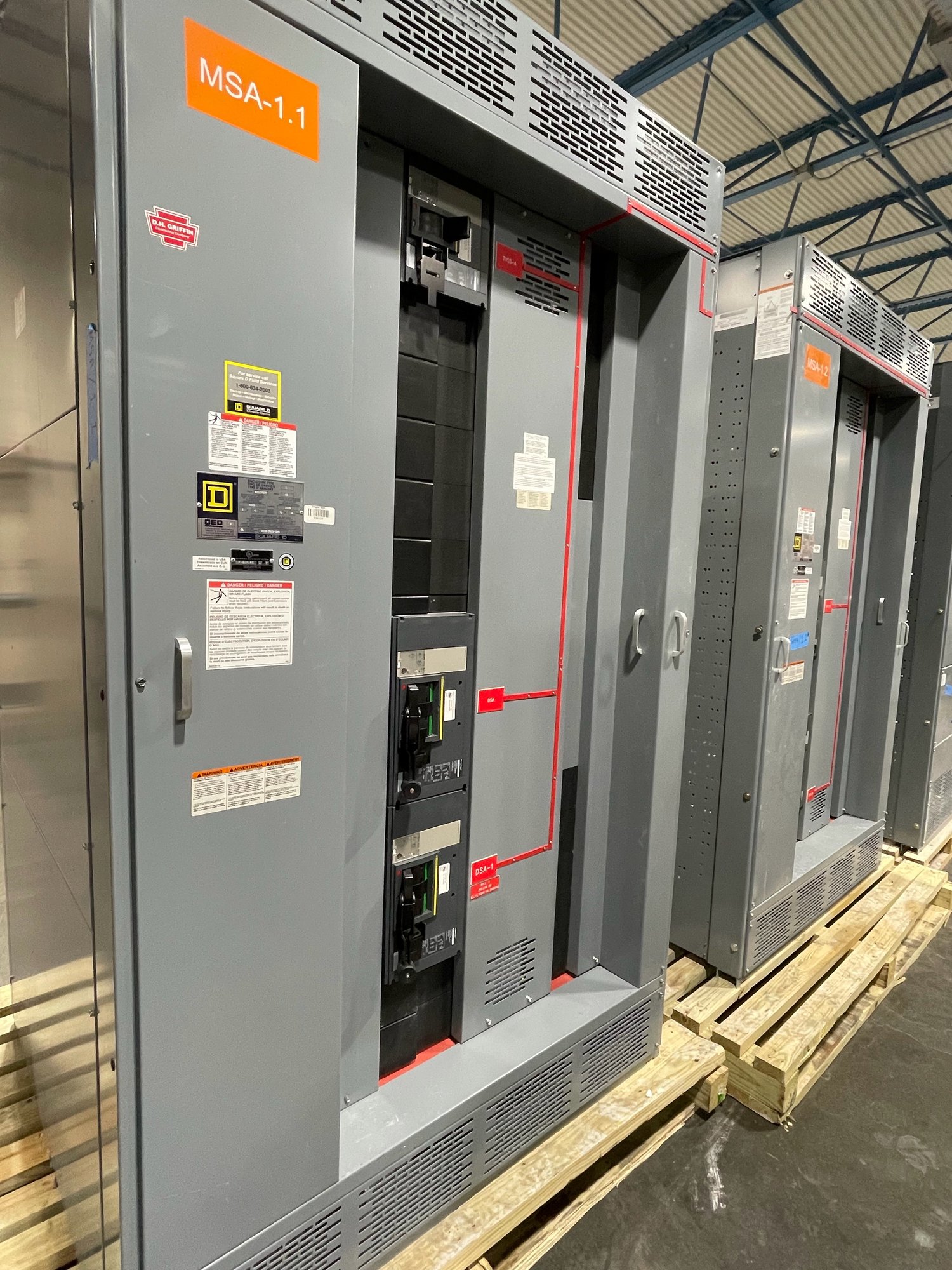
Make handling part of the specification
A switchboard may be handled several times between fabrication and its final location. The specification should identify who will receive it, where it will be unloaded, how it will move through the building and what lifting equipment is available. These conditions affect whether an assembly can ship intact or must be divided into sections, and whether the planned route can accommodate its dimensions and handling orientation.
For a new equipment quote, share the electrical lineup, enclosure arrangement, installation location, access constraints and anticipated delivery route when available. Note overhead obstructions, door and corridor clearances, floor or platform limitations, and any restriction on crane, forklift or rigging access. These details allow the manufacturer and project team to evaluate handling provisions against the intended shipment without assuming site conditions.
Identify lift points and limits
Lift points must be tied to the specific assembly and its approved lifting method. Drawings or handling instructions should identify where rigging may attach, the required lifting arrangement and any restrictions on sling placement or spreader equipment. A lifting method that works for one section may not apply to another, particularly when a lineup contains different enclosure widths, heights or internal arrangements.
Do not treat cabinet edges, bus supports, doors, roof panels or other structural features as lifting points unless the approved instructions explicitly identify them for that purpose. Field teams should not select attachment locations by appearance or improvise a lift. The equipment documentation needs to make the intended method understandable to the qualified rigging personnel responsible for planning and executing the move.
Document the center of gravity
The center of gravity matters because an unevenly balanced load can tilt or rotate during a lift. Its location depends on the finished assembly, including the arrangement of compartments and installed components. A general estimate for a similar lineup is not a substitute for configuration-specific information. Where a center-of-gravity mark or dimension is provided, the drawing should identify its reference points and the assembly or section to which it applies.
Procurement and engineering teams should ask what center-of-gravity information will be included in the approved handling documents and whether it is stated for each shipping section. They should also establish how configuration changes are handled: a revised lineup, added component or changed section break may affect the documented balance. Use the final approved information for lift planning, and have qualified personnel verify the rigging plan for the load and site conditions.
Set shipping sections before shipment
Shipping sections determine more than the number of packages. Section boundaries influence electrical and mechanical connections, lifting arrangements, transport dimensions and the sequence for receiving and setting equipment. A sectionalized lineup must be identified consistently across drawings, shipping documents and installation information so the receiving team can match each delivered section to its planned position.
Before approving a section plan, compare the proposed dimensions and weights with truck access, unloading capacity, building openings and the path to the electrical room. Confirm who will provide any required field joining work and what connection or alignment information will accompany the equipment. Final section sizes and weights depend on the approved configuration; confirm them for the order rather than basing site plans on preliminary estimates.
Define approved handling and handoff
Handling instructions should travel with the equipment documentation and reach the people coordinating transport, unloading and placement. Establish which drawing revision governs, how sections are identified and where the approved lift method and related limitations can be found. If a contractor or facility team is arranging rigging, include that party in the review early enough to raise access or equipment concerns before shipment planning is finalized.
For Georgia delivery, coordinate the destination, receiving contact, unloading arrangements and delivery access as part of the order. A delivery address alone does not confirm that a section can be unloaded or moved into position. Share site-specific constraints and required delivery coordination in advance; the shipment plan, available configuration and schedule are confirmed for each order. Do not lift or move equipment using assumptions that conflict with the approved instructions.
Questions to resolve before release
For a quote, provide the requested lineup and enclosure information, intended installation location, known access limits, shipping destination and expected unloading method. Ask which lift points and handling documents will be supplied, whether center-of-gravity information will be shown by section, what section dimensions and weights will be documented, and how revisions affect those records. Also identify any site deadline or receiving restriction that could influence shipment coordination.
Before fabrication release, review the proposed section arrangement against the route from truck to final location, then assign responsibility for rigging and receiving coordination. Confirm that the final approved drawings and handling instructions will be available to the qualified personnel planning the move. Resolving these questions early gives the project team a practical basis for equipment layout, transport planning and Georgia jobsite preparation.