Identify the sources and operating patterns
Variable-frequency drives, UPS systems, electronic power supplies, LED drivers, and other rectifier-based equipment can draw current in pulses rather than as a smooth waveform. Those currents contain harmonics at multiples of the fundamental frequency. Their magnitude depends on the equipment, operating point, controls, and combination of loads, so a nameplate total alone may not describe the harmonic profile.
Start the design discussion with a load schedule that identifies nonlinear equipment, quantity, voltage, phase, expected demand, and operating hours. Note which loads run together, whether they are added in stages, and whether future expansion is expected. Existing power-quality measurements can help on retrofit projects, but record measurement location, operating conditions, and instrument data so engineering can interpret them in context.
Why triplen harmonics affect the neutral
In a three-phase, four-wire system, balanced fundamental-frequency phase currents largely cancel in the neutral. Certain zero-sequence components, including third-order harmonics and their multiples, can instead add in the neutral conductor. A neutral carrying substantial harmonic current can heat even when the phase conductors do not appear overloaded by a basic load calculation.
Do not assume that balanced phase loading eliminates neutral concerns when nonlinear loads are present. The engineer should evaluate the expected harmonic spectrum and neutral current, along with conductor arrangement, ambient conditions, enclosure environment, and applicable installation requirements. Depending on that review, the design may call for a full-capacity or increased neutral, revised conductor sizing, or other measures established by the project engineer.
Use analysis to guide equipment selection
Harmonic analysis is an input to equipment selection, not a substitute for system design. It can inform bus and conductor sizing, neutral provisions, protective-device choices, and whether filtering or load-side mitigation warrants study. Evaluate the complete duty and installation conditions; increasing one conductor’s capacity does not by itself resolve every source of heating or power-quality concern.
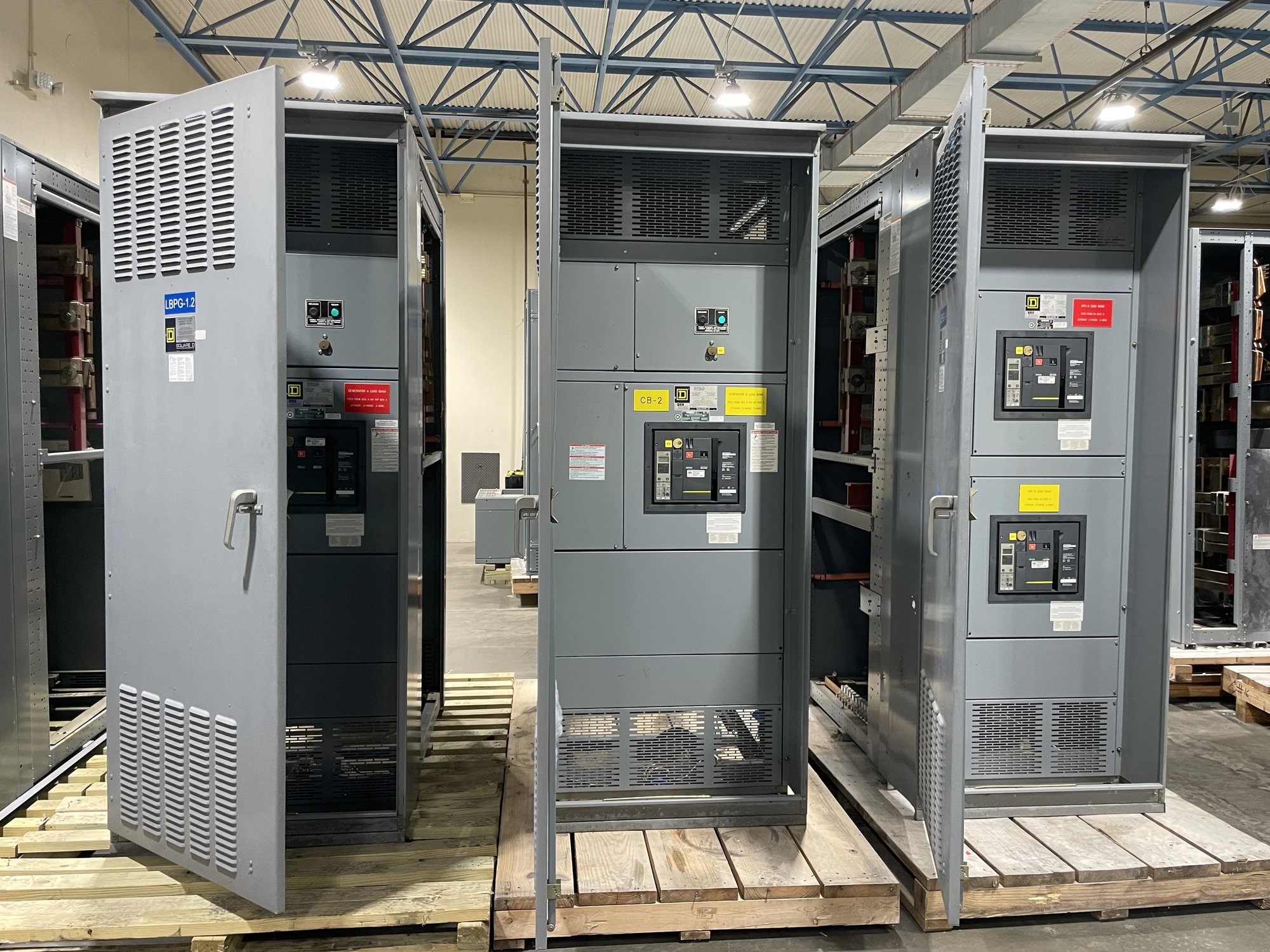
For a new switchboard assembly, provide the system voltage, phase and wire arrangement, available fault-current information, main and feeder requirements, load schedule, and harmonic study assumptions. Identify whether the requested design is a UL 891 switchboard assembly and state the required documentation and configuration. UL 891 applies to switchboards; it should not be treated as a blanket listing for medium- or high-voltage switchgear.
Coordinate thermal and protection decisions
Harmonic current can increase effective heating in conductors and equipment, while protective devices respond according to their design and settings. Ask the engineer to consider neutral loading, bus temperature rise, enclosure conditions, and device application together. A breaker sized from fundamental-frequency load assumptions may not settle the question of thermal suitability when harmonic content is significant.
Where measurements are available, share phase and neutral current readings, voltage distortion data, load operating state, and the point of measurement. Where measurements are not available, identify assumptions and request that the engineering review state what must be verified before final selection. Filtering, transformer choices, and load-side corrections depend on the system study; they should not be specified as universal remedies.
Prepare a useful manufacturing handoff
A quote request is more actionable when it includes one-line diagrams, equipment schedules, bus and neutral requirements, enclosure and mounting constraints, feeder counts, protective-device preferences, and the latest harmonic report. Include anticipated spare capacity and expansion plans, but distinguish firm requirements from options. These details help define a custom-built configuration without assuming that a standard arrangement fits the load.
For Georgia projects, provide the delivery location, site access constraints, receiving hours, required delivery sequence, and target on-site date. Nationwide shipping can support project delivery, while the order’s configuration, availability, and timeline are confirmed for that specific scope. Align the requested ship window with the construction schedule, inspection milestones, and any site work needed before the assembly arrives.
Close the loop before release
Before releasing the assembly for manufacture, have the responsible engineer confirm the harmonic assumptions, neutral and conductor basis, protective-device coordination, and any required mitigation. Resolve differences between the study, one-line, and equipment schedule; late changes to feeder counts or neutral provisions can affect the build. Installation, settings, and energization should follow the approved design and be handled by qualified personnel.
For a quote, send the one-line, load schedule, available harmonic analysis or measurement data, system and fault information, required switchboard scope, and Georgia delivery constraints together. Ask the engineering team to identify any missing inputs that affect neutral sizing or equipment selection, then confirm the final configuration and schedule before purchase. That handoff turns harmonic concerns into defined equipment requirements.