Distribution fundamentals
Electrical distribution is the movement of power from a utility service, generator, or other source through equipment to loads. A distribution system may include transformers, switchboards, panelboards, feeders, and branch circuits. The one-line diagram shows the main electrical relationships in simplified form; it helps reviewers understand sources, buses, protective devices, and connected loads without depicting every wire.
A feeder carries power between distribution equipment or from equipment to a downstream load center. A bus, or busbar, is the conductive path inside an assembly that distributes power to connected devices. When preparing a specification, identify the source and destination of each feeder, relevant load information, and how the equipment must connect to the existing or planned system. The project engineer must establish the design requirements.
Switchgear and switchboards
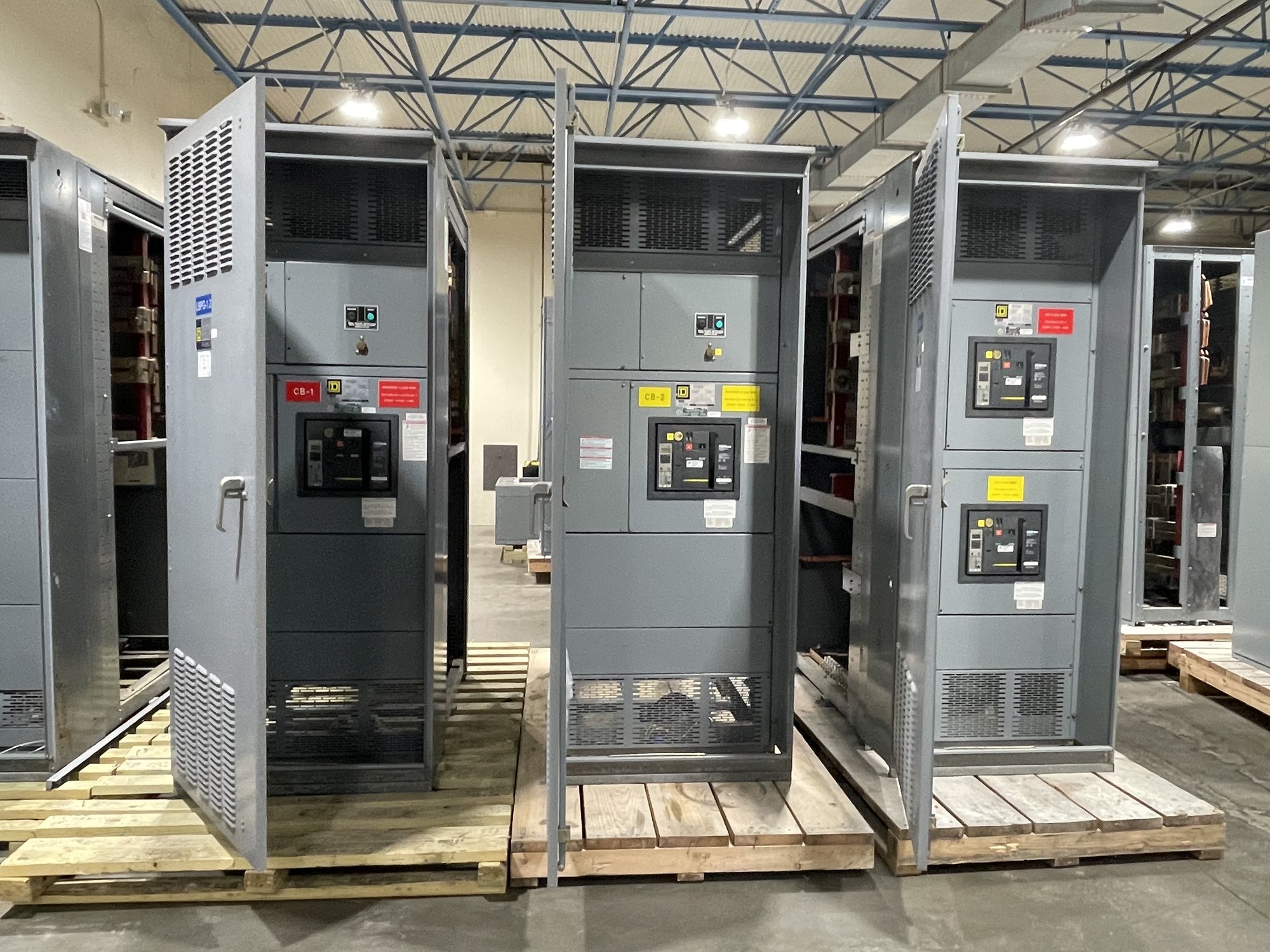
Switchgear is an assembly of switching, protective, and control devices used to control and isolate electrical circuits. The term may refer to equipment at different voltage levels, so the project documents should state the intended application rather than rely on the word alone. Voltage class, available fault current, system grounding, service conditions, and required functions help distinguish one design from another.
A switchboard is a specific type of low-voltage distribution assembly, commonly used to receive power and distribute it through feeder or branch devices. UL 891 is a standard for switchboard assemblies; it is not a blanket listing for medium- or high-voltage switchgear. Confirm the specified equipment type, applicable standard, ratings, and scope with the design engineer and authority having jurisdiction.
Ratings and protective devices
Voltage rating identifies the electrical system level an assembly or device is intended for. Ampere rating describes current capacity under specified conditions, while short-circuit current rating, or SCCR, indicates the level of short-circuit current an assembly can withstand under its stated conditions. These values are not interchangeable. The design team must determine applicable ratings from system data and equipment coordination needs.
A circuit breaker opens a circuit when its operating mechanism responds to specified conditions, such as an overcurrent. A fuse interrupts current by melting its element under defined conditions. A protective relay monitors electrical quantities and can signal a breaker to trip; it does not by itself replace the interrupting device. Ask the engineer which protection functions, device types, settings provisions, and coordination requirements belong in the equipment scope.
Configuration and specification language
A lineup is a group of connected equipment sections arranged as one assembly. Incoming sections receive power, and distribution sections contain devices serving outgoing circuits. Section count, device arrangement, bus configuration, metering, control components, and cable access affect the layout. Dimensions and access clearances must be coordinated with the room, conduits, structural conditions, and installation plan.
A custom-built configuration is developed around project requirements, but the phrase does not establish that every requested component is available or suitable. For a quote, provide the current one-line diagram, equipment schedule, required standards and ratings, preferred device types, metering or control needs, and any enclosure or connection constraints. Flag alternates, exclusions, and unresolved design decisions so the proposed scope can be reviewed accurately.
Submittals, scope, and delivery
A submittal is the equipment information provided for project review, such as drawings, device schedules, and technical data. It allows the engineer and other designated reviewers to compare the proposed assembly with the contract documents before release to production. Review responsibilities, approval sequence, and required revisions should be clear; approval does not replace the engineer’s design responsibility or applicable authority review.
Lead time is the expected interval for defined project steps, not a universal promise. It can depend on final scope, component availability, drawing approvals, and production scheduling. Shipping to a Georgia project must also fit site access, receiving hours, unloading capability, and the installation sequence. Confirm the delivery location, requested timing, receiving contact, and any delivery restrictions for each order.
Turn terminology into a clear quote
For a new switchboard or switchgear quote, send the latest project documents and identify what is fixed versus still under design. Include source and load information, system voltage, required equipment ratings, fault-current data when available, intended protective functions, section layout, connection preferences, and project review milestones. If data is pending, mark it as pending rather than substituting an assumed value.
Before proceeding, ask which equipment standard and assembly scope apply, what ratings are being quoted, which devices and accessories are included, what drawing reviews are required, and what assumptions affect schedule or Georgia delivery. Resolve discrepancies between the one-line, specifications, and equipment schedule with the project engineer. This shared terminology helps procurement compare scope and gives the manufacturer a sound basis to confirm configuration, availability, and timing.