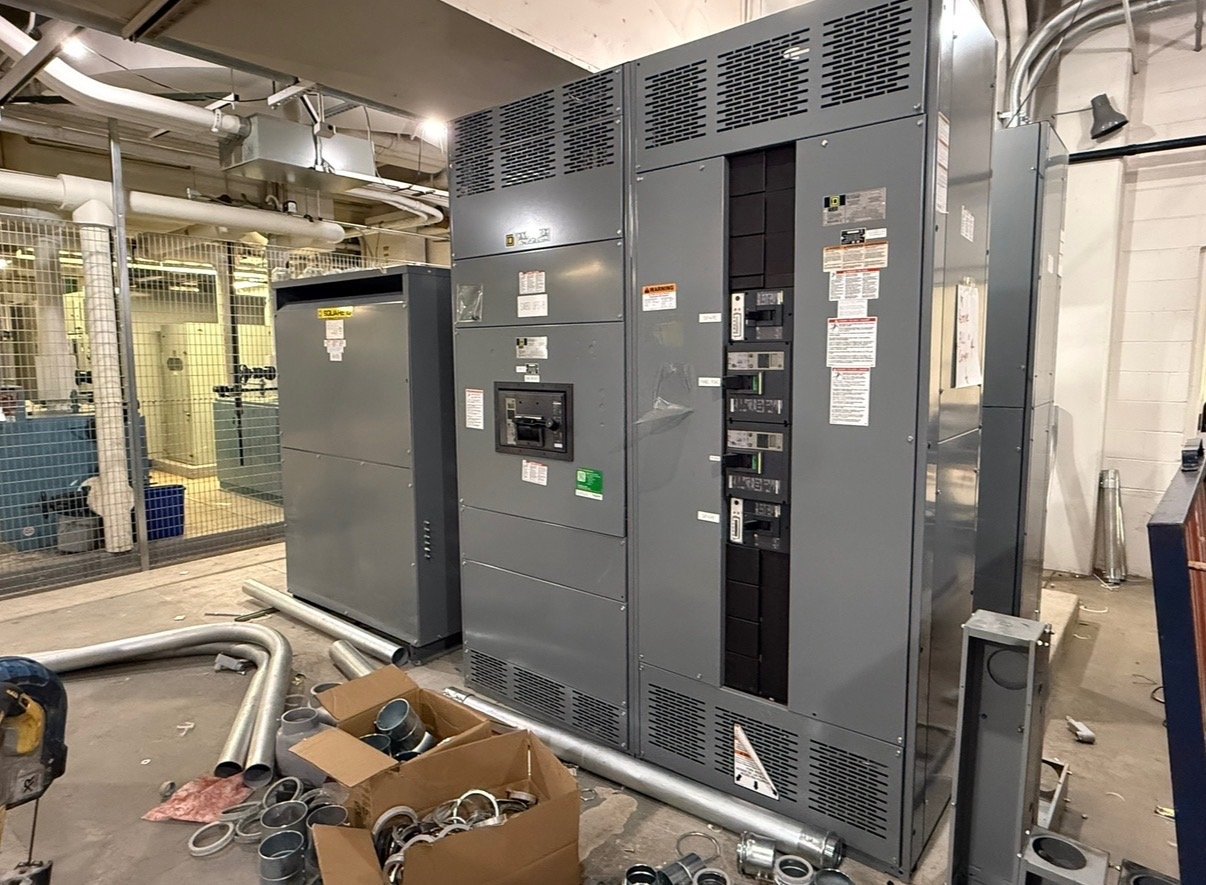
Which equipment type fits the application?
Switchgear and switchboards are not interchangeable labels for every assembly. The application, voltage class, system arrangement, available fault current, operating requirements and project specifications help determine the appropriate equipment. A low-voltage distribution project may call for a switchboard assembly, while other systems require switchgear designed for a different voltage class or duty. The one-line diagram and equipment schedule are better starting points than a general product name.
For new equipment, provide the intended function, source and load arrangement, installation setting, and any required incoming or outgoing device configuration. If the project documents use a broad or inconsistent term, identify that discrepancy rather than assuming the terms describe the same construction. The manufacturer can review the requested scope and clarify what configuration is being quoted; the project engineer remains responsible for confirming the design.
What do ratings tell us?
Ratings define limits and capabilities that must match the system and the specified operating conditions. Relevant values can include voltage, continuous current, short-circuit or interrupting capability, frequency, number of phases, and enclosure or environmental requirements. Device ratings, bus ratings and assembly characteristics are related but are not interchangeable. A quote should identify the requested values clearly and flag information that is missing or inconsistent.
Do not infer a suitable rating from an existing cabinet’s appearance or from a single breaker label. Confirm system data, protective-device requirements and applicable project specifications with the responsible engineer. UL 891 applies to switchboard assemblies; it is not a blanket listing for medium- or high-voltage switchgear. Any certification or construction requirement should be stated for the specific equipment being requested and verified for the quoted scope.
What information helps produce a quote?
A useful quote request includes the one-line diagram, equipment schedule, specification sections and current drawing revision. State the equipment type, nominal system voltage, phase and wire arrangement, bus and device ratings, main and feeder quantities, and required accessories where known. Include enclosure requirements, cable entry or termination preferences, metering and control needs, and any defined communication or coordination interfaces.
Also identify the project location in Georgia, delivery destination, requested quantity, required submittal documents, and the date by which pricing or equipment is needed. Note which selections are fixed and which remain open to engineering review. When documents conflict, list the affected drawing or specification references. This makes assumptions visible, helps scope custom-built configurations, and reduces the risk of comparing quotes based on different equipment.
How are lead times established?
Lead time depends on the actual configuration, component availability, engineering review, drawing approvals, production requirements and order details. Custom features or unresolved specifications can affect the schedule. A general estimate should not be treated as a committed ship date, and availability is not assumed from a standard configuration or a prior project. The schedule is confirmed for the specific order after its scope and requirements are reviewed.
For a Georgia project, provide the required on-site date, receiving constraints, site access or unloading limitations, and whether delivery must coordinate with a construction sequence. Nationwide shipping can serve Georgia destinations, but transit and delivery arrangements depend on the order and destination. Align the equipment schedule with the project’s installation plan and allow time for document review, approvals and coordination before treating delivery as a fixed milestone.
What should be verified before release?
Before approving drawings or releasing equipment for production, compare the proposed lineup with the latest approved one-line diagram, schedules and specifications. Check device quantities and functions, ratings, bus arrangement, section dimensions, cable access, metering, control interfaces and accessory requirements. Confirm that revisions, exceptions and assumptions are documented so the engineering, procurement and construction teams are working from the same scope.
The project engineer and the authority having jurisdiction determine design acceptance and applicable code requirements. Manufacturer review of a quote or drawing does not replace that project-specific evaluation. If a field condition, utility requirement or coordination study changes, communicate the change before production status or shipment is assumed. The final documents should identify what is included and what remains outside the supplied assembly.
How should the project hand off to purchasing?
Purchasing teams can keep the handoff clear by attaching the approved scope, drawing revision, quote exceptions and required delivery information to the purchase order. Identify the approving contact, submittal milestones, requested ship window, ship-to address and receiving contact. If substitutions or alternates are under consideration, record the exact technical differences and obtain engineering review rather than treating similar descriptions as equivalent.
For a Georgia order, begin with the current project documents and a realistic delivery window, then request confirmation of configuration, availability and schedule for that specific scope. Resolve open rating or interface questions before approval, and carry approved revisions through procurement and site coordination. This gives the manufacturer and project team a common basis for quoting, building and arranging delivery of new equipment.