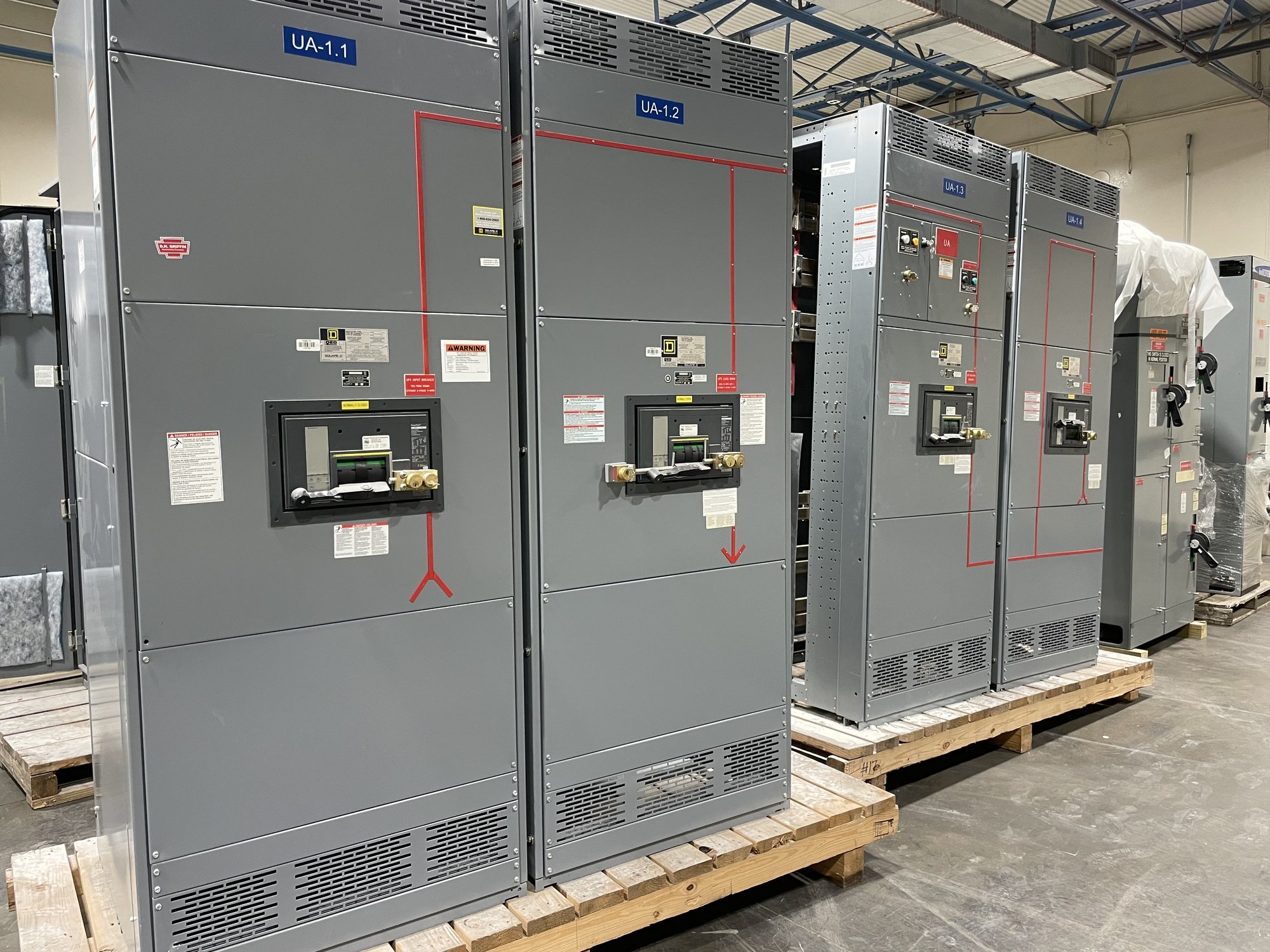
Start with the project application
A useful first conversation begins with the equipment’s role in the facility, not a product name alone. Share whether the project is new construction, a replacement, an expansion or a staged upgrade, along with the intended location and the loads or distribution sections the assembly must serve. These details help frame the configuration discussion without assuming that an existing lineup or preliminary drawing establishes the final design.
Provide the available electrical documents, such as a one-line diagram, equipment schedule, specification and relevant plan views. Identify what is preliminary, what has been approved and which documents govern if they conflict. The project engineer should confirm system characteristics and design criteria; our review can clarify equipment scope and identify information still needed before a quote or build configuration can be defined.
Resolve the specifications that shape the build
For a switchboard assembly, discuss the required arrangement, service conditions, main and distribution sections, metering or control provisions, and interfaces with upstream and downstream equipment. Identify any requested UL 891 scope for the switchboard assembly and make clear which documents or project requirements establish it. UL 891 applies to switchboards; it should not be treated as a blanket listing for medium- or high-voltage switchgear.
Electrical ratings, protective devices, bus details, enclosure requirements and environmental conditions must come from the project’s engineering basis rather than guesswork. Share specified values and any approved exceptions, and flag open decisions for the responsible engineer. The final configuration, ratings, applicable standards and acceptance requirements need review by qualified project professionals and the authority having jurisdiction where applicable.
Make custom configuration decisions early
Custom-built equipment can address project-specific arrangements, but customization depends on a complete, coordinated scope. Explain constraints such as available floor space, access for installation and maintenance, cable entry direction, conduit locations, adjacent equipment and required working clearances. Provide dimensional drawings when available, and distinguish fixed building conditions from dimensions that remain subject to field verification.
Also identify requested accessories, control interfaces, labeling conventions, metering needs and any coordination with other supplied equipment. A clear list helps separate included items from options and prevents assumptions from becoming procurement gaps. Where details are unresolved, record who will decide them and by when; changes after configuration approval can affect documentation, material selection and the order schedule.
Plan procurement around real constraints
Purchasing teams need a quote that reflects the intended scope, not just a general equipment description. Send the project location in Georgia, requested quantity, target delivery window, bid or release date, and any required submittal or approval milestones. Include the specification section, drawing revision and any approved alternates so commercial and technical reviews use the same basis.
We focus on American-made components, U.S. manufacturing, custom configurations and short lead times, but component availability and the schedule depend on the specific order. Exact scope, availability and timeline are confirmed for each project. If the installation date is fixed, state the date and explain what drives it; the team can then assess the requested schedule against the configuration and procurement requirements rather than assume a general lead time.
Coordinate Georgia delivery and project handoff
Georgia delivery is planned as part of the order, without implying a local office or on-site service. Provide the complete delivery address, site access limits, receiving hours, unloading arrangements and any restrictions on truck size or delivery appointment. Note whether the destination is an active facility, a construction site or a staging location, and identify the person responsible for receiving and inspecting the shipment.
Before release, align the approved equipment documents with the purchase order, destination and delivery expectations. Confirm who reviews submittals, who approves deviations, and how revisions are transmitted to the manufacturer. At handoff, the receiving and installation teams should have the current approved drawings and shipping information; qualified personnel must handle installation, connection, testing and energization in accordance with project requirements.
Prepare a complete request for quotation
For a focused quote, gather the one-line diagram, equipment schedule, applicable specification, plan dimensions, requested standards, known ratings, options, quantity and project milestones. Add the Georgia delivery details and identify open technical questions instead of filling gaps with assumptions. If the project is a replacement, provide the existing equipment information and explain which interfaces or site dimensions have been verified.
A practical next step is to send the current document set with a concise scope summary and a list of decisions still pending. State the required delivery window and the review dates that control it. This gives our team a basis to clarify configuration, identify exclusions and confirm order-specific availability and timing, while your engineer and procurement lead retain a clear record of approvals and responsibilities.