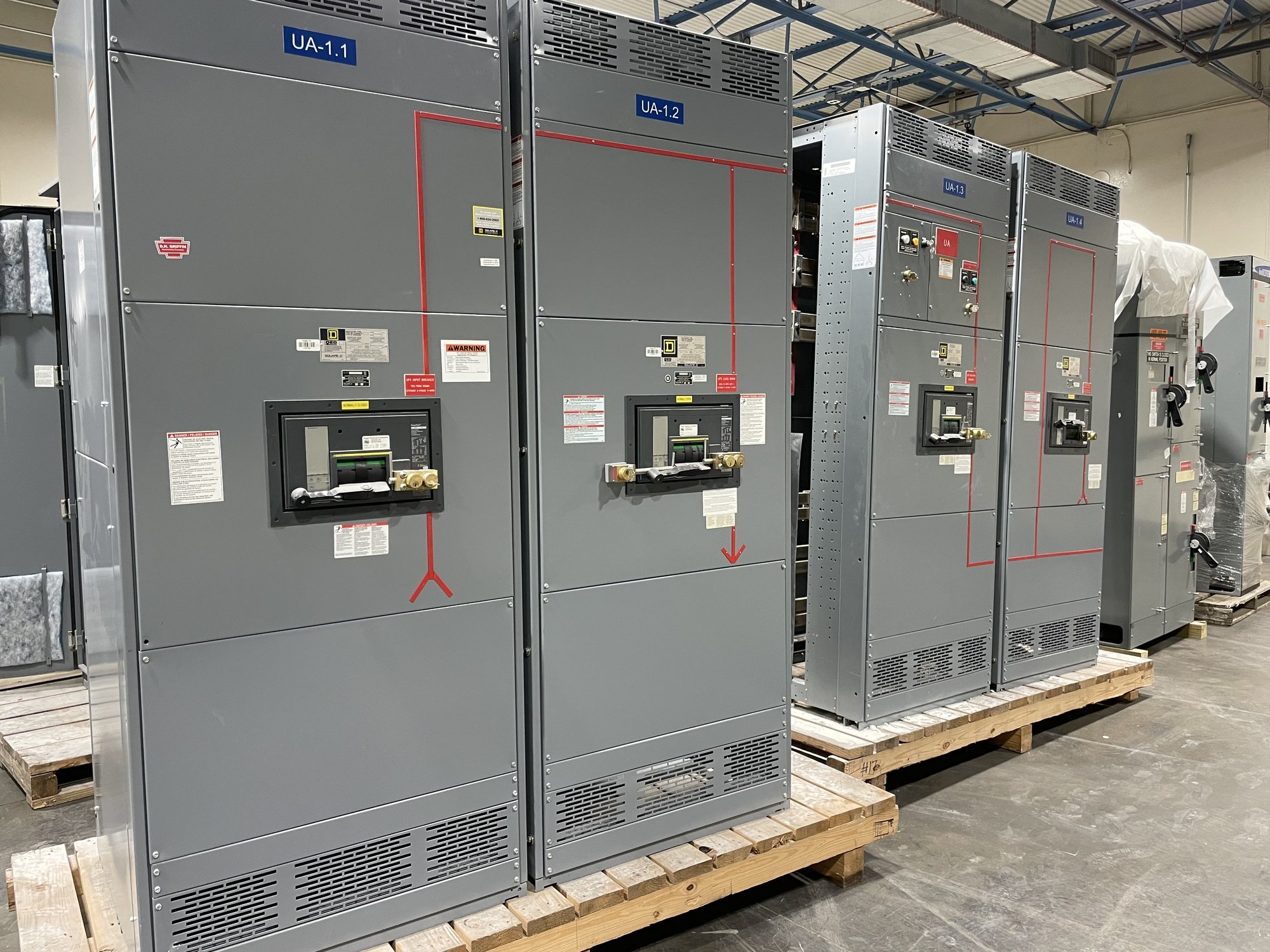
Start with the enclosure environment
A seal is selected for the conditions at the enclosure, not simply because a product is labeled weather-resistant. Record whether equipment will be indoors or outdoors, exposed to washdown, wind-driven rain, airborne dust, oil mist, cleaning chemicals, or frequent temperature swings. Georgia projects may face humid summers and seasonal storms, but the actual exposure at the installation site matters more than a general regional assumption.
Document the enclosure arrangement, mounting orientation, door locations, cable-entry details, and any ventilation or pressure-relief features. Gaskets cannot compensate for an unsuitable enclosure layout, unsealed penetrations, or an application that requires controlled ventilation. Share the intended environmental protection requirements and applicable project documents so engineering can evaluate the complete assembly rather than treating the door seal as an isolated component.
Match material to service conditions
Elastomer selection depends on temperature range, moisture, ultraviolet exposure, ozone, oils, cleaners, and contact with adjacent materials. A material that performs well against water may be unsuitable where solvents or petroleum products are present. Consider both normal operation and foreseeable cleaning or maintenance products, and identify any known chemical exposure rather than relying on a broad description such as industrial environment.
Ask for the proposed gasket material, form, and attachment method to be reviewed against the enclosure design and service conditions. Solid profiles, cellular materials, and formed seals behave differently under compression and may have different recovery or aging characteristics. Material suitability, dimensional fit, and any requested environmental rating must be confirmed for the specific configuration; do not infer an enclosure rating from a gasket material name alone.
Specify compression, not just thickness
A gasket must compress enough to close the intended sealing path without being crushed or preventing the door from seating. Relevant factors include free height, profile geometry, groove or land dimensions, door stiffness, hinge alignment, latch spacing, and the condition of mating surfaces. Excessive compression can accelerate permanent set or distort a door; insufficient compression can leave gaps, especially near corners and between latches.
Provide enclosure drawings or interface dimensions, gasket path details, door and frame construction, hinge and latch locations, and the intended closure arrangement. Where an existing design is being revised, note measured gaps and any recurring leak locations. Engineering review can assess how the proposed seal interacts with the assembly, but final fit and environmental performance depend on the complete enclosure and installation conditions.
Account for access and service life
Switchgear doors may be opened for inspection, adjustment, or other work by qualified personnel. Repeated opening, uneven latching, abrasion, contamination, and aging can change gasket recovery and sealing contact. A seal that is difficult to inspect or replace can complicate maintenance, while an attachment method that pulls away during service can create a gap after the door is closed.
Establish an inspection approach based on the equipment instructions and site maintenance practices. Look for cracking, hardening, tears, displacement, contamination, loss of resilience, and uneven contact around the full perimeter. Keep compatible replacement material and installation details documented where required by the maintenance plan. Do not apply lubricants, adhesives, or cleaners unless they are approved for the selected material and assembly.
Resolve specification and procurement details
Before requesting a quote, share the enclosure type and drawings, number and location of sealed doors, exposure conditions, target environmental requirements, temperature range, chemical or cleaning exposures, and any specified gasket material or profile. Identify whether the requirement is for a new UL 891 switchboard assembly or another equipment configuration; UL 891 applies to switchboard assemblies and does not establish a blanket listing for medium- or high-voltage switchgear.
Also provide project quantity, requested delivery location in Georgia, required submittal information, schedule constraints, and any owner or engineer preferences. These details help clarify the scope and identify questions before fabrication. Material availability, final design, assembly scope, and delivery timing are confirmed for each order; no gasket choice by itself establishes code compliance or agency approval.
Carry the seal detail through delivery
A useful project handoff identifies the approved gasket material and profile, seal path, attachment approach, relevant drawings, and inspection or replacement notes. Keep revisions aligned across the equipment schedule, approved submittals, and procurement documents. If the project changes exposure conditions, door hardware, or enclosure dimensions, flag the change before fabrication so its effect on sealing can be reviewed.
For Georgia delivery, coordinate the required arrival point, site receiving limitations, unloading arrangements, and the date equipment is needed for the project sequence. Share these logistics with the order scope rather than assuming a standard shipment fits every site. Before requesting a quote, assemble the enclosure drawings, environmental conditions, material preferences, door details, maintenance expectations, and delivery requirements; that information gives the manufacturer a practical basis to confirm the proposed sealing scope.