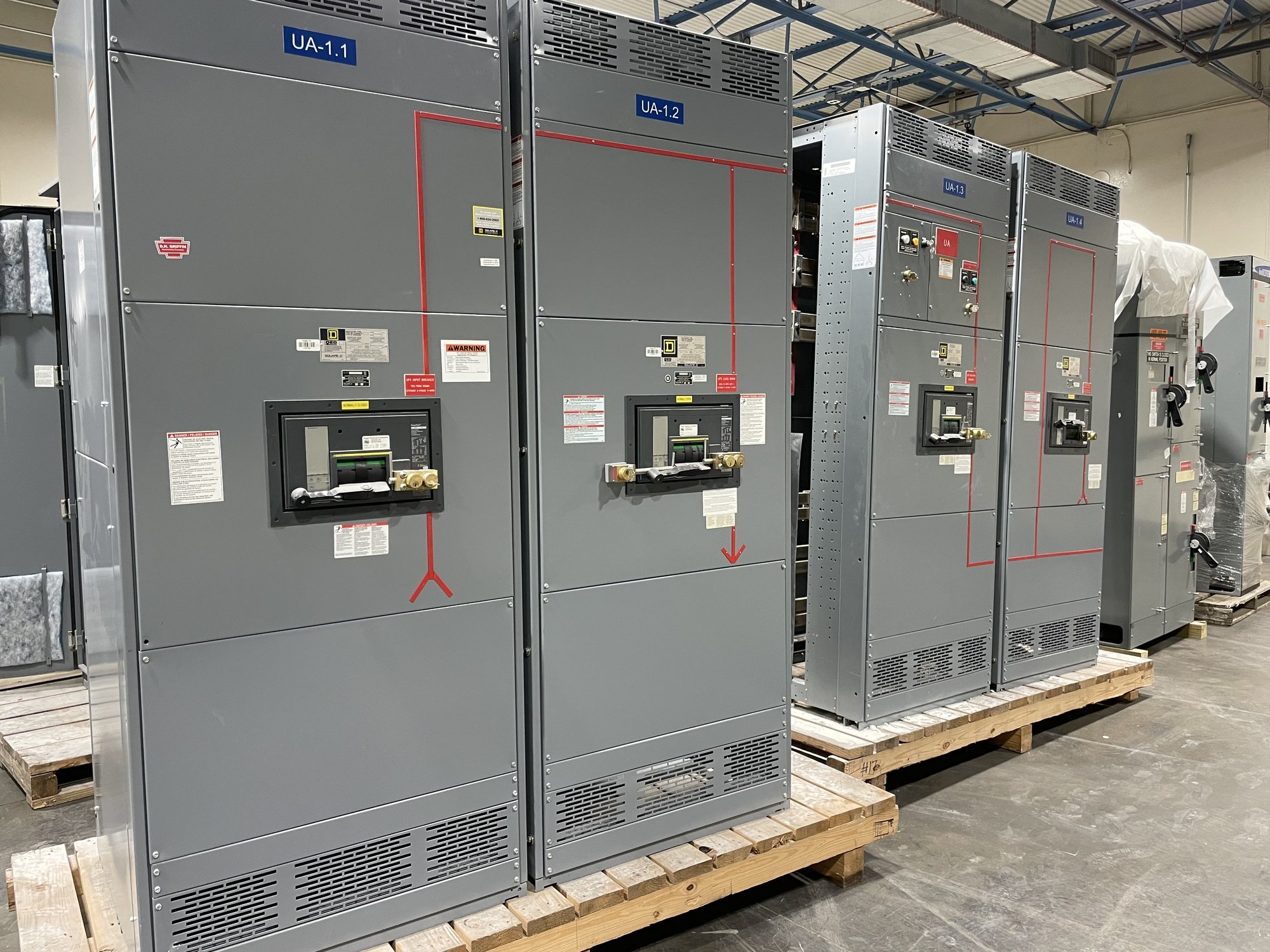
Start with the electrical basis
The first pricing driver is the equipment’s role and electrical duty. Identify whether the request is for a low-voltage switchboard, switchgear, or another assembly, then share the system voltage, phase, frequency, main and feeder requirements, and available fault-current information. Those details shape bus design, protective-device selection, enclosure arrangement, and the engineering needed to establish a buildable scope.
Do not assume that a familiar project voltage or a one-line diagram alone answers every question. The quote process may need the source characteristics, grounding method, utility or transformer information, load schedule, and applicable project documents. A qualified engineer should resolve design assumptions and protective coordination; the manufacturer can price the defined configuration, not infer an unverified system design.
Configuration and device choices
The number and type of mains, ties, feeders, and spare provisions affect material, assembly work, and layout. For each circuit, identify its intended function and the required protective device, such as a breaker or fused switch, where the design calls for one. Ratings, trip or fuse details, accessories, metering, control power, and interlocks can also change the scope. Requested features should be listed explicitly rather than left to an assumed standard arrangement.
Physical construction matters as well. Indoor or outdoor use, enclosure type, cable entry direction, front or rear access, section dimensions, finish, and equipment-room clearances can influence the design and price. If the assembly must connect to existing equipment, provide its relevant interface dimensions and connection details. Custom-built configurations are available subject to engineering review, component availability, and confirmation of the order scope.
Standards, drawings, and documentation
Specify the governing project requirements and the documents needed for review, approval, installation planning, and turnover. These may include a one-line diagram, site or room layout, load schedule, equipment schedule, control schematic, and written specification. Clarify which submittals, drawing revisions, labels, test records, or manuals are required so the quotation reflects the actual documentation and coordination effort.
For a UL 891 switchboard assembly, identify that requirement directly and define the intended assembly scope. UL 891 applies to switchboards; it should not be treated as a blanket listing for medium- or high-voltage switchgear. State other requested standards or agency requirements separately. The applicable design and approval path depends on the equipment and project, so confirm requirements with the engineer and authority having jurisdiction.
Schedule and procurement decisions
Requested delivery timing can affect component selection, engineering sequence, and production planning, but no schedule should be assumed from a general statement about short lead times. Share the required on-site date, drawing-review milestones, release date, and any phased delivery needs. The manufacturer can confirm availability and a practical timeline after reviewing the defined configuration, current component supply, and approval process.
Procurement can reduce avoidable changes by deciding early which options are mandatory and which may be alternatives. Identify approved device preferences, acceptable substitutions if any, spare capacity, metering scope, and control integration requirements. American-made components may be considered for the build, but component origin and availability depend on the specified design and order. Confirm any origin requirements in the request rather than treating them as automatic.
Georgia delivery and site readiness
Delivery planning is part of the quoted scope, not an afterthought. Provide the Georgia project address or delivery point, receiving hours, unloading arrangements, access limits, and whether the site can accept a complete assembly or needs sections delivered separately. Note restrictions such as narrow doors, limited staging space, lift requirements, or a scheduled outage that affects when equipment can be received and moved.
Nationwide shipping can support projects across Georgia, while the actual freight method, packaging, shipping cost, and delivery timing depend on the order and destination. Confirm who coordinates unloading and movement from the receiving point to the electrical room. Share site constraints early so the equipment configuration and delivery plan can be reviewed together; do not assume freight includes rigging, placement, installation, or energization.
Prepare a useful quote request
A focused request should include the one-line diagram and equipment schedule, electrical ratings, circuit count and functions, device requirements, enclosure and access conditions, requested standards, documentation list, delivery location, and target milestones. Add known interface dimensions and identify open design questions. If a detail is pending, label it as pending instead of presenting an estimate as a confirmed requirement.
Before submitting, have the project engineer and procurement team align on the basis of design, acceptable options, submittal needs, and delivery assumptions. Ask the manufacturer to identify exclusions, unresolved inputs, and the point at which pricing or schedule may change. This gives the Georgia project team a quote tied to a clear scope and a sound basis for comparing proposals. quotation marks