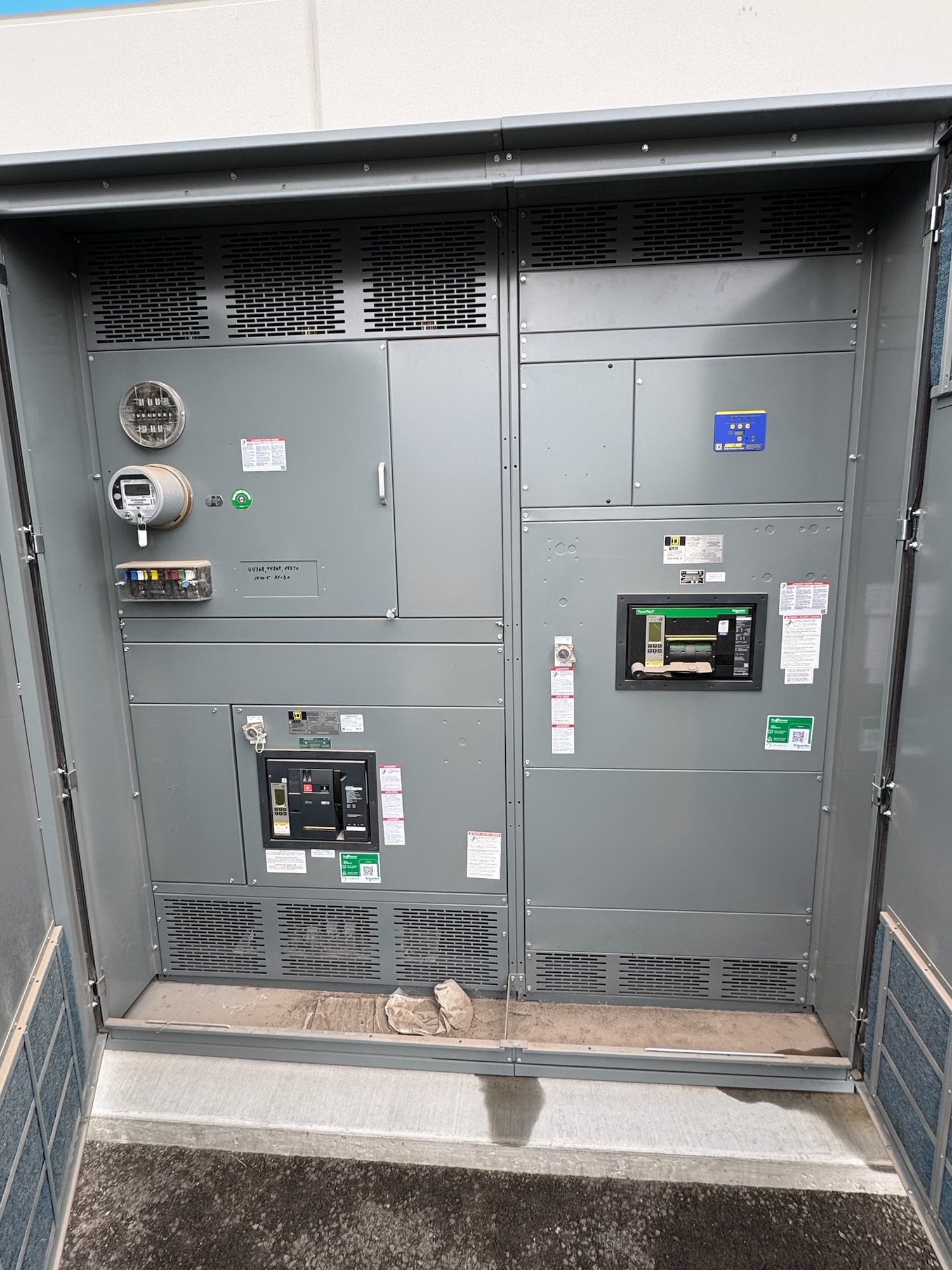
What an enclosure rating tells you
An enclosure rating describes protection provided by an enclosure under defined conditions. It helps teams compare how a housing limits access to hazardous parts and resists certain external influences, such as solid objects, dust or water. It does not, by itself, establish that switchgear will suit every outdoor location, withstand every exposure, or operate correctly under any site condition.
NEMA and IP designations come from different rating systems and test approaches. Their numbers are not interchangeable, even when two designations appear to address similar concerns. Specify the system and exact designation required by the project documents, then confirm that the proposed enclosure and complete assembly meet that requirement. Avoid treating a broad label such as “weatherproof” as a technical specification.
NEMA and IP: compare the requirements, not just the numbers
NEMA enclosure types address particular environmental conditions and may include considerations such as corrosion, icing, oil or access to hazardous parts, depending on the type. IP codes classify protection against access to hazardous parts, solid objects and water ingress according to their defined tests. A higher number in one system does not translate directly into a matching number in the other.
The correct comparison begins with the project’s actual hazards and governing documents. Ask whether the specification requires a particular NEMA type or IP code, and whether it also names a test standard or installation condition. If documents use both systems or request an “equivalent” rating, have the engineer of record define acceptable equivalence; do not assume a supplier’s cross-reference settles the design.
Translate Georgia site conditions into requirements
Georgia projects may face humid air, wind-driven rain, seasonal storms, airborne dust, insects, washdown or corrosive atmospheres. Exposure varies between sites and even between areas of one facility. An enclosure beneath a deep canopy, one beside a loading area and one in direct weather may need different consideration. Describe the actual location rather than relying on the state or city as a substitute for site assessment.
Record whether the gear is indoors or outdoors, sheltered or exposed, and near salt, chemicals, process emissions or irrigation. Note expected water sources, drainage, flood exposure, cleaning methods, ambient temperature and ventilation constraints. Identify whether condensation is a concern. These details help the design team evaluate enclosure construction and any project-specific provisions; a rating alone does not establish suitability for flooding, immersion, condensation control or every corrosive exposure.
Consider the complete assembly and its openings
Protection depends on the assembled equipment, not just the cabinet specification. Doors, seams, hinges, latches, cable-entry points, conduit hubs, louvers and operator devices can affect the finished enclosure. Field drilling or adding accessories may change the protection provided unless the modification is evaluated and carried out in accordance with the design. Clarify which entries and devices are factory supplied and which are part of site installation.
Environmental protection also interacts with heat management and maintenance. Tighter construction can limit air exchange, while ventilation openings can change exposure protection. Check equipment heat dissipation, ambient conditions and any required cooling approach with the design team. Consider door access, working space, inspection needs and the effect of repeated operation on seals. Do not trade away thermal or service requirements simply to select a more restrictive-sounding designation.
Make the specification actionable for procurement
For a quote, provide the required NEMA type or IP code, the governing project specification, equipment function and approximate installation environment. Include indoor or outdoor placement, exposure to rain or washdown, corrosive agents, dust, temperature range, mounting arrangement, cable-entry locations and expected accessories. Share drawings or schedules when available, and flag any conflicting requirements so they can be reviewed before the configuration is finalized.
Also identify who will approve the enclosure selection and whether site modifications are planned. Confirm the required assembly scope, document expectations and delivery destination in Georgia. New switchgear is built to the confirmed project configuration; availability and timeline depend on that scope. The manufacturer can review the requested enclosure provisions alongside the assembly requirements, but the project engineer and authority having jurisdiction determine design acceptance for the installation.
Carry the decision through delivery and installation
Before release, align the approved designation with drawings, schedules, submittals and purchase documents. Confirm that the specified rating applies to the complete assembly and that included openings, accessories and entry methods match the reviewed design. Record any limitations, exclusions or required field practices in the project handoff so contractors do not unintentionally alter the intended protection during installation.
For Georgia delivery, coordinate the destination, receiving access, unloading plan and installation sequence with the project team; delivery location does not establish site suitability. Send the enclosure designation, exposure description, entry plan and any conflicting specification notes with the quote request. Resolving those questions early gives engineering and procurement a clear basis to confirm the configuration before the new switchgear is built.