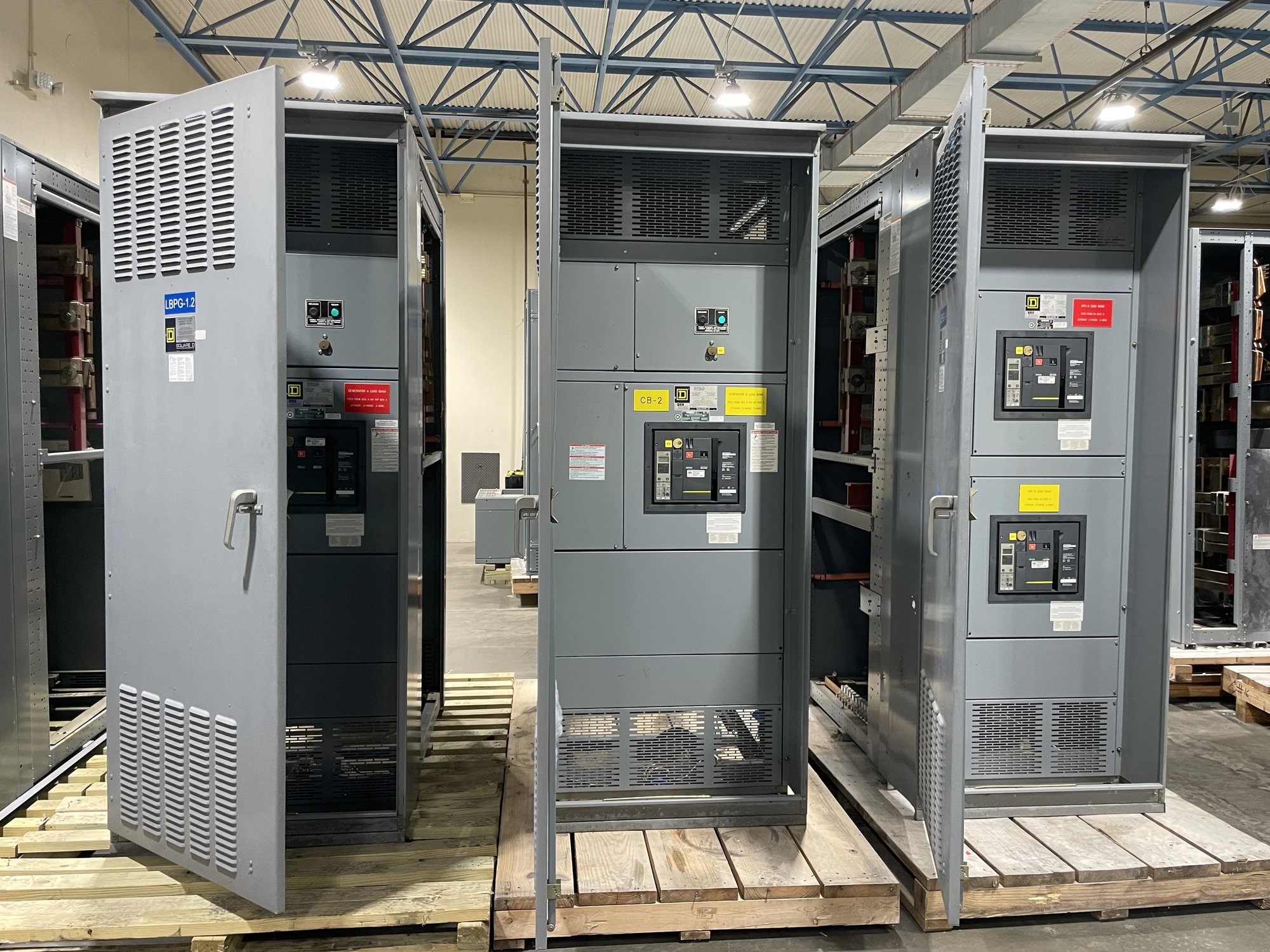
Understand where moisture comes from
Condensation forms when moisture in the air contacts a surface below the air’s dew point. In switchgear enclosures, that surface may be a cabinet wall, bus support, wiring channel or other component cooled by a change in ambient conditions. High relative humidity raises the likelihood of condensation, but humidity alone does not establish the risk; temperature and the enclosure’s thermal behavior matter too.
Georgia projects may encounter humid outdoor air, damp utility spaces, unconditioned rooms or buildings that cycle between occupied and unoccupied temperatures. Equipment near exterior walls, loading areas or locations subject to washdown may face different exposure than switchgear in a stable, conditioned electrical room. Document the actual installation environment rather than relying only on a city’s general climate.
Map temperature cycling
Ask how temperatures change through a typical day, season and operating cycle. Consider shutdown periods, overnight cooling, seasonal HVAC settings, nearby heat sources and whether equipment can be exposed to cold air before a humid room warms. A closed enclosure can still experience internal temperature changes as the surrounding room and energized equipment heat or cool at different rates.
Useful project information includes expected ambient temperature and humidity ranges, whether the room is conditioned continuously, and any known periods of high humidity or rapid temperature change. If measurements are available, share their location, duration and operating conditions. These details help engineering evaluate the moisture scenario; a single reading taken during a comfortable daytime condition may miss the critical period.
Evaluate heater requirements
Enclosure heaters can raise internal surface temperatures and reduce condensation risk when selected and located for the application. They are not a universal remedy: heater output, placement, control method, enclosure volume, heat loss and the equipment’s operating heat all affect results. A thermostat or humidistat may be considered where appropriate, but control settings and sensor placement should reflect the intended operating conditions.
For a quote, identify whether heaters are requested, what control approach is specified, and whether auxiliary power is available and maintained during equipment shutdown. Confirm the supply voltage, control wiring expectations and any space or access constraints. Do not assume a heater is included or that a proposed arrangement resolves every moisture source; the final design depends on the enclosure and site information reviewed for the order.
Treat ventilation as a tradeoff
Ventilation can help manage heat, but openings or fans may admit humid air, dust or other contaminants. In a humid environment, moving outside air through an enclosure can increase moisture exposure rather than reduce it. Conversely, limiting ventilation without considering heat dissipation may affect component temperatures. The decision should account for both thermal needs and the condition of air around the equipment.
Share whether the switchgear will be indoors or outdoors, the room’s HVAC approach, nearby contaminants, and any enclosure construction or environmental requirements established by the project. If the design calls for filtered ventilation, fans, cooling equipment or a sealed configuration, identify that requirement early. Engineering review must reconcile heat management, moisture control and the specified enclosure; no single ventilation approach fits every installation.
Specify the project conditions clearly
A useful specification separates known requirements from assumptions. Provide the switchboard or switchgear scope, installation location, indoor or outdoor use, expected temperature and humidity conditions, available auxiliary power, and any required heater or ventilation controls. Include relevant drawings, enclosure constraints and project standards. For UL 891 switchboard assemblies, that standard applies to the switchboard assembly; it does not establish a universal condensation-control design or cover medium- and high-voltage switchgear.
Procurement teams should ask which moisture-control features are included in the proposed configuration, which depend on project data, and what information remains unresolved. Confirm that the specified controls can be supported by the project’s power and wiring plans. Ratings, configuration, availability and schedule are confirmed for each order, so align the technical scope and required delivery date before release.
Coordinate handoff and delivery
Before submittal approval, have the project engineer and responsible electrical professionals review the proposed enclosure, controls, operating environment and installation requirements. Resolve assumptions about room conditioning, shutdown power and maintenance access. At handoff, pass along approved drawings, control details and site conditions to the teams responsible for installation and commissioning; only qualified personnel should handle or energize electrical equipment.
For Georgia delivery planning, provide the destination, site access constraints, requested arrival window and any receiving or staging requirements. Nationwide shipping can support projects across the state, while the specific shipping plan and timing are confirmed for each order. Before requesting a quote, gather environmental conditions, heater and ventilation preferences, auxiliary power details, drawings and delivery needs. That information gives the manufacturer a clear basis to review condensation-control options for the project.