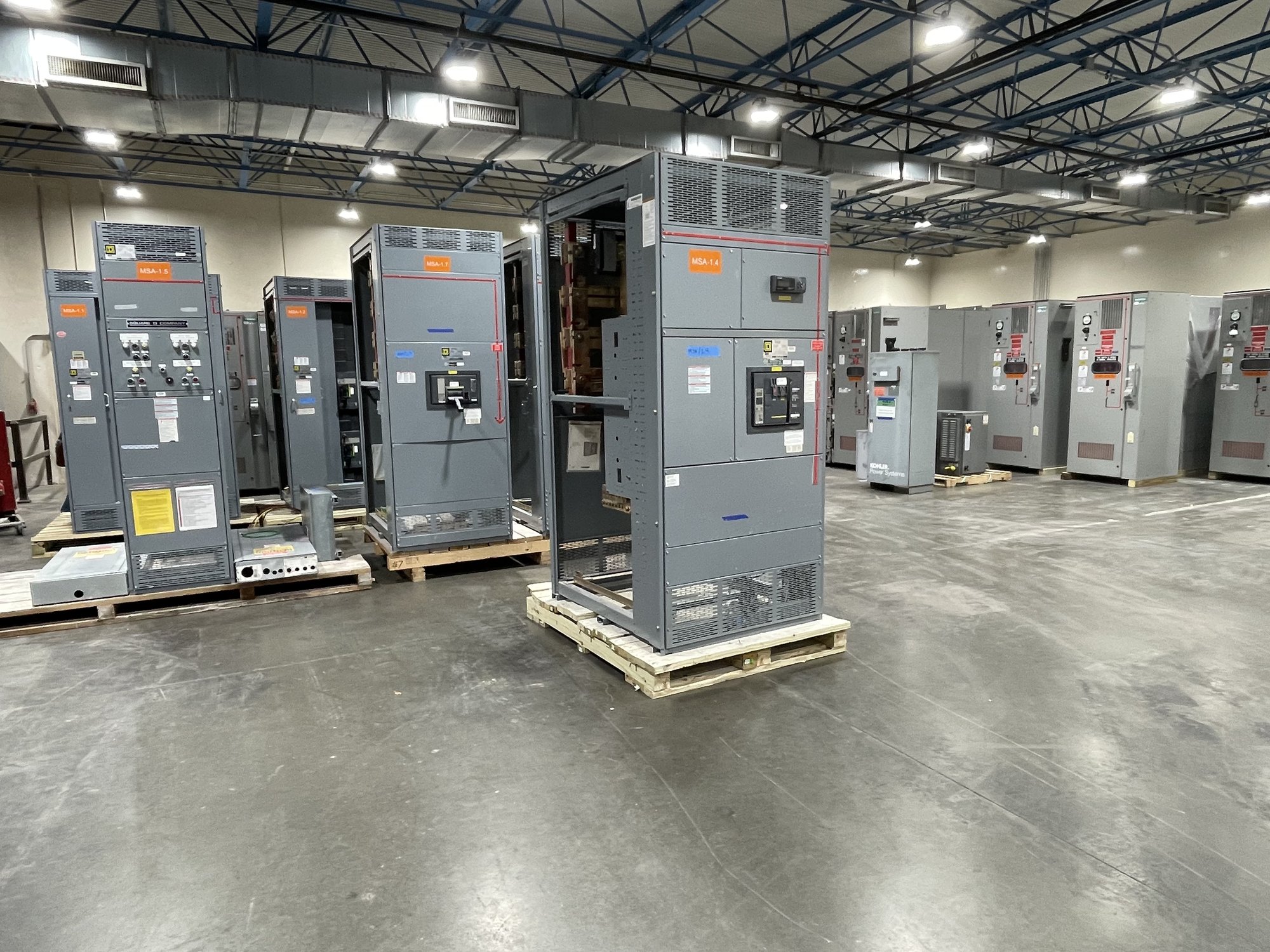
Establish what “reconditioned” means
The label alone does not establish an assembly’s history or present condition. Ask what work was performed, which components were replaced or retained, whether the bus and protective devices were inspected, and what test records are available. Request identification of the original equipment, modifications, and any limits on the seller’s inspection or documentation. A clear scope lets engineering assess what is known and what remains uncertain.
New equipment is built to an agreed project specification, so procurement can review the proposed configuration and documentation before release. It avoids relying on an unknown service history, but it still requires careful review of drawings, ratings, options and delivery scope. Compare proposals on the same basis: included sections, breakers, metering, controls, accessories, tests, documentation and freight. A lower initial figure may not include the same work or project fit.
Review records and standards by assembly
For a reconditioned assembly, request available nameplate data, original drawings, maintenance and repair history, test reports, and records identifying changed parts. Check that documents correspond to the specific equipment and configuration being offered. Missing or mismatched records can complicate engineering review, acceptance and future maintenance. Do not treat a prior label or test as proof that the equipment in its current condition meets project requirements.
UL 891 applies to switchboard assemblies; it is not a blanket listing for medium- or high-voltage switchgear. For new equipment, identify the required assembly standard, certification or evaluation scope in the specification and confirm what documentation will be provided for the offered configuration. For either procurement route, have the responsible engineer and authority having jurisdiction determine applicable requirements. Do not infer compliance from component markings or a general claim about the equipment.
Compare warranty and condition evidence
Warranty terms can differ by supplier and scope, especially when equipment has been used or repaired. Obtain the written terms and check what assemblies and components are covered, the term and start date, exclusions, remedy, and any conditions affecting coverage. Confirm whether the warranty addresses workmanship, replacement parts or the complete assembly. If terms are limited or unavailable, include that exposure in the comparison rather than assuming coverage.
For reconditioned equipment, ask for inspection and test methods, results, exceptions, and the party responsible for the work. A test report should identify what was tested and under what conditions; it is not a substitute for checking age, wear, obsolescence or suitability for the duty. New equipment also needs defined acceptance documentation and agreed testing scope. Review both options against the project’s reliability needs and the records facilities staff will need after handoff.
Verify electrical and physical compatibility
Compare system voltage, phases, frequency, bus ratings, short-circuit requirements, main and feeder arrangements, protective-device types, control voltage, metering and communication needs. Check available fault-current information and coordination requirements with the engineer. For existing installations, identify the make and model, connection details, cable or conduit entry, available space, and any interface with upstream or downstream equipment. A similar appearance or nominal rating does not establish interchangeability.
Reconditioned equipment can carry legacy devices or dimensions that affect replacement parts, maintenance, settings and integration. New custom-built configurations can be specified around the project’s documented requirements, subject to engineering review and confirmed scope. Provide one-line diagrams, load or feeder schedules, equipment photographs, nameplate information and site measurements where available. Resolve discrepancies before ordering; field changes can affect cost, schedule, installation planning and the final approval process.
Make the procurement and handoff decision
A useful quote request states the application, required ratings, configuration, preferred delivery window, destination in Georgia and the documents needed for review. Include whether the project calls for a UL 891 switchboard assembly, and identify any existing-equipment interfaces or site constraints. Ask the manufacturer to identify assumptions, exclusions, included tests, warranty terms and the proposed submittal package. Exact scope, availability and timeline are confirmed for each order.
Georgia delivery should be planned around receiving access, unloading responsibility, storage conditions and the installation sequence; confirm these details with the project team rather than assuming a particular shipping arrangement. Before purchase, have engineering compare the proposed equipment with the one-line and specifications, and have the authority review applicable requirements. Then record the selected configuration, approved documents, open items and acceptance responsibilities in the order handoff. Choose new or reconditioned only when evidence, fit and commercial terms support the project.