Identify the contaminant before choosing a method
Start with what is present and where it appears. Dry, nonconductive dust on an enclosure surface is different from conductive metal particles, carbon residue, salt deposits or moisture inside a compartment. Record affected sections, visible patterns, operating conditions and any recent construction, water intrusion or equipment work. Photographs can help an engineer or manufacturer assess the concern, but they do not establish that internal parts are suitable for cleaning or return to service.
Avoid treating every deposit as ordinary dust. Residue may indicate overheating, tracking, corrosion, insulation damage or an ongoing leak, and cleaning alone will not correct the cause. If there is evidence of arcing, abnormal odor, damaged insulation, standing water or unexplained protective-device operation, keep the condition within the facility’s electrical safety process and obtain qualified evaluation before deciding whether cleaning, repair or replacement is appropriate.
De-energized work requires controlled planning
Internal cleaning should be performed only by qualified electrical personnel under the facility’s safety procedures, with equipment placed in an electrically safe work condition and verified as required by applicable procedures. Switching, isolation, lockout/tagout, absence-of-voltage verification and control of stored energy must be addressed by the responsible qualified team. A door-open condition or an assumed outage is not proof that equipment is de-energized.
The work plan should identify the exact lineup and compartments involved, sources of backfeed, connected control power, adjacent energized equipment and boundaries for the task. Follow the equipment manufacturer’s instructions for access, approved cleaning materials and prohibited methods. Do not use liquids, solvents, compressed air or abrasive tools unless the manufacturer’s guidance and the responsible electrical engineering review permit them; these methods can spread contamination, damage insulation or drive debris into inaccessible areas.
Match inspection and cleaning to construction
Before work begins, determine the switchgear or switchboard manufacturer, model, age, enclosure type, compartment arrangement and installed options. Gather available drawings, nameplates, maintenance records and prior service findings. For a switchboard assembly, confirm how barriers, bus compartments, circuit breakers and cable areas are arranged; a cleaning procedure suitable for an exterior surface may not be suitable for internal bus insulation, electronic trip units or instrument components.
Specify how the qualified team will inspect for residual contamination and related damage after cleaning. The acceptance plan may need to address insulation condition, signs of corrosion or tracking, mechanical integrity, foreign-object removal and any testing or adjustments required by manufacturer instructions or engineering judgment. Do not assume that a clean appearance proves suitability for energization. The responsible engineer and facility authority determine required checks and release the equipment under site procedures.
Prevent recurrence at the source
Contamination control is more effective when the cause is corrected. Review enclosure doors, gaskets, unused openings, cable-entry sealing, ventilation paths and room housekeeping. Consider whether dust is entering during nearby cutting or concrete work, whether air movement carries fibers into equipment, or whether condensation follows temperature changes. Any modifications to ventilation, barriers or sealing should be reviewed for their effect on equipment cooling, access and the manufacturer’s intended design.
Set controls that fit the site: keep doors closed and secured, manage construction dust, maintain appropriate room conditions, and include exterior and interior condition checks in the facility’s maintenance program. Record findings, dates, work performed and any recurring locations. Inspection frequency should reflect equipment condition, environment, duty and manufacturer guidance rather than an assumed universal interval. Escalate repeated deposits, moisture or corrosion for engineering review instead of scheduling the same cleaning without addressing the source.
Specify replacement equipment with cleaning access in mind
When contamination has damaged equipment or a project calls for replacement, procurement can reduce future maintenance difficulty by documenting the installation environment and access constraints. Share the system voltage and available fault-current information, lineup arrangement, feeder and main-device requirements, metering and control needs, enclosure conditions, cable-entry direction, room clearances and any applicable project drawings. For UL 891 switchboard assemblies, identify the assembly scope and required features so the manufacturer can review the configuration; UL 891 applies to switchboards, not as a blanket listing for medium- or high-voltage switchgear.
For a quote, also describe the contamination history, likely source, affected compartments, whether equipment will be replaced in phases, required shutdown coordination, delivery access and the project schedule. State whether the request is for a new assembly, a replacement section or a configuration review. American-made components and custom-built options may be considered, while exact scope, availability and timing are confirmed for the order. Do not assume a particular certification, rating or lead time without confirmation.
Plan the handoff through Georgia delivery
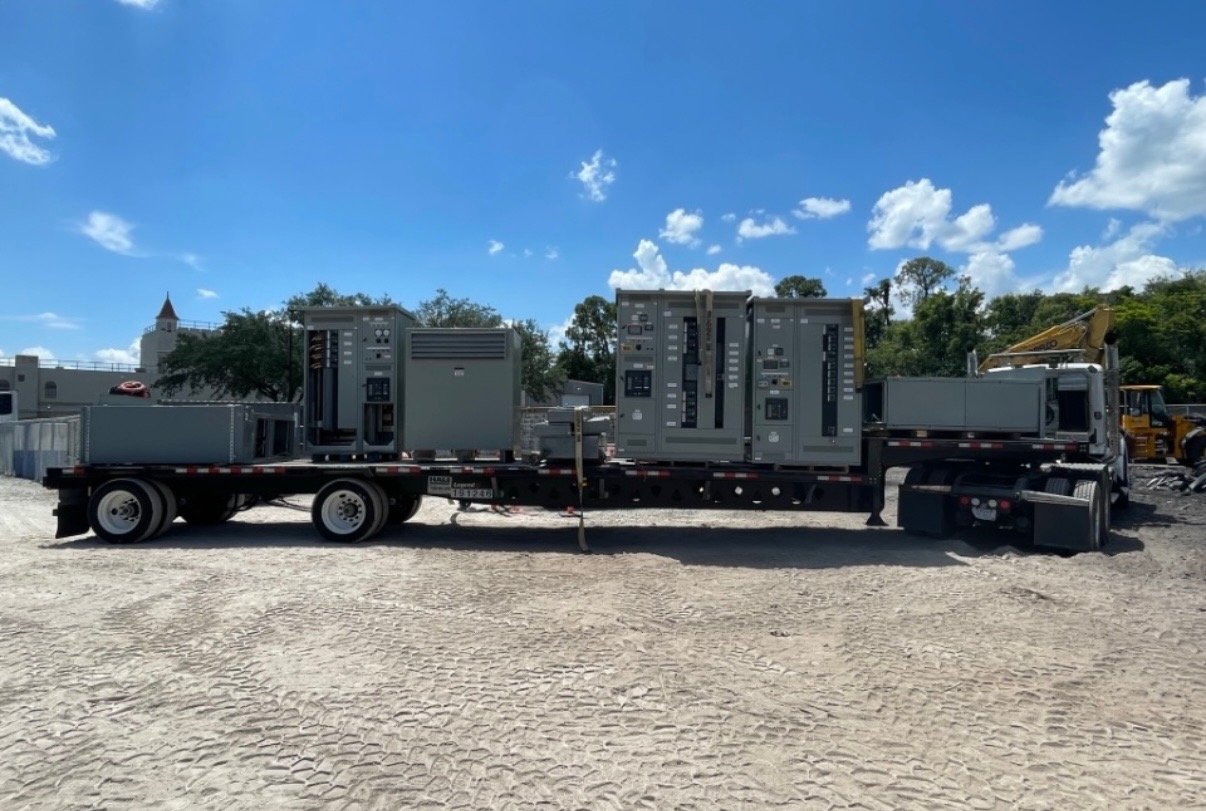
A useful project handoff gives the manufacturer and installation team the same equipment scope, drawings, site conditions and interface requirements. Confirm shipping destination in Georgia, receiving hours, unloading responsibility, route and doorway limitations, storage conditions and the sequence for moving equipment into the electrical room. Nationwide shipping can support Georgia projects, but the delivery plan and timing should be confirmed for the specific order and site rather than assumed.
Before requesting a quote, assemble nameplate photographs, one-line diagrams, dimensions, contamination observations, relevant manufacturer instructions, required switchboard features and the preferred delivery window. Ask which information is still needed to confirm the configuration and what documents will accompany the new equipment. Assign qualified personnel to assess and maintain existing gear, and coordinate any replacement installation, testing and energization with the project engineer and responsible site authority.