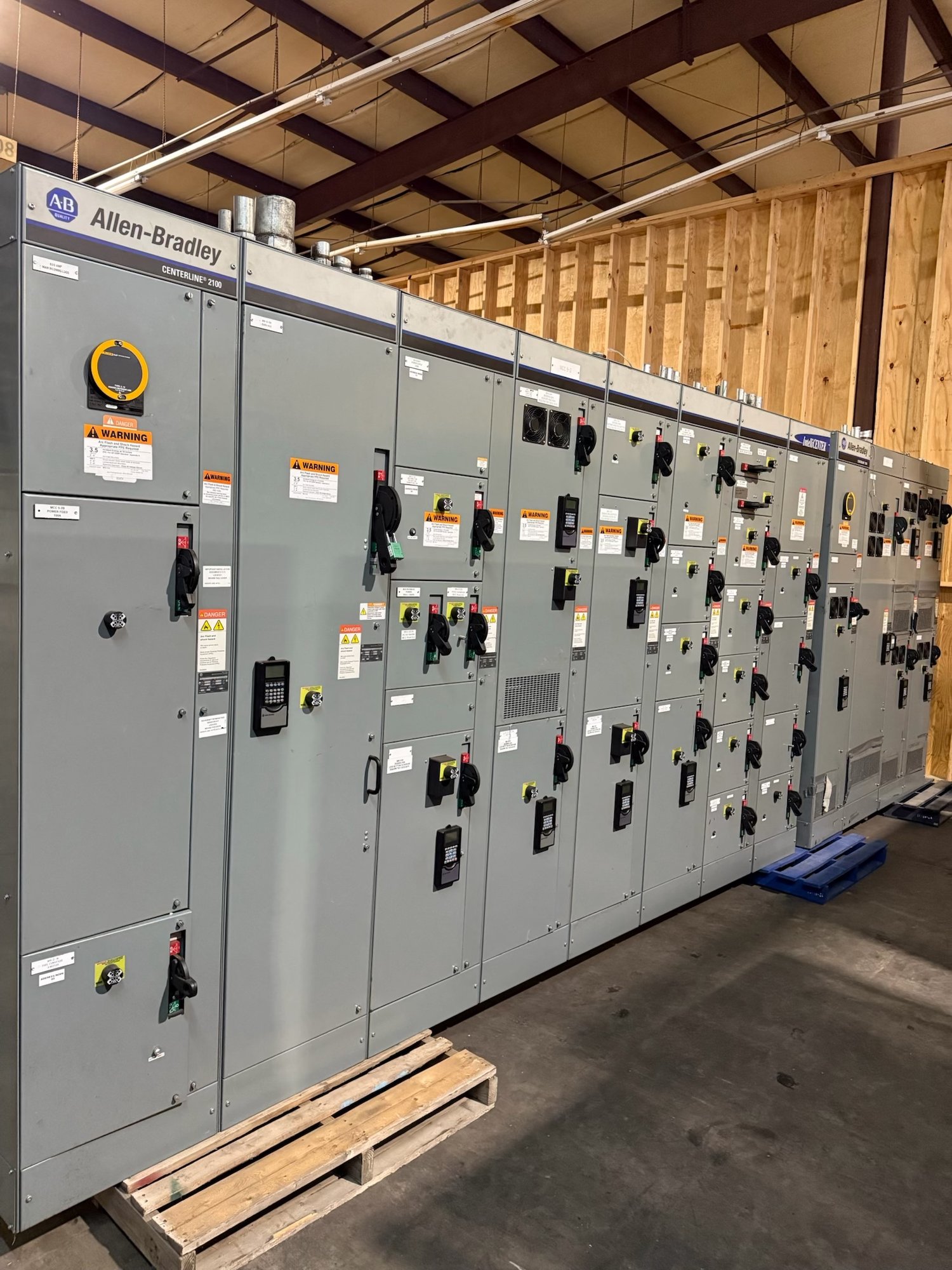
Define the project before selecting equipment
Start by identifying what the equipment must serve and where it fits in the distribution system. Record the project type, new construction or replacement scope, installation location, and whether the equipment will connect to utility service, a transformer, generators, or downstream panels. Include the one-line diagram and available load information when they exist; do not substitute assumptions for engineering decisions that are still open.
Clarify site conditions that can affect configuration: indoor or outdoor location, room dimensions, access route, floor or housekeeping-pad details, and the planned cable entry and exit directions. For replacement work, document existing equipment interfaces and shutdown constraints. These details help a manufacturer assess whether the proposed assembly can be built and delivered to the intended location without treating an unverified field measurement as final.
Set electrical requirements with the engineer
Ask the project electrical engineer to establish the system voltage, phase and wire arrangement, frequency, and required continuous current. The engineer should also determine available fault current and the equipment ratings needed for the actual system. Identify the source and load connections, feeder quantities and sizes, and any spare or future provisions. The correct answer depends on the distribution design, not on a generic preference for a larger rating.
Define the functions each section must perform, such as service entrance, distribution, feeder protection, metering, or transfer-related interfaces. Specify breaker or fusible device preferences only where the design calls for them, and identify control power, monitoring, communications, and accessories that must be included. Review protection coordination, grounding, and applicable project requirements with the responsible professionals and the authority having jurisdiction; a quote is not a substitute for that review.
Choose the equipment scope and standards
Match the equipment type to its role. A low-voltage switchboard may be appropriate for a distribution application, while other system conditions may call for a different assembly or voltage class. For switchboard projects, ask whether the proposed assembly is designed to UL 891 and confirm the exact scope covered by the offered equipment. UL 891 applies to switchboards; it should not be treated as a blanket listing for medium- or high-voltage switchgear.
Separate required features from preferences before comparing configurations. Note enclosure requirements, bus arrangement, section layout, metering, labeling, access, and provisions for future circuits. Ask which components and options are included in the quoted scope, which require further engineering, and which are unavailable for the requested configuration. Confirm the applicable standards and documentation for the specific assembly rather than assuming every component has an individual certification or that every design is approved for the site.
Request a quote that supports comparison
A useful quote request includes the project location in Georgia, target installation date, one-line diagram, equipment schedule, load and fault-current data, and known site constraints. Add the required equipment type, ratings established by the engineer, section count or layout if defined, device and accessory schedules, enclosure details, and requested documentation. Mark unresolved items clearly so they can be identified as engineering questions rather than silently filled in by assumption.
Ask each manufacturer to state the offered scope, configuration assumptions, exclusions, submittal requirements, and any information needed to complete the design. Compare proposals against the same electrical requirements and section schedule, not only the headline price. Request confirmation of current component availability and the estimated build and shipment timeline for the proposed order. Availability and schedule depend on the finalized scope and are confirmed for each order.
Plan purchasing, submittals, and delivery
Before issuing a purchase order, reconcile the proposal with the latest drawings and specifications. Resolve open technical items, document approved deviations, and confirm the bill of material, shipping scope, destination, and delivery sequence. Establish who will review submittals and how revisions will be handled. A purchasing decision made against an outdated one-line diagram can create avoidable changes after the order is released.
For a Georgia project, coordinate the delivery destination and receiving plan with the site team. Confirm truck access, unloading responsibility, storage conditions, receiving hours, and whether equipment needs to arrive in a particular phase. Nationwide shipping can support projects across Georgia, but transit planning must fit the order’s confirmed shipment details and the site’s constraints. Protect the schedule by aligning delivery expectations with construction readiness, not just the desired energization date.
Close the handoff before installation
Give the installing contractor the approved submittal package, final equipment schedule, shipping and receiving information, and any manufacturer documentation included with the order. Verify that field conditions still match the approved configuration, including dimensions, access, connections, and required clearances. Qualified electrical personnel should perform installation and testing under the project’s approved plans and applicable requirements; engineering and authority review remain part of the project process.
To begin a focused quote request, assemble the latest one-line diagram, equipment schedule, project location, desired delivery window, and a list of unresolved design questions. Ask the manufacturer to identify assumptions, confirm the proposed scope and component availability, and explain what must be settled before production. This gives the project team a practical basis for evaluating the offer and carrying the purchase through submittal, delivery, and installation planning.