What the continuous rating represents
A bus carries current between incoming sources, protective devices and outgoing circuits. Its continuous current rating identifies the current it can carry on an ongoing basis within the limits established for the assembly and its specified conditions. It is not the same as a short-circuit rating, which addresses fault withstand, or a breaker trip setting, which governs protection of a circuit.
A project specification should identify the required continuous rating for each bus section and distinguish it from the ratings of connected breakers, mains and feeders. A bus rating does not, by itself, establish the ampacity of field conductors or the available fault-current capability of the completed system. Those values require separate coordination and review.
Temperature and the stated conditions
Current flowing through bus bars produces heat. The finished assembly must manage that heat within the temperature limits applicable to its components and construction. Ambient temperature matters because a warmer surrounding environment leaves less margin for heat to dissipate. A rating stated for defined test or installation conditions should not be assumed to apply unchanged in a hotter electrical room, outdoor enclosure or other atypical setting.
Share the expected ambient temperature range, installation location and enclosure environment during design review. Note nearby heat sources, ventilation constraints, altitude or other site conditions if they may affect the equipment specification. Do not apply an informal derating factor or assume that a larger bus automatically resolves a thermal concern; the manufacturer and project engineer must evaluate the actual configuration and applicable requirements.
Assembly configuration changes the picture
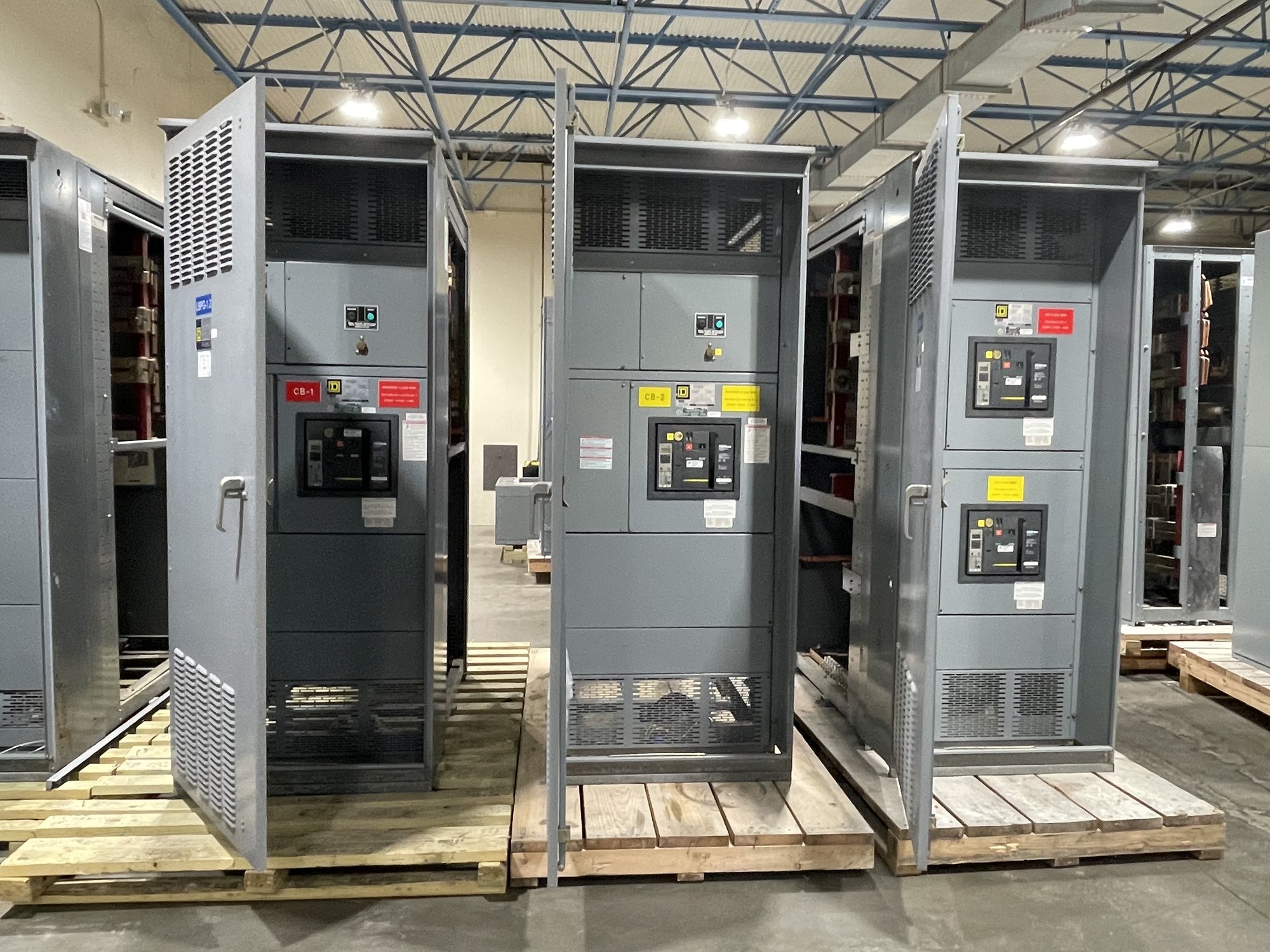
The same nominal bus size can perform differently in assemblies with different layouts and construction. Enclosure dimensions, bus spacing, orientation, barriers, joints, connections and the placement of heat-producing devices can influence temperature rise and heat transfer. A lineup with multiple sections, unusual transitions or a specific top or bottom entry arrangement may require details that are absent from a simple one-line rating callout.
For a custom-built UL 891 switchboard, the assembly configuration and the standard’s scope must be considered together. UL 891 applies to switchboard assemblies; it is not a blanket listing for medium- or high-voltage switchgear. Confirm the equipment class and required standard for the application, then have the complete proposed assembly reviewed. Do not infer that an individual bus component’s rating establishes the rating of the finished lineup.
Coordinate bus, loads and protection
Start with the load study and operating plan rather than selecting bus solely from the largest connected breaker. Identify continuous loads, demand assumptions, anticipated load growth, source arrangement and any periods when sections operate in parallel or transfer between sources. The engineer should reconcile these inputs with feeder and main ratings, protective-device coordination, fault-duty requirements and the intended sequence of operation.
Procurement should check that the specification calls out continuous current ratings by section, not just one overall value where sections may differ. Clarify whether future expansion is expected and whether the requested rating applies with the lineup in its final installed configuration. Changes to breakers, cable entry, enclosure or section arrangement after design review can affect the thermal evaluation and may require a revised quote or equipment design.
Information to provide for a quote
A useful quote package includes the one-line diagram, preliminary layout, required bus rating for each section, voltage and system arrangement, main and feeder device information, fault-current requirement, enclosure type and cable-entry direction. Add the expected ambient conditions, indoor or outdoor location, available room space, load profile and any expansion plans. If a project specification identifies a standard or required documentation, include the relevant requirements for review.
Call out unresolved assumptions instead of letting them become hidden design inputs. For example, identify whether a rating is a minimum, whether a future load is included, and whether unusual room conditions have been confirmed. We build new switchgear and switchboard configurations in the United States using American-made components where specified; component selection, availability and the final configuration are confirmed for each order.
Plan the handoff to the Georgia site
For Georgia projects, align the approved assembly configuration with the electrical-room plan, delivery access and construction sequence. Confirm the ship-to location, receiving hours, unloading responsibility, route constraints and required delivery window early enough to coordinate the order. Nationwide shipping is available, but the actual schedule and logistics depend on the confirmed equipment scope and shipment details.
Before releasing the specification for purchase, ask the project engineer to confirm the required continuous rating under the stated ambient and installation conditions, and ask the manufacturer to review the complete lineup configuration. Provide those decisions with the quote documents, then reconcile the approved submittal with the one-line diagram and site requirements. This gives engineering, procurement and installation teams a clear basis for ordering the right bus arrangement without treating a nominal ampere value as the whole design.