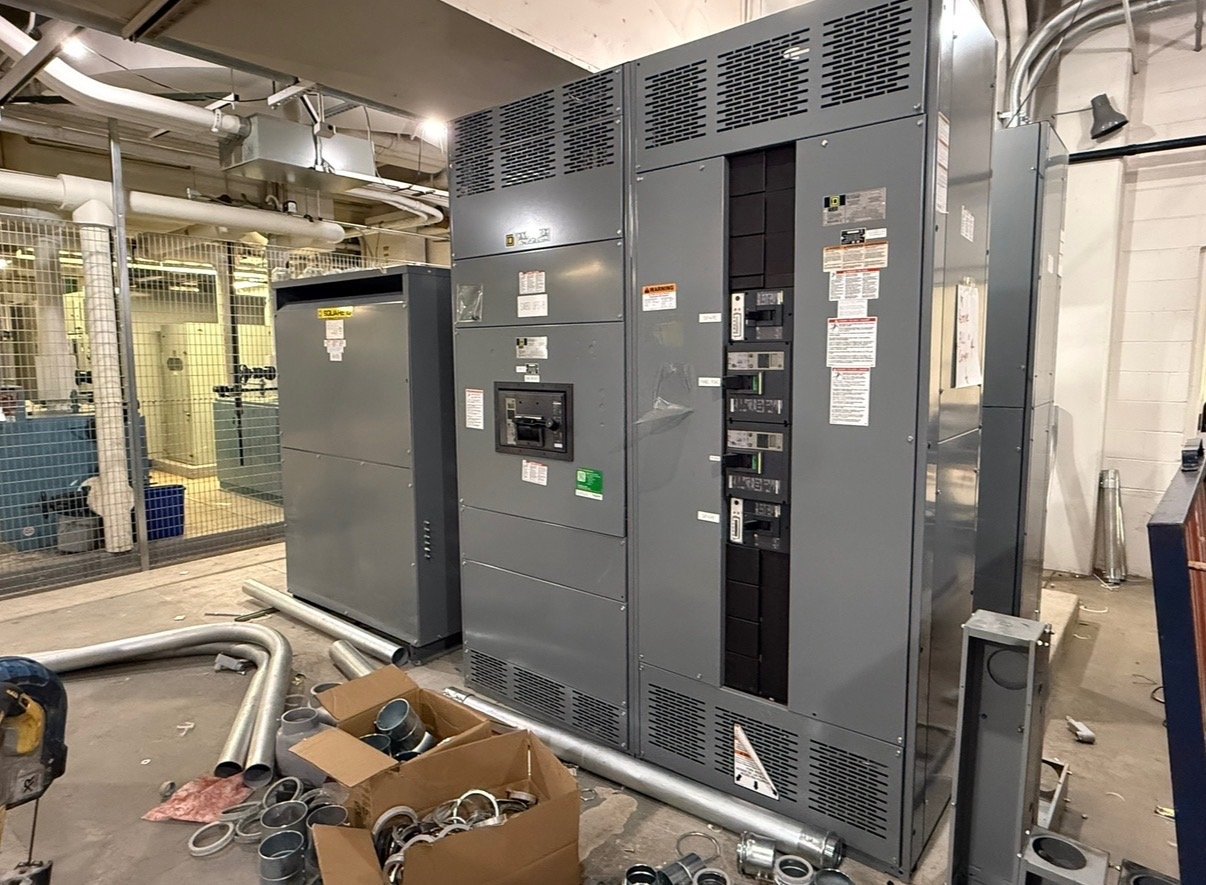
Start with utility source information
The serving electric utility can provide source information for a proposed service, often as available fault current at a defined point or as data that allows the engineer to calculate it. Ask what voltage, phase configuration, operating condition, and point of delivery the data represents. A value without its reference point or assumptions may not describe the conditions at the service equipment.
Utility contributions can vary with feeder configuration, upstream equipment, and changes to the distribution system. Confirm whether the information is current for the project and whether it represents a maximum condition suitable for equipment evaluation. For a new or modified Georgia service, coordinate the request through the project’s utility process; do not substitute a nearby building’s fault-current value.
Trace impedance to the service point
The fault current at the service is not determined by the utility source alone. The transformer’s impedance and rating, conductor material and size, conductor length, and the arrangement of parallel runs contribute to the impedance between source and service equipment. The engineer uses the applicable system model and fault type to determine how those elements affect the calculated current.
Identify the actual service configuration before relying on a preliminary calculation. A transformer change, longer secondary conductors, a different conductor arrangement, or a revised point of connection can alter the result. If the utility supplies a short-circuit value at its terminals rather than at the service, the intervening impedance must be accounted for by the responsible electrical engineer.
Define the value and its use
Available fault current is a system-condition value at a specified location; it is not the same as a switchboard’s short-circuit current rating. The equipment rating must be appropriate for the calculated conditions and the proposed protective-device arrangement. Engineers should identify the applicable voltage, phase, fault basis, and evaluation point so the equipment supplier can review the intended configuration against the project documents.
Ask the engineer of record to clarify whether the specification calls for a calculated maximum, a utility-provided figure, or another documented basis. Also resolve whether the project evaluates three-phase faults, line-to-line faults, or other conditions relevant to the system. These decisions affect equipment selection and coordination, so procurement should not infer missing assumptions from a single number on a drawing.
Prepare a useful switchboard specification
For a new UL 891 switchboard assembly, provide the electrical one-line, service voltage and configuration, utility source data, transformer information, and service-conductor details available at bid time. Include the specified short-circuit rating and any required protective-device or series-rating information, with the documents that establish the design basis. The assembly standard does not replace project-specific fault-current engineering or extend UL 891 coverage to medium- or high-voltage switchgear.
When information is preliminary, label it as such and identify who will issue the final values and by what project milestone. Ask whether the quoted configuration depends on a particular upstream device, transformer, or conductor arrangement. A change to any of these inputs may require a rating review or revised equipment configuration; document the decision before releasing approved drawings for fabrication.
Coordinate changes and project handoff
Keep utility data, calculations, and equipment submittals tied to the same service point and revision. If the utility updates its source information or the electrical design changes, route the new data to the engineer and switchboard supplier for review. Do not treat an earlier calculation as valid after a material system change, and do not energize equipment based solely on a procurement document.
For a Georgia project, share the delivery location, site access constraints, requested delivery window, and receiving contact as part of the order planning. Nationwide shipping can support projects across the state, while delivery timing and equipment availability are confirmed for each order. To request a quote, provide the one-line, utility fault-current documentation, transformer and conductor details, required assembly scope, and the date the project needs equipment on site.
Close the data gaps before release
A practical handoff identifies the source of each fault-current input, its reference location, the calculation owner, and the revision used for equipment selection. If the utility value is pending, list the open item and the party responsible for obtaining it rather than assigning an assumed value. This gives engineering, procurement, and the manufacturer a clear basis to resolve configuration questions without concealing uncertainty.
Before approving the switchboard submittal, compare its stated service conditions and rating with the engineer’s final design documents and utility data. Confirm that any assumptions about upstream protection or system impedance remain valid, then record the approved revision for the project file. This focused check supports an informed equipment order and a coordinated transition from design to installation.