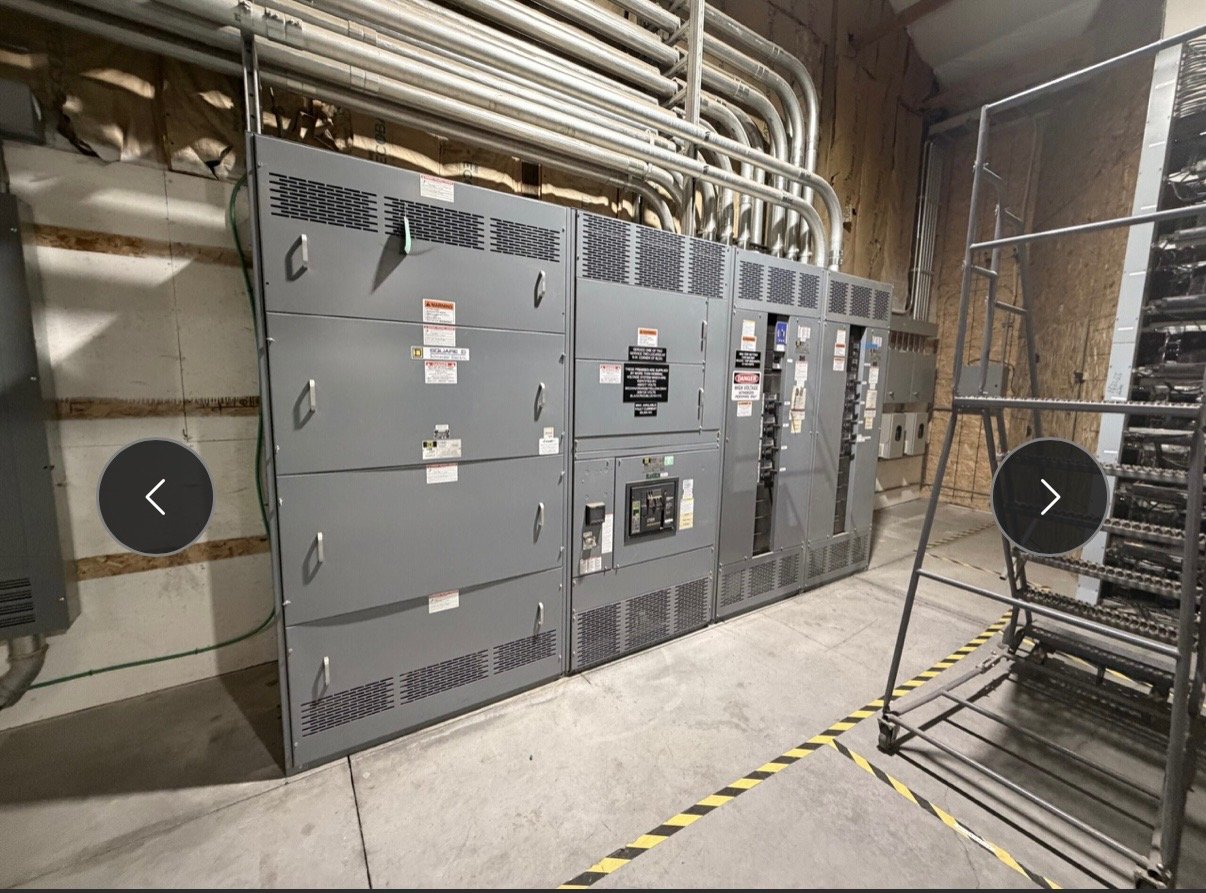
Establish the scope baseline
Start with the latest approved one-line diagram, specifications, schedules, and addenda. Record their revision dates and identify which documents govern if they conflict. Then compare each listed assembly and device with the proposed scope: lineup sections, mains, ties, feeders, metering, control power, and any specified accessories. A material list cannot resolve a design conflict on its own, so flag discrepancies for the responsible engineer rather than assuming which document takes precedence.
Check that the scope reflects the intended configuration, not just a count of major components. For example, a feeder breaker may appear in the schedule while its required trip unit, metering provisions, auxiliary contacts, or control wiring are not clearly represented. Ask whether the quoted assembly includes those items, which are furnished separately, and which are outside the manufacturer’s scope. Make exclusions and customer-furnished components visible before comparing proposals.
Reconcile quantities and locations
Build a count by section and function, then reconcile it against the one-line and panel or equipment schedules. Verify the number of mains, tie devices, feeder devices, metering points, spare provisions, and control components. Distinguish an installed spare breaker from an empty provision for a future breaker: they are different quantities, have different costs, and may require different section arrangements. Confirm whether duplicate schedule tags represent separate devices or repeated references to one device.
Also check quantities of items that are easy to overlook, such as instrument transformers, fuses, control switches, terminal blocks, and communication interfaces. Identify the intended destination and tag for each where the documents provide that information. If a quantity is uncertain, list the assumption and ask the design team to confirm it. This avoids treating an unexplained allowance or a repeated line item as a settled requirement.
Verify ratings and device details
Compare each device’s stated voltage, continuous current, interrupting or withstand requirements, and trip or protection functions with the project documents. Confirm the basis for short-circuit values and whether they apply to the complete assembly or an individual device. Check that the proposed main, tie, and feeder ratings align with the specified system and coordination approach; do not infer a required rating from a frame size or a similar-looking schedule entry.
Review poles, trip-unit functions, sensor or rating-plug details where applicable, and any specified ground-fault, metering, or communications features. Ask which exact device configuration is proposed when the bill of materials uses a broad description. Engineering must resolve application questions, including protection settings and system studies, and the equipment proposal should be checked against the resulting requirements. A component list does not replace design review or authority review.
Check options and substitutions
Treat options as scope items that need explicit disposition. Confirm whether the documents require a particular enclosure arrangement, finish, bus material, cable entrance, access feature, space heater, control-power source, or monitoring interface. For each option, distinguish included, excluded, not applicable, and awaiting confirmation. This makes proposal comparisons more reliable than assuming that a familiar feature is standard in every configuration.
Evaluate any proposed substitution against the specified function and interface, not just the description or nominal rating. Ask for the exact manufacturer, catalog or configuration details, applicable ratings, dimensional impact, connection requirements, and effect on controls or communications. Record who has authority to approve the change and obtain written approval before it becomes the purchasing basis. A substitution that appears equivalent may still affect coordination, drawings, maintenance practices, or project acceptance.
Prepare a clear quote and handoff
For a useful manufacturer quote, share the current one-line, equipment schedules, specifications, addenda, and the bill of materials with revision identifiers. Include the requested assembly scope, required device ratings and options, known exclusions, and a marked list of proposed substitutions requiring review. State the project location in Georgia, delivery destination, receiving constraints, and requested schedule milestones. Exact configuration, availability, and timing are confirmed for each order.
Before releasing the purchase order, reconcile the final proposal line by line and resolve open questions with the responsible engineer and procurement lead. Carry the approved bill of materials, revisions, exclusions, and substitution decisions into the order documents and drawing review. Confirm who will receive submittals and who can approve changes after release. This creates a traceable handoff from design intent to new equipment procurement and helps prevent late scope changes from being mistaken for included items.
Use the review to close open items
A practical review ends with a short issue register: the document reference, disputed quantity or requirement, proposed resolution, decision owner, and approval status. Separate technical questions from commercial clarifications so neither gets buried. In particular, identify unresolved ratings, missing options, uncertain counts, and substitutions that could affect assembly layout or delivery planning. Keep the register with the quote and purchase-order revisions.
Before requesting a final quote, send the reconciled documents and ask the manufacturer to identify assumptions, exclusions, and any proposed deviations from the stated scope. Have engineering disposition technical differences and procurement confirm commercial scope and Georgia delivery details. Release the order only when the approved configuration and open-item status are clear to all parties.