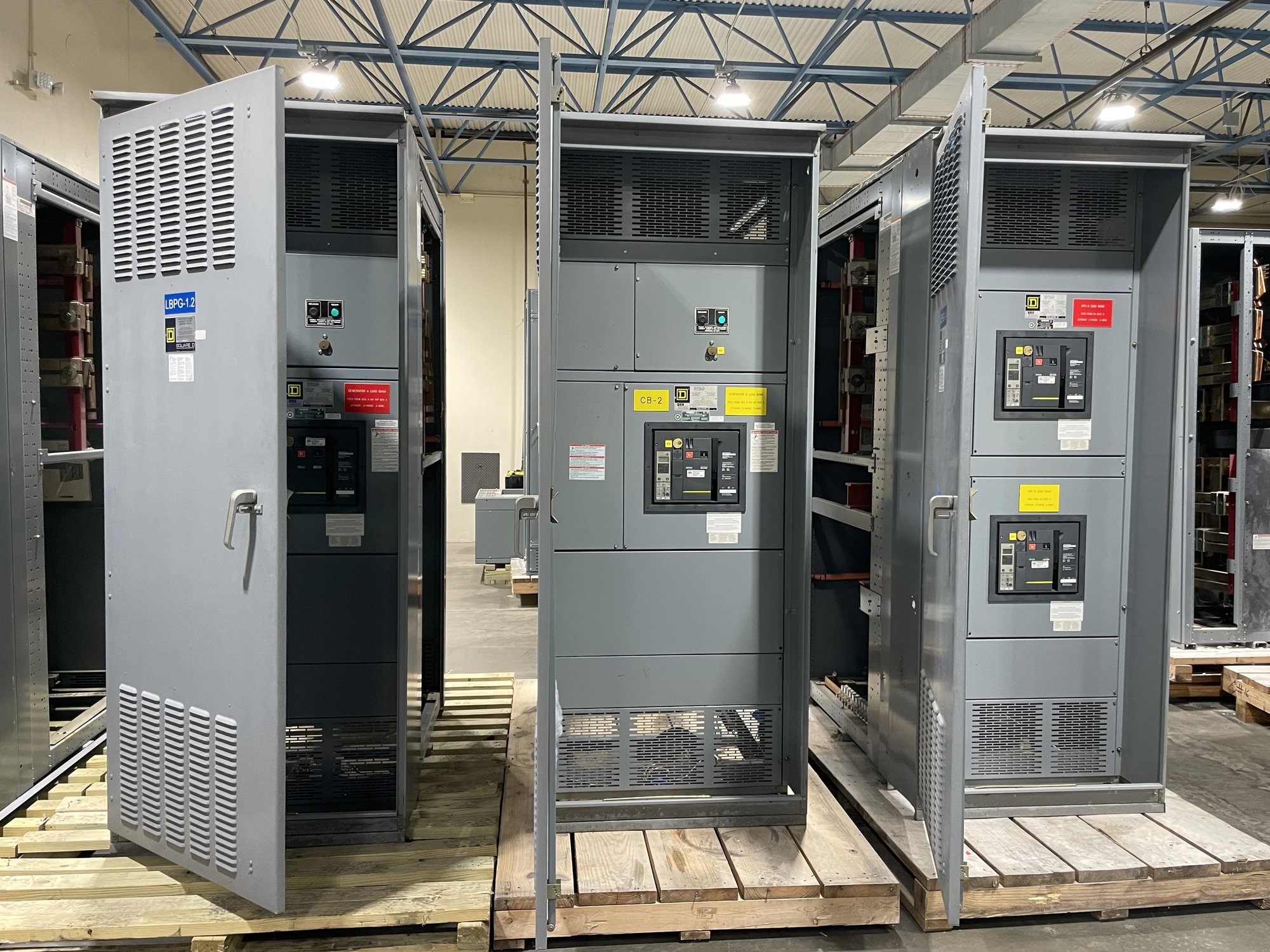
Define the equipment and project boundary
Start by stating what the procurement covers: a switchboard, switchgear lineup, or defined assemblies within a larger electrical system. Identify the project name or reference, installation location, quantity, and whether the request concerns replacement, expansion, or new construction. Note what is included and excluded, such as enclosures, metering, protective devices, control wiring, or accessories, where those choices have already been established.
Show the equipment’s place in the system with a one-line diagram or equivalent project drawing. Identify upstream and downstream equipment, service or feeder functions, and interfaces with generators, transformers, transfer equipment, or other sources when applicable. These references help clarify scope; they do not establish a final design. The responsible electrical engineer should determine system requirements and review the proposed configuration.
Record electrical and operating requirements
Provide the system voltage, phase and wire arrangement, frequency, and intended service conditions. State the required continuous current and any known available fault-current information at the equipment location, along with the source and date of that data. Describe the grounding arrangement and identify whether the equipment serves as service equipment, a distribution point, or another defined role. Do not leave critical values to assumptions in a quote request.
List the functions required at each section or circuit, including incoming mains, feeders, tie arrangements, metering, and protective-device features. If the project specifies interrupting or withstand ratings, operating sequences, coordination requirements, or special monitoring, provide the governing engineering documents and criteria. The engineer of record must verify these requirements against the actual system; a manufacturer’s quotation is not a substitute for fault-current analysis, coordination, or code review.
Describe the physical arrangement and site limits
Specify the desired lineup orientation, section sequence, access requirements, and cable-entry direction if known. Include available room dimensions, door and aisle clearances, ceiling limits, floor or housekeeping-pad details, and the route from receiving point to final location. Identify whether the equipment will be indoors or outdoors and provide relevant environmental conditions, including moisture, dust, temperature, or corrosive exposure, for engineering review.
Clarify cable and conduit entry space, termination preferences, and any restrictions that affect section dimensions or placement. Note seismic, structural, lifting, or anchoring criteria when the project documents require them. For Georgia delivery, share the complete jobsite address, receiving hours, unloading method, site-access limits, and requested delivery window. These details support shipment planning, but delivery arrangements and timing must be confirmed for the specific order.
Set standards, documents, and review expectations
Name the project specifications, drawings, and applicable standards that govern the equipment, and identify the edition or project requirement where known. UL 891 applies to switchboard assemblies; it should not be treated as a blanket listing for medium- or high-voltage switchgear. State the required equipment type clearly and ask which standards and certifications apply to the specific proposed assembly rather than assuming a standard covers every component or configuration.
Define the submittal package needed for review, such as outline drawings, one-line diagrams, elementary diagrams, bills of material, or device data, as applicable to the scope. Identify who reviews submittals and how deviations or substitutions must be documented. Professional engineering review and approval by the relevant authority remain necessary where required. Confirm that the final approved documents match the quoted configuration before release to production.
Make commercial scope and schedule explicit
Separate mandatory requirements from preferences and identify any approved alternatives. State whether the quote should include engineering documentation, factory assembly, special packaging, or delivery to a defined receiving point. Provide the requested quantity, project milestone dates, required submittal timing, and any constraints on phased shipments. American-made components, custom-built configurations, and nationwide shipping may be considered for a new-equipment order, but component selection, availability, and schedule depend on the confirmed scope.
Avoid relying on a generic lead-time assumption when planning procurement. Share the date equipment must be available for installation, the status of design and approvals, and any dependencies such as final fault-current data or utility coordination. The manufacturer can confirm the applicable scope, component availability, and timeline for the particular order. Keep procurement, engineering, construction, and receiving teams aligned when revisions affect dimensions, devices, or delivery plans.
Prepare a quote-ready handoff
Before submission, assemble the current one-line diagram, relevant schedules, project specification, physical layout information, and a concise list of open decisions. Identify the person responsible for technical questions and the party authorized to approve commercial changes. Mark preliminary values as preliminary and distinguish them from confirmed requirements. This makes uncertainties visible instead of allowing them to become unstated assumptions in the quoted equipment.
For a Georgia quote request, share the equipment type, system data, required functions, site constraints, governing documents, quantity, target milestones, and delivery conditions together. Ask the manufacturer to identify information still needed to define the proposed scope and confirm the order-specific schedule. Then route the proposal and submittals to the responsible engineer and project reviewers before approval. This handoff creates a clearer purchasing basis while preserving professional design and code review.