Define the assembly scope before release
Start with the one-line diagram, equipment schedule, control schematics and specification that govern the assembly. Confirm the intended service, system voltage, bus arrangement, incoming and feeder devices, metering, control power and required interfaces. These documents help establish whether the request is for a switchboard assembly or another switchgear configuration; UL 891 applies to switchboards, not as a blanket listing for medium- or high-voltage equipment.
Resolve document differences before fabrication. A panel schedule may call for a feeder rating that conflicts with the one-line, while a control drawing may show an interlock absent from the specification. Identify the document revision and approval status, open technical questions, and any owner-furnished components. Clear decisions reduce the risk of installing the wrong device, drilling an enclosure for an outdated layout or delaying assembly while requirements are reconciled.
Coordinate components and physical layout
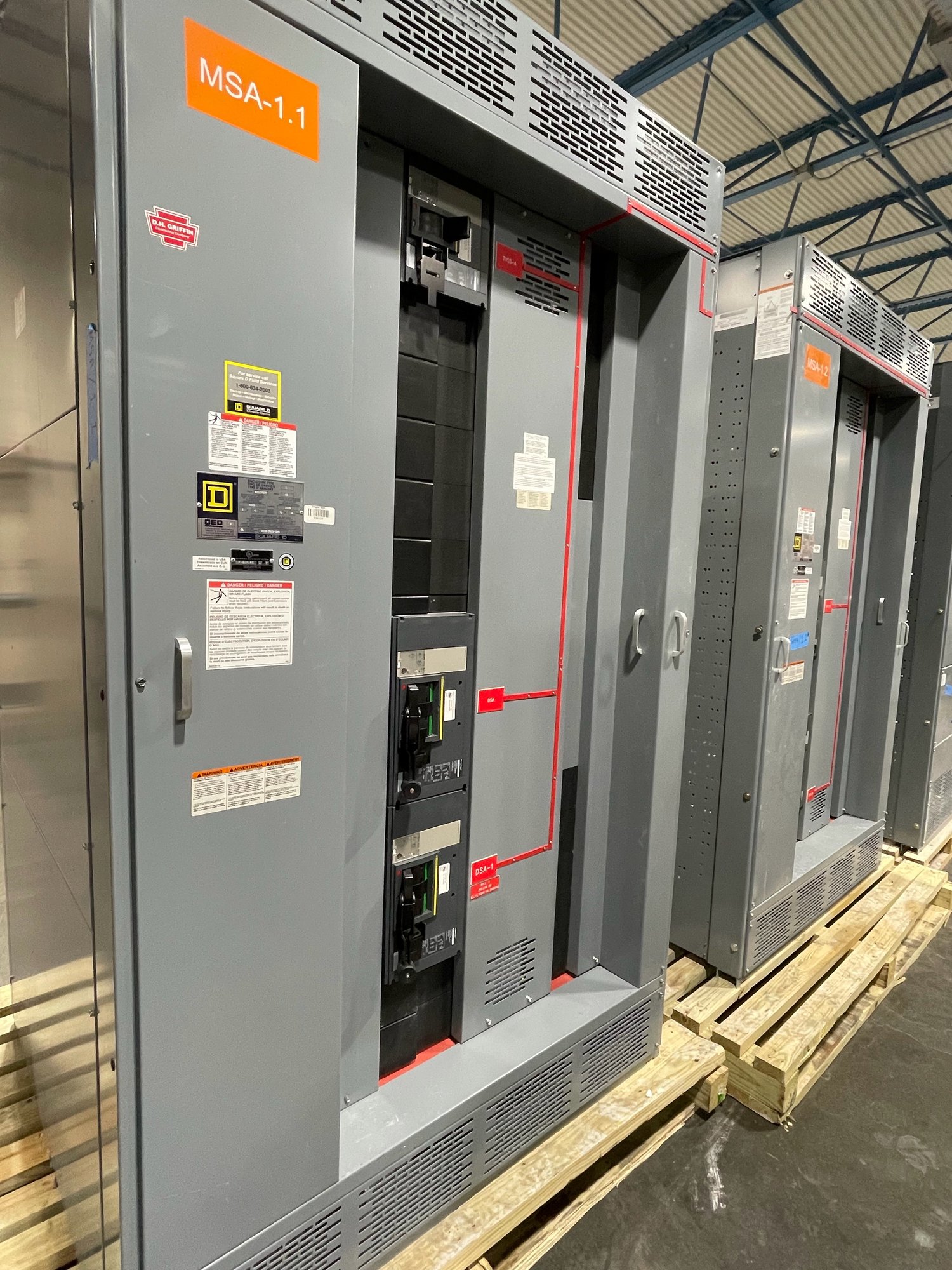
Component installation depends on the approved arrangement and the exact device selections. Breakers, bus supports, metering equipment, control devices and other specified parts must fit their assigned positions and connect to the intended power or control circuits. Enclosure dimensions, access, cable entry, working clearances and routing paths all affect how the assembly can be arranged; do not assume a component substitution is interchangeable without design review.
Procurement planning should address component descriptions, manufacturer and catalog data where specified, quantities, accessories and acceptable alternates. Ask whether the scope includes all devices and wiring or only a defined portion of the assembly. American-made components can be incorporated where applicable and available, but origin, compatibility and availability are confirmed for the specific order. Confirm the equipment configuration and any approved substitutions before authorizing procurement or releasing final drawings.
Install buswork, devices and wiring
Assembly work follows the controlled drawings and the agreed scope. The build sequence coordinates enclosure sections, buswork, supports and devices so connections and access match the design. Bus arrangement, connection details, conductor routing and device orientation are project-specific. Installation records or inspection points can be defined with the project team when required by the purchase documents; do not presume a particular record or test is included unless the scope says so.
Control wiring connects specified relays, meters, switches, terminal blocks and other devices according to the approved schematics. Wire identification, termination points, routing and separation should support drawing review and later field connections. Confirm terminal designations, external interface points, control voltage and any furnished field cables or accessories. Changes after wiring begins may require drawing updates and rework, so route revisions through the designated engineering approval process rather than relying on informal field notes.
Inspect workmanship and verify the build
Inspection checks whether the physical assembly corresponds to the released documents: device locations and identifications, bus and conductor connections, wiring termination, labels, enclosure details and specified accessories. The applicable inspection scope and acceptance criteria should be agreed before work starts. Inspection is not a substitute for engineering review, and it does not establish that a design is suitable for an installation without the required engineering and authority review.
Project-specific verification should trace the completed equipment to the approved drawings and order requirements. Depending on the contracted scope, this may include checking wiring against schematics, confirming device and nameplate data, reviewing identified interfaces, and recording discrepancies for resolution. Ask which checks, reports and customer witness points are included, and whether any requested test has defined methods and acceptance criteria. Do not infer a certification, rating or test result from assembly alone.
Plan procurement, delivery and handoff
For a quote, provide the one-line, equipment schedule, specifications, control schematics, drawing status, required configuration, component preferences, scope boundaries and requested documentation. Note site constraints such as receiving access, unloading responsibility, delivery window, project sequence and final destination in Georgia. Those details help coordinate nationwide shipping with the construction schedule, but exact availability, shipping arrangements and timeline are confirmed for each order rather than assumed.
Before release for shipment, agree on the final drawing set, open-item disposition, equipment identification, included documentation and any field connection responsibilities. The handoff should make clear what the assembly includes and what remains for site installation or commissioning by qualified personnel. Share the governing documents and delivery requirements early, then request a quote against that defined scope so the equipment, inspection plan and Georgia delivery can be coordinated around the project.