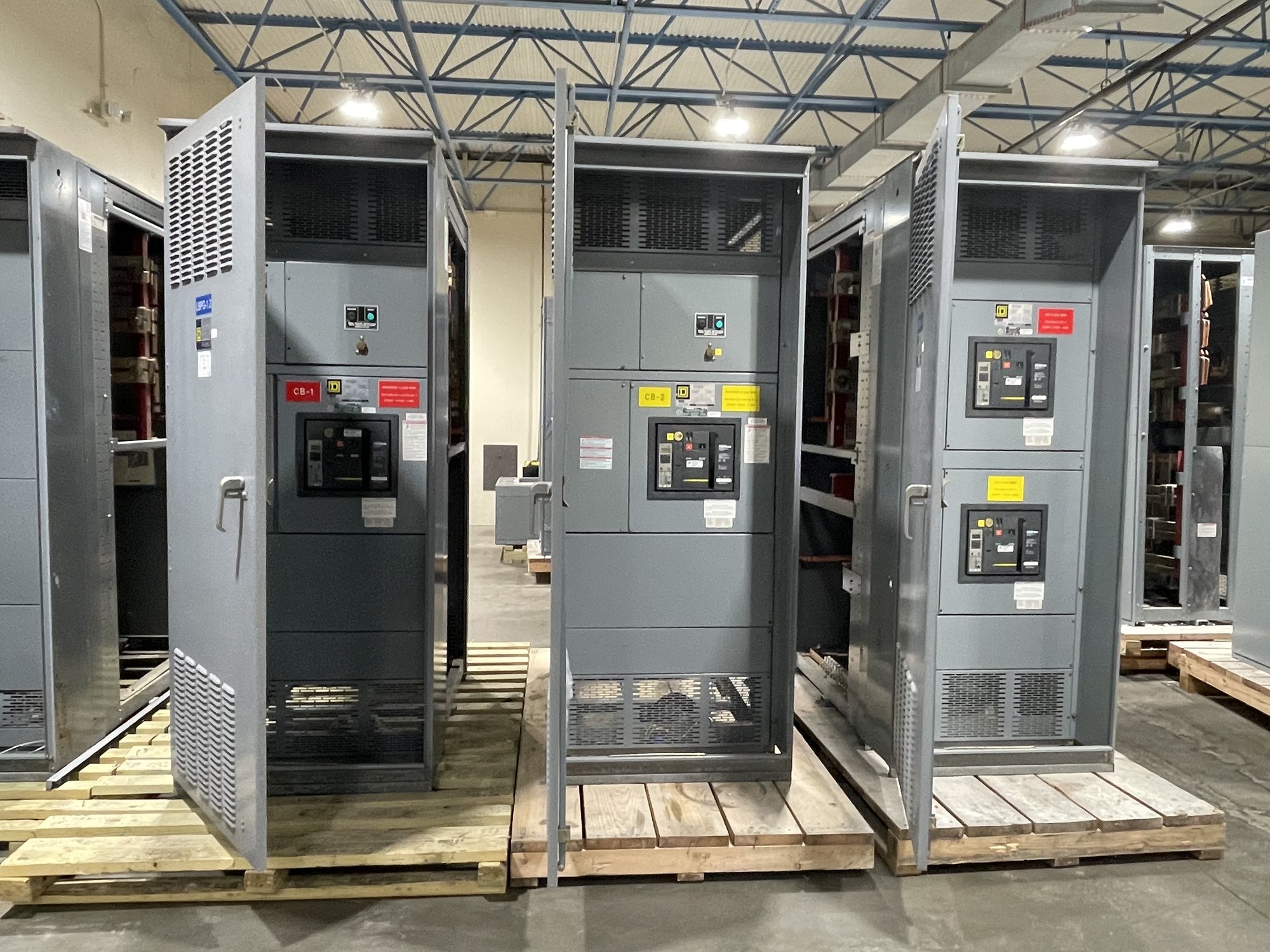
Define the spare’s intended role
Start by recording which switchboard or switchgear lineup the breaker is intended to support and what function it serves. Capture the equipment manufacturer, lineup and section identifiers, breaker type, catalog or part number, frame size, trip unit details, pole count, and relevant electrical ratings from the equipment nameplates and approved drawings. Identify whether the spare is intended for a specific circuit or is a common spare for a defined group of equipment.
Do not assume that breakers with similar appearance or matching ampere ratings are interchangeable. Mounting arrangement, bus and stab interfaces, drawout elements, operating mechanism, accessories, control voltage, trip functions, and interrupting ratings can differ. Have the facility’s qualified electrical or engineering personnel verify the intended match against equipment documentation. When ordering a new spare, provide those records and describe any uncertainty rather than relying on a photograph or a generic description.
Choose a controlled storage location
Store the breaker indoors in a clean, dry area with stable conditions appropriate to its manufacturer documentation. Keep it protected from rain, condensation, flooding, airborne dust, corrosive vapors, conductive debris, and direct exposure to construction activity. Avoid locations near exterior doors, unconditioned areas with repeated temperature swings, chemical storage, or equipment that produces vibration. Follow the specific storage temperature and humidity limits in the product instructions; do not substitute a general facility target for manufacturer requirements.
Retain the original shipping packaging when it provides suitable protection, and keep the unit secured against tipping, impact, or movement. Do not place heavy materials on the package or use the breaker as a storage surface. If packaging is opened for inspection, restore protective covers and barriers as directed by the manufacturer. Record the storage location so the spare can be found without moving other equipment or exposing it to avoidable handling damage.
Preserve identity and configuration records
Attach a durable identification record to the package, not to a surface that could interfere with operation or inspection. Include the intended lineup and circuit, breaker identification, purchase documentation, receipt date, storage location, and the person or group responsible for the record. Keep copies of nameplate information, approved submittals, wiring diagrams, accessory schedules, and applicable manufacturer instructions in the facility’s document system.
Track configuration details that may be lost when packaging is separated from the unit. Note installed or separately packed accessories, trip unit settings or configuration information when applicable, control wiring requirements, and any storage or handling instructions. Protect sensitive records and settings information under facility procedures. If the breaker is reassigned, update the record only after qualified personnel confirm the new application and compatibility; a label alone does not establish suitability.
Set an inspection and handling routine
Establish inspection intervals based on manufacturer guidance, storage conditions, and facility procedures. A visual check can look for damaged packaging, moisture evidence, corrosion, contamination, displaced covers, and missing labels or documents. Record the date, observed condition, and any corrective action. If conditions depart from the product instructions, isolate the concern and obtain guidance from qualified personnel or the manufacturer before deciding whether the breaker remains suitable for service.
Avoid unnecessary unpacking, mechanical operation, cleaning, lubrication, or electrical testing during storage. These activities can introduce contamination, damage components, or affect settings when performed without the right procedures and expertise. Before installation, qualified personnel should review the manufacturer’s instructions and the equipment’s maintenance and commissioning requirements. Storage inspection is not a substitute for required examination, testing, or acceptance by the responsible engineering team and applicable authorities.
Confirm compatibility before procurement
For a new spare breaker quote, share the equipment manufacturer and model, lineup and section identifiers, breaker catalog or part number, nameplate data, frame and trip details, pole count, mounting or drawout arrangement, accessories, and available drawings. State whether the breaker is for an existing assembly or a new project, and identify the intended circuit or application. Provide clear nameplate photographs and explain any unknowns; engineering review may be needed to resolve differences between records and installed equipment.
Also confirm the required quantity, requested configuration, documentation needs, project schedule, and delivery point in Georgia. Delivery planning should account for site receiving hours, unloading capability, indoor storage space, and whether the package must reach a contractor, facility, or project site. Exact configuration, availability, and timing are confirmed for each order. The project handoff should leave the receiving team with identification, handling instructions, and records that connect the delivered breaker to its intended equipment.
Make the spare usable when needed
Assign an owner for the compatibility record and inspection log, and include both in maintenance or asset-management procedures. Review the record after switchboard modifications, breaker replacements, changes to protection settings, or document revisions. Those changes can make a previously suitable spare uncertain. Before moving or issuing the unit, verify its identity, condition, and intended application against current approved equipment information.
A practical next step is to inventory each spare’s label, storage condition, associated lineup, and supporting drawings, then flag gaps for engineering review. For a replacement or newly planned spare, send the verified equipment details, configuration questions, quantity, and Georgia delivery requirements with the quote request. Keep the received breaker protected and its records together until qualified personnel approve it for the designated application.