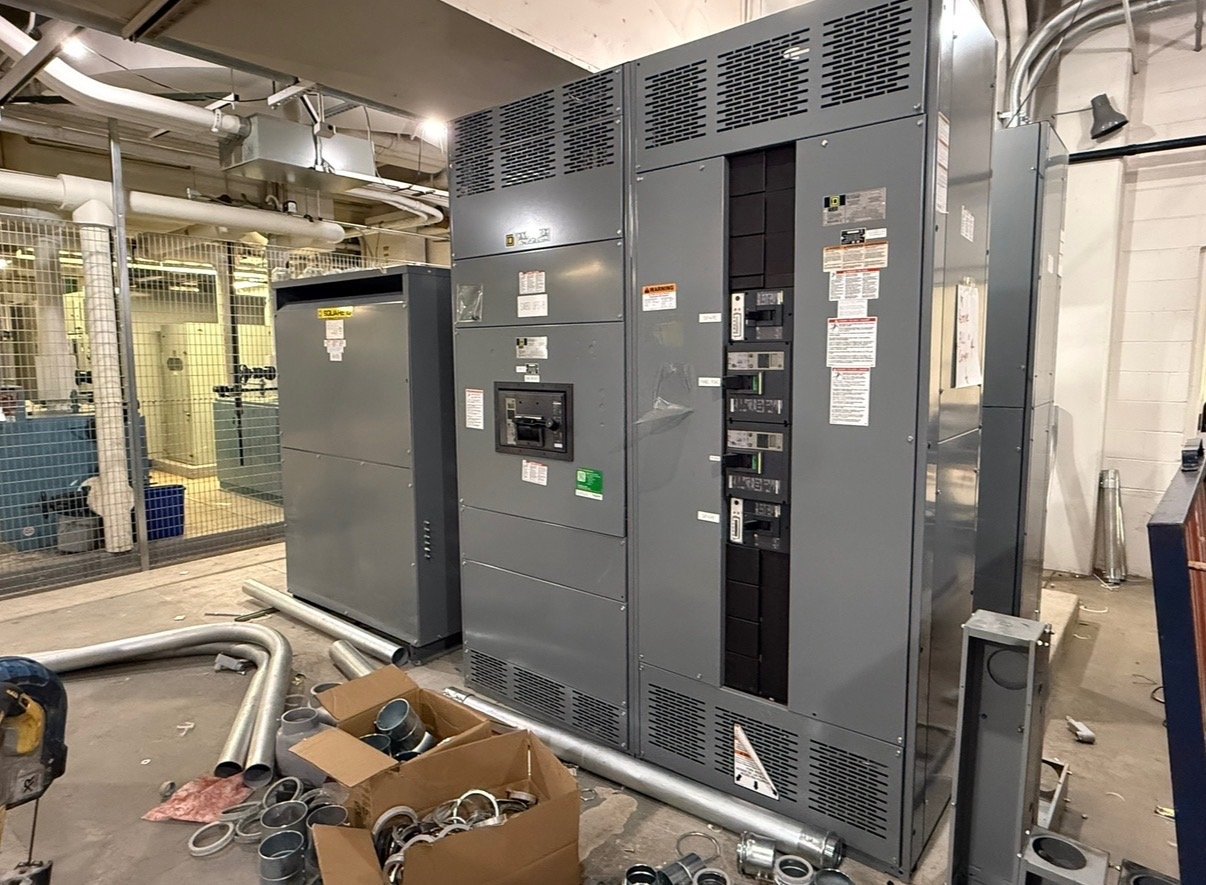
Start with the field change, not the old drawing
A documentation update begins by defining what changed and where. Examples include a replaced breaker, revised feeder destination, altered control wiring, a new metering arrangement, or a protective-device adjustment. Record the affected lineup, section, cubicle, device identifiers, and the date or project phase of the change. A marked-up one-line diagram alone may not capture wiring, settings, labels, and asset records affected by the same work.
Collect the latest available drawings and compare them with field observations made by qualified personnel under the facility’s safety and access procedures. Note missing sheets, conflicting revision dates, illegible markings, and equipment that differs from the drawing. Photographs and redlines can help explain discrepancies, but they do not replace engineering verification where circuit function, protection, or equipment configuration is uncertain.
Define the documents and verification needed
Specify the records to revise: one-line diagrams, elementary or control schematics, connection and wiring diagrams, equipment layouts, cable or feeder schedules, device lists, and maintenance records. Identify the format and revision conventions the facility uses, including drawing numbers, title blocks, approval status, and whether editable files are required. Clarify whether the scope is limited to supplied switchgear documentation or includes integrating records from other project participants.
For protective settings, provide the approved study or engineering direction, device make and model, trip-unit or relay details, existing setting files where available, and the intended change history. Settings should not be inferred from a field note or copied from a similar feeder. A qualified engineer must establish and review settings against the system and applicable requirements; the documentation should clearly distinguish approved values from information that still needs confirmation.
Resolve discrepancies before records are finalized
Field conditions can expose gaps that are not resolvable from a document set alone. A device may have a different catalog identifier, control wires may have been rerouted, or a feeder name may no longer match the served load. List each discrepancy with its source and status: verified, awaiting engineering decision, or requiring additional field confirmation. This creates a practical review trail instead of silently converting assumptions into permanent records.
Agree on the boundary between documentation and physical work. Updating a label schedule does not install labels, and revising a drawing does not authorize changes to wiring or protective settings. If the field change itself is incomplete or differs from the approved design, route it through the facility’s engineering and change-control process before representing it as an approved as-built condition.
Make labels and equipment records agree
Labels should correspond to the approved drawings and the facility’s naming system. Confirm the wording and identifiers needed for equipment, breakers, feeders, control devices, and source or destination references. Ask whether existing label conventions, materials, dimensions, and placement rules must be retained. Where the field condition cannot be verified, flag the label information for review rather than creating a confident-looking but potentially misleading identifier.
Update asset records with information useful for future maintenance and procurement, such as equipment and device identifiers, manufacturer data visible in the approved records, drawing references, revision dates, and the change made. Preserve prior revisions according to the facility’s document-control practices. A clear record of what changed, who reviewed it, and which documents supersede earlier versions helps prevent obsolete sheets from circulating.
Plan review, procurement, and Georgia delivery
For a quote, share the affected equipment scope, current drawings and redlines, known field changes, required document types, preferred file formats, and any engineering approvals already available. Include the number of lineups or sections, label quantities if physical labels are requested, and the required review and handoff process. Identify unresolved items and the person or role authorized to approve them. Exact scope, availability, and schedule are confirmed for each order.
If documentation work is tied to new switchgear or replacement assemblies, state the project location in Georgia, delivery address constraints, receiving hours, unloading arrangements, and the date records are needed relative to equipment delivery. We build and supply new switchgear with custom configurations and nationwide shipping; the applicable equipment scope and timing are confirmed for the order. Delivery planning should leave time for engineering review and site coordination, not assume that shipment alone completes the documentation handoff.
Close the revision loop
Before closeout, compare the final drawing register with the revised files, confirm revision identifiers and approval status, and reconcile labels and equipment records to the accepted field condition. Deliver an exceptions list for items that remain unverified instead of treating them as complete. The facility should determine how controlled copies are distributed and how superseded documents are withdrawn from work areas and maintenance systems.
Prepare one consolidated field-change package: current marked-up records, the available approved engineering basis for settings, label requirements, equipment-record updates, and a list of open questions. Ask the responsible engineer and facility document owner to review that package before it is issued as the current record. This focused handoff gives Georgia project teams a clear next step and reduces the chance that a later crew relies on an outdated configuration.