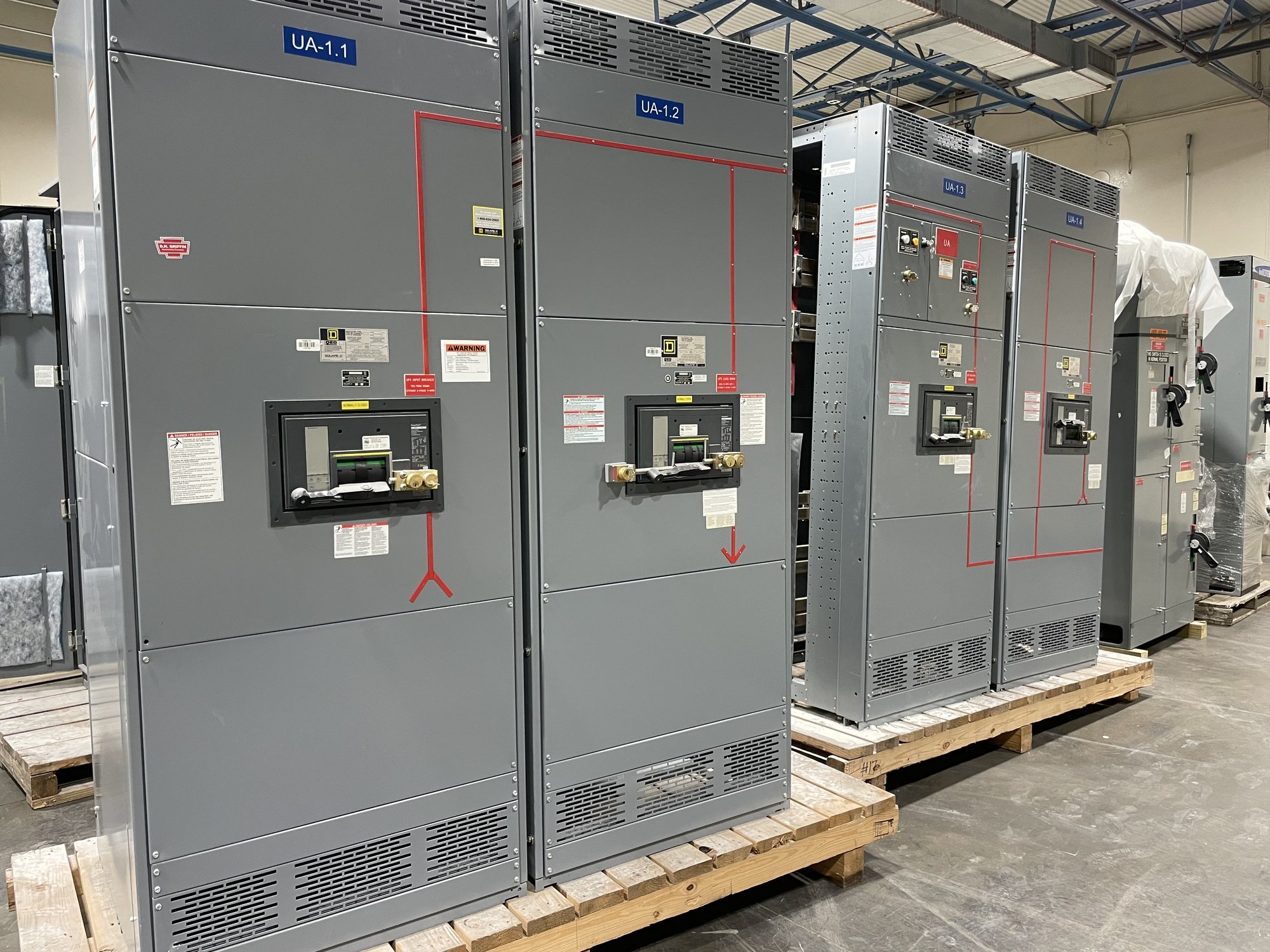
Control access and establish isolation
Treat water near energized switchgear as an electrical emergency, not a housekeeping issue. Keep personnel away from the enclosure and surrounding wet areas, prevent access, and notify the site’s electrical and safety leads. Do not open doors, touch the cabinet, wipe internal surfaces, or attempt to operate breakers while moisture may be present. A wet floor, leaking ceiling, or water path through conduit can extend the hazard beyond the equipment itself.
A qualified electrical professional should determine the isolation boundary and follow the facility’s established electrical safety and lockout/tagout procedures. Upstream sources may include utility feeds, generators, alternate feeds, control power, or stored energy; opening one device may not de-energize every section. Verify absence of voltage using appropriate procedures and equipment before inspection. If the source cannot be isolated promptly, maintain the restricted area and coordinate with emergency and utility personnel as the situation requires.
Find the water path, not just the wet spot
Once access is controlled and qualified personnel authorize examination, document where moisture appeared and what conditions preceded it. Record the affected section, approximate extent, visible droplets, staining, corrosion, debris, and any alarms or unusual operation. Photograph conditions before cleanup when permitted. These observations help distinguish a sudden leak from recurring condensation and provide an engineering basis for deciding what must be inspected or replaced.
Trace possible entry routes beyond the switchgear enclosure: roof penetrations, wall joints, doors, ventilation openings, cable trenches, conduit, and nearby plumbing or process lines. Condensation can form when humid air meets a cooler enclosure or bus compartment, especially where temperature changes, poor ventilation, or water vapor are present. In Georgia, seasonal humidity and storms may be relevant, but the actual cause must be established at the site rather than assumed from location.
Assess insulation and components carefully
Moisture can affect insulation without leaving an obvious pool of water. Inspect, as permitted by the equipment design and manufacturer instructions, for damp or contaminated insulating barriers, tracking, swelling, cracks, deposits, corrosion, and water marks on bus supports, breakers, terminals, control wiring, and instrument components. Salt, dust, and other residues can become conductive when wet. A dry-looking surface does not establish that insulation remains suitable for service.
Qualified specialists should select assessment methods based on equipment type, condition, and manufacturer guidance. Electrical tests may help characterize insulation condition, but test voltage, preparation, isolation of sensitive devices, and interpretation require expertise. Do not apply heat, solvents, or cleaning agents, or perform insulation-resistance testing, without confirming suitability for the specific assembly. Record what was tested, the test conditions, results, limitations, and any components removed or replaced for engineering review.
Correct the source and define disposition
Control the cause before restoring equipment. Repairs may involve building-envelope work, drainage, pipe relocation, sealing an approved entry point, or improving environmental control; changes must not obstruct designed ventilation or create new condensation conditions. The facility’s engineering team and qualified electrical contractor should coordinate the enclosure, room, and electrical work. Keep the affected gear isolated until inspection and disposition are complete, even if visible water has been removed.
The engineering decision may be continued isolation, component replacement, assembly repair, or replacement of a complete section. It should account for the moisture path, duration, contamination, affected insulation, equipment condition, manufacturer instructions, and the consequences of failure. No single drying method or field test proves an assembly fit for re-energization. The responsible engineer and authority having jurisdiction determine applicable requirements and acceptance; UL 891 applies to switchboard assemblies, not as a blanket qualification for other voltage classes or equipment.
Plan replacement around actual requirements
When damage warrants new equipment, provide the manufacturer with the existing equipment type, system voltage and available fault-current information, bus arrangement, main and feeder device requirements, enclosure and environmental conditions, dimensions, cable entry details, control and metering needs, and required interfaces. Include photographs, drawings, nameplate data, test findings, affected sections, and the planned outage or installation window. Identify whether the replacement is a switchboard assembly and whether UL 891 is specified; confirm the exact scope during engineering review.
For a Georgia project, share the delivery site, receiving restrictions, access route, unloading responsibility, staging conditions, and coordination milestones. American-made components, custom-built configurations, short lead times, and nationwide shipping may support planning, but availability, final configuration, and schedule are confirmed for each order. Clarify who will verify field dimensions, review drawings, complete installation, and manage inspection and energization so procurement and construction teams work from the same approved scope.
Prepare a controlled handoff
Before closing the incident, assemble the isolation record, moisture-source findings, photographs, inspection notes, test reports, repair documentation, and engineering disposition in one handoff. Identify equipment that remains unavailable, temporary controls, open building repairs, and the party responsible for each next action. This record helps the facility team avoid treating a cleaned enclosure as cleared equipment and gives replacement planners a traceable basis for scope and schedule decisions.
If moisture has reached switchgear, restrict access and arrange qualified isolation first; then document the source and extent before cleanup changes the evidence. Have the responsible electrical engineer define the inspection and return-to-service criteria. If replacement is indicated, send the manufacturer the equipment data, damage findings, site constraints, and Georgia delivery requirements so the proposed new assembly can be reviewed against the project’s actual needs.