Start with load priorities
A selective arrangement does not treat every feeder as equally important. Identify the loads that require an alternate source, those that can remain de-energized during an outage, and any loads that must never transfer automatically. Examples may include controls, pumps, process equipment, or building systems, but the project team must determine priorities from operating needs rather than assume a standard grouping.
For each load group, document normal source, alternate source, operating consequence of interruption, and acceptable transfer behavior. Clarify whether loads transfer individually, in coordinated groups, or only after an operator action. This schedule gives the designer a basis for defining feeder positions, control inputs, and the conditions that must be satisfied before a transfer is allowed.
Define the source and transfer sequence
The control scheme depends on how sources are arranged and what conditions indicate that a source is unavailable. Specify the intended sensing points, source status signals, and any time delays or operating sequence requirements. State whether transfer should occur on loss of voltage, another defined condition, or a supervisory command, and whether return to the normal source is automatic or manual.
Clarify the permitted transfer paths and the expected state of each breaker or switching device during normal operation, source failure, transfer, and restoration. If the alternate source has limited capacity, identify which loads may be picked up first and whether others must remain disconnected. The electrical designer should evaluate source capacity, fault contribution, protection coordination, and switching duty for the proposed sequence.
Use interlocks to enforce operating intent
Interlocks prevent combinations of device states that the project does not permit. Depending on the approved scheme, they may block transfer when an alternate source is unavailable, prevent unintended paralleling, or require a particular device position before another can close. Specify the prohibited states explicitly; do not rely on a general request for an interlocked transfer arrangement to communicate the operating rules.
The engineer of record must determine whether electrical, mechanical, key, or control interlocking is appropriate and how it relates to the protection and operating sequence. Provide the intended permissives, lockouts, alarms, and operator controls for review. A design should also address failed signals, control power loss, and a breaker that does not reach its commanded position, with responses established by the project’s engineering requirements.
Coordinate switchboard scope and review
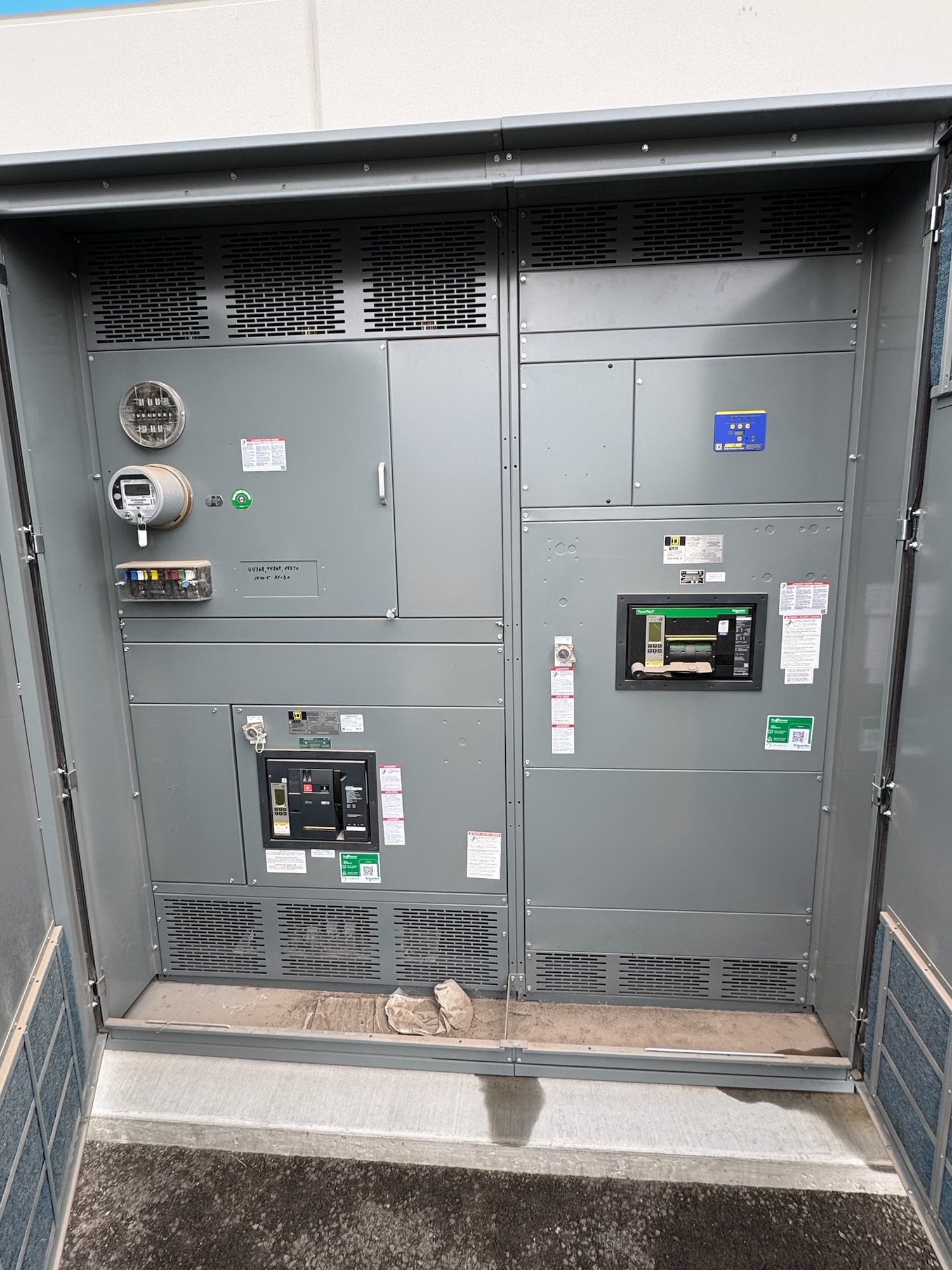
Selective transfer affects more than control logic. The equipment scope may include source devices, load feeder devices, metering or indication, control components, wiring interfaces, and provisions for external signals. Confirm which components are supplied in the assembly and which are furnished or connected by others. For UL 891 switchboard assemblies, the applicable scope is the switchboard assembly; that standard is not a blanket listing for medium- or high-voltage switchgear.
Before release, review one-line diagrams, elementary diagrams, device and feeder schedules, control narratives, terminal requirements, and any sequence-of-operation documents. Resolve differences between drawings and written requirements before fabrication. Clearly identify project revisions and approval responsibilities so the assembled configuration reflects the reviewed design rather than an assumed generic transfer scheme.
Prepare a useful quote request
For a quote, share the one-line diagram, system voltage and phase, source and feeder details, load priorities, intended transfer sequence, and known fault-current or equipment-duty information. Include device preferences or required interfaces only where they are established, along with metering, alarms, remote signals, control power, and enclosure or installation constraints. Identify open engineering questions instead of presenting unconfirmed assumptions as final requirements.
Also state the requested submittal and delivery milestones, destination in Georgia, receiving constraints, and any coordination needed with the contractor or site team. We manufacture new switchgear and switchboard configurations in the United States, using American-made components where specified and available. Configuration, component availability, and timing are confirmed for each order; nationwide shipping can be coordinated to the project destination.
Carry decisions through handoff
A clear handoff preserves the transfer intent from design through procurement, submittal review, and installation planning. Assign responsibility for approving the sequence, protection coordination, external wiring, and site interfaces. The contractor and qualified electrical personnel should verify that field connections and commissioning procedures follow approved project documents and applicable authority review before equipment is energized.
To move the arrangement forward, provide the load-priority schedule, source-state sequence, interlock prohibitions, and latest one-line diagram with your quote request. Ask the project engineer to resolve any uncertain transfer behavior before approval. This focused information lets the manufacturer evaluate the required configuration and identify scope questions early, while keeping final design decisions with the responsible engineering team.