Define the start-up load list
Identify which loads are required to initiate and sustain the plant’s restart, and distinguish them from loads that can wait until generation is available. Depending on the plant design, the list may include control and protection power, lubrication or seal systems, ventilation, fuel handling, cooling auxiliaries, and equipment needed to start prime movers. Treat each as a project-specific candidate, not a universal black-start list.
For every designated load, document voltage, phase, full-load and starting current, duty, required operating duration, and whether it can tolerate interruption. Note dependencies: a pump may be essential only after another system is available, while controls may need uninterrupted power throughout the sequence. This load schedule gives the engineer and equipment supplier a common basis for feeder sizing, bus arrangement, and switching scope.
Map sources and restoration order
Show the intended source path from the black-start source to each priority load, then onward to station buses and other generation or grid sources as the restart advances. Identify which source is expected to energize each bus at each stage, how sources are isolated from one another, and what conditions permit a transfer or tie closure. A one-line diagram should make normal, black-start, and post-start configurations distinguishable.
The sequence must account for source limits as well as load priority. Starting a large motor or adding several loads together can depress voltage or exceed the available source capacity. Engineers should define staged pickup, interlocks, permissives, and any required operator confirmation. The switchboard or associated switching equipment can be configured around those approved requirements, but the plant’s protection, control, and operating philosophy must determine the sequence.
Specify the switching assembly
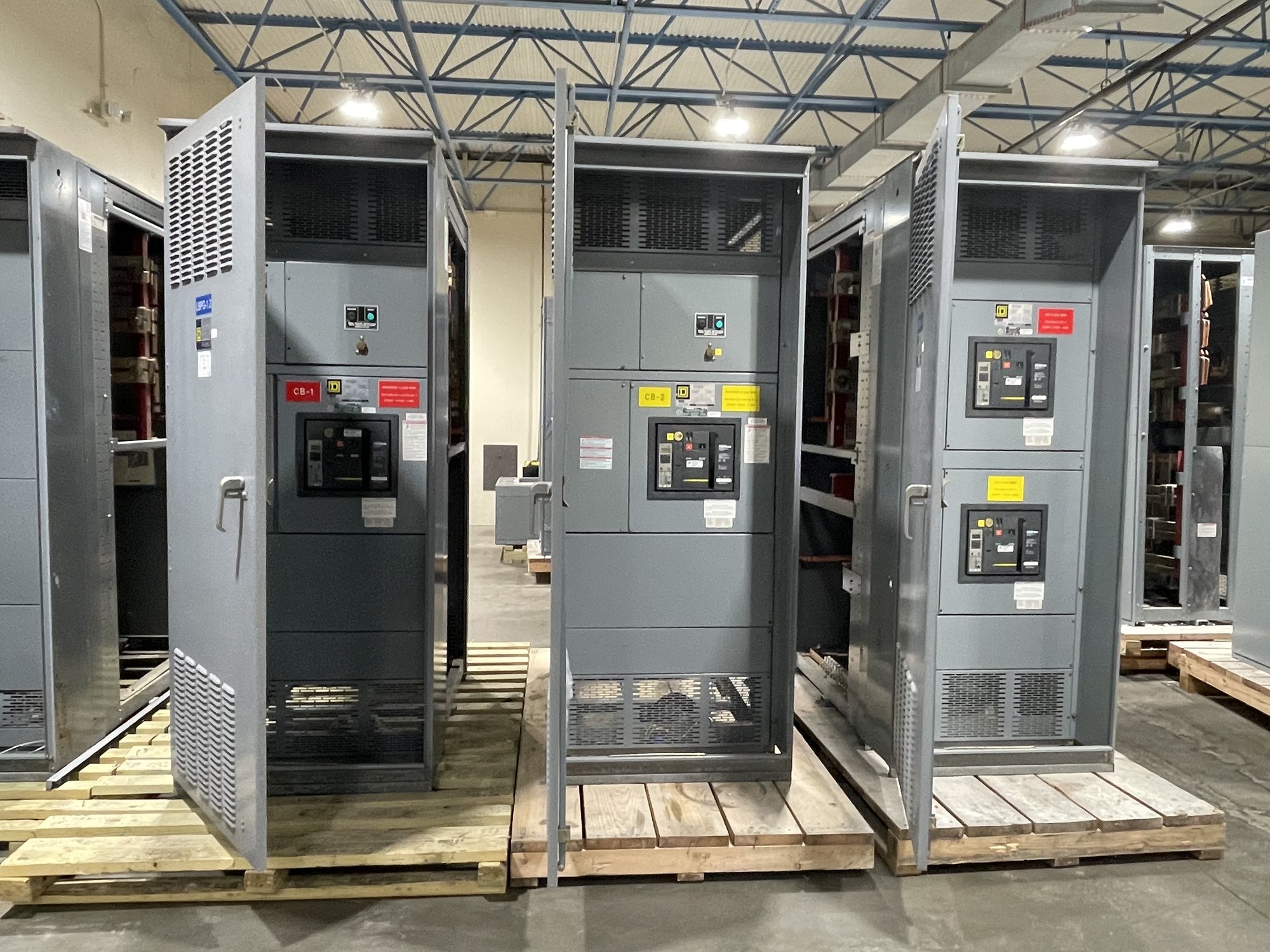
Procurement documents should identify bus ratings, system voltage, available fault current, feeder quantities, breaker or switch functions, metering, control power, and required enclosure conditions. State whether the assembly must accommodate drawout devices, remote operation, communications, or interface points for plant controls. These choices affect layout, wiring, access, and the boundary between the switchboard and separately supplied control or protection systems.
UL 891 applies to switchboard assemblies; it is not a blanket listing for medium- or high-voltage switchgear. Specify the equipment type and applicable standards for each voltage class, and have the responsible engineer confirm the intended scope. Do not assume a particular rating, certification, or configuration from a preliminary description. Final design and acceptance requirements depend on the project documents and review by the engineer and authority having jurisdiction.
Resolve practical design constraints
Black-start equipment may need to operate after an outage, when normal station services and communications are unavailable. Identify what controls must function from the designated source, what indication operators need locally, and which functions rely on batteries, stored energy, or external control power. Confirm cable entry, working clearances, environmental conditions, and physical interfaces with the room and connected equipment before releasing drawings.
Protection coordination and transfer behavior deserve early attention. Establish how the design handles a fault on a priority feeder, a failed source, an unavailable bus section, or a source that cannot accept the next load step. Determine whether switching is automatic, manual, or a combination, and document the safe operating states. These are engineering decisions; equipment configuration should implement approved logic rather than substitute for it.
Coordinate procurement and delivery
For a quote, provide the current one-line diagram, load schedule, source sequence, system voltage, fault-duty information, feeder and device schedule, enclosure requirements, control interfaces, and requested submittal scope. Flag unresolved items, such as motor-start data or final protection settings, so they can be identified as engineering dependencies rather than silently assumed. Also state the project phase, required drawing reviews, and the date equipment must be available for installation.
Georgia delivery planning should account for the plant’s receiving location, access limits, unloading method, indoor storage, and the installation sequence. Confirm shipping configuration and delivery requirements with the project team; exact availability and timeline are established for each order. Before release, align approved drawings, device labels, control connections, and the commissioning handoff with the engineer and contractor. Start with the load list and one-line, then request a configuration review against the intended restart sequence.